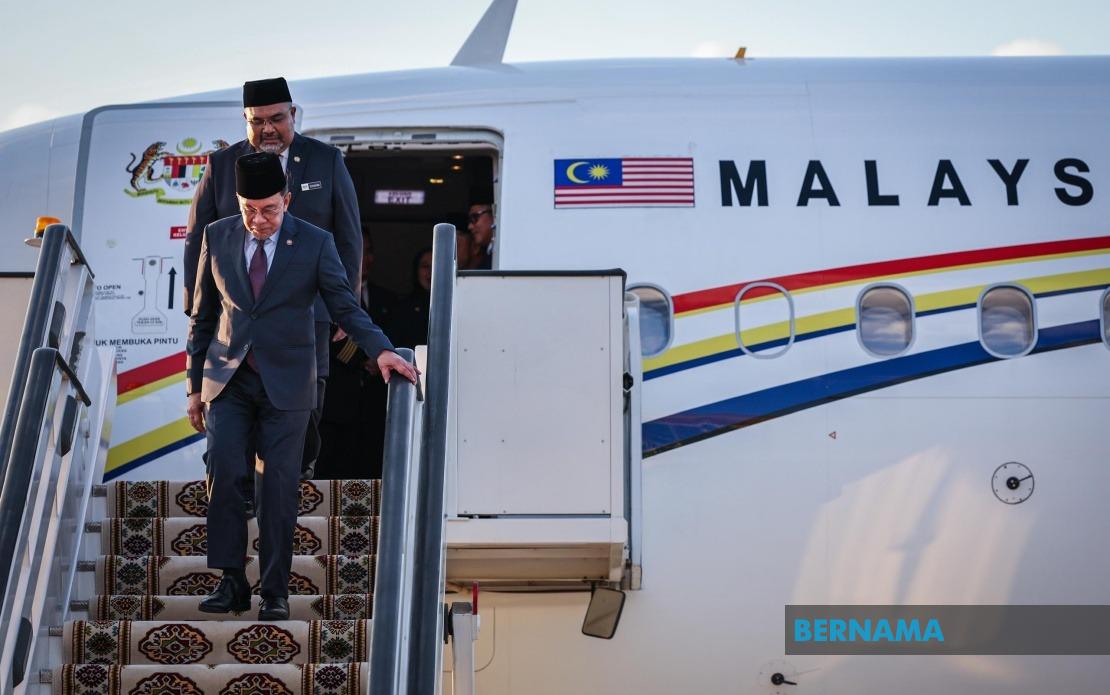
Prime Minister Datuk Seri Anwar Ibrahim touched down in Ashgabat on June 18 after concluding a working visit to Kazan in Russia's Republic of Tatarstan, extending Malaysia's diplomatic footprint across Central Asia. His aircraft arrived at Ashgabat International Airport at 8 pm local time for the two-day official visit spanning June 18-19, with a delegation that included Investment, Trade and Industry Minister Datuk Seri Johari Abdul Ghani and Economy Minister Akmal Nasrullah Mohd Nasir. The Malaysian ambassador to Turkmenistan, Mohd Suhaimi Ahmad Tajuddin, greeted the prime minister upon arrival, while Turkmenistan's Deputy Chairman of the Cabinet of Ministers for Oil and Gas, Guvanch Agajanov, led the local reception at the capital's airport.
This visit carries particular significance as the first official call by an incumbent Malaysian premier to Turkmenistan, cementing a relationship that has seen five Malaysian prime ministers visit the Central Asian nation across several decades. The invitation came directly from Turkmenistan President Serdar Berdimuhamedov, reciprocating his own official visit to Malaysia in December 2024. Such exchanges underscore growing bilateral cooperation and Malaysia's strategic pivot toward deeper engagement beyond its traditional Southeast Asian and broader Asian markets.
The itinerary reflects the formal nature of the engagement, beginning with an evening gathering where Anwar will meet with the Malaysian community and supporters of Malaysia-Turkmenistan relations. June 19 promises a full diplomatic calendar, opening with an official welcome ceremony at the Presidential Palace hosted by Berdimuhamedov himself. The programme encompasses one-on-one discussions between the two leaders, comprehensive bilateral negotiations, the signing of a joint statement, and the execution of bilateral agreements and memoranda of understanding that have been negotiated beforehand by respective government agencies.
Beyond the formal state functions, the visit demonstrates Malaysia's commitment to strengthening ties through cultural and religious engagement. Anwar, who holds the dual portfolio of Prime Minister and Finance Minister, will participate in an official luncheon hosted by Berdimuhamedov and subsequently perform Friday prayers at the Turkmenbashi Ruhy Mosque, commonly referred to as the Gypjak Mosque. These gestures reflect Malaysia's desire to connect on multiple levels—diplomatic, economic, and cultural—with its Central Asian counterpart.
The Malaysia-Turkmenistan Forum, to be jointly inaugurated by both leaders at the Chamber of Commerce and Industry of Turkmenistan, represents a platform designed to foster business-to-business connections and promote bilateral commerce. This forum underscores the economic dimension of the visit, positioning private sector engagement as a cornerstone of the bilateral relationship. The forum's establishment signals both nations' intention to move beyond traditional state-level cooperation toward sustained commercial partnerships.
From an economic perspective, Turkmenistan ranks as Malaysia's fourth-largest trading partner among Central Asian economies, a position earned through consistent commercial engagement. During 2025, bilateral trade reached RM75.80 million, with Malaysian exports standing at RM75.50 million, representing a robust nine percent increase year-on-year. While these figures reflect a relatively modest trade volume compared to Malaysia's major global partners, the growth trajectory indicates expanding economic ties and untapped potential for Malaysian businesses seeking Central Asian market access.
Petroliam Nasional Bhd, Malaysia's national oil company, has emerged as the most significant economic anchor in the bilateral relationship, leveraging Turkmenistan's vast hydrocarbon reserves. Petronas has invested cumulatively RM52.73 billion in Turkmenistan since establishing operations there in 1996, making it the largest Malaysian investor in the country by a considerable margin. These energy sector investments represent critical revenue streams for Petronas and demonstrate Malaysia's capacity to generate substantial returns through long-term resource partnerships in the Central Asian region.
Turkmenistan's energy wealth and strategic location along historical Silk Road trade corridors have made it increasingly important for Malaysian companies seeking diversification beyond Southeast Asia. The country's proven natural gas reserves rank among the world's largest, and its petroleum sector continues to attract international investment despite geopolitical sensitivities and sanctions-related challenges that have periodically affected foreign engagement. Malaysia's historical role in this sector provides leverage and experience that other Southeast Asian nations may lack.
The timing of Anwar's visit reflects Malaysia's broader diplomatic strategy of expanding relations with non-traditional partners while maintaining established relationships. His sequential visits to Russia's Tatarstan and Turkmenistan demonstrate a coordinated approach to Central Asian engagement, potentially opening pathways for Malaysian businesses seeking entry into regional markets. Such visits by sitting prime ministers carry symbolic weight, signalling to international investors and regional observers Malaysia's seriousness about sustained engagement with the broader Asian continent.
For Malaysia, deepening ties with Turkmenistan presents multiple strategic advantages. Energy security concerns make the Central Asian region increasingly relevant as Malaysia diversifies its economic partnerships and sources of investment returns. The bilateral relationship also positions Malaysia as a bridge between Southeast Asia and Central Asia, a role that enhances Malaysia's diplomatic influence and soft power across the broader Asian landscape. Anwar's visit, coupled with agreements expected to be signed, should establish frameworks for enhanced cooperation in sectors beyond energy, potentially including infrastructure development, technology transfer, and educational exchanges.
The visit also carries implications for Malaysia's position within broader geopolitical frameworks. By engaging meaningfully with Central Asian states, Malaysia reinforces its non-aligned, independent foreign policy posture while building relationships that diversify its strategic partnerships. This approach provides Malaysia with greater flexibility in navigating complex regional dynamics and reduces dependence on any single power center or alliance structure. The formal protocols of the visit and the expected signing of bilateral instruments will extend institutional connections that facilitate future cooperation at multiple governmental levels.
Looking forward, the outcomes of this visit—particularly any new agreements or memoranda of understanding—will indicate the trajectory of Malaysia-Turkmenistan relations over the coming years. Enhanced diplomatic ties typically precede expanded commercial activity, suggesting that the private sector should monitor emerging opportunities in energy services, technology, and infrastructure sectors. For Malaysian investors and exporters, the elevation of bilateral relations through a prime ministerial visit provides clearer political signals that both governments are committed to facilitating business activities and removing administrative barriers to trade and investment.