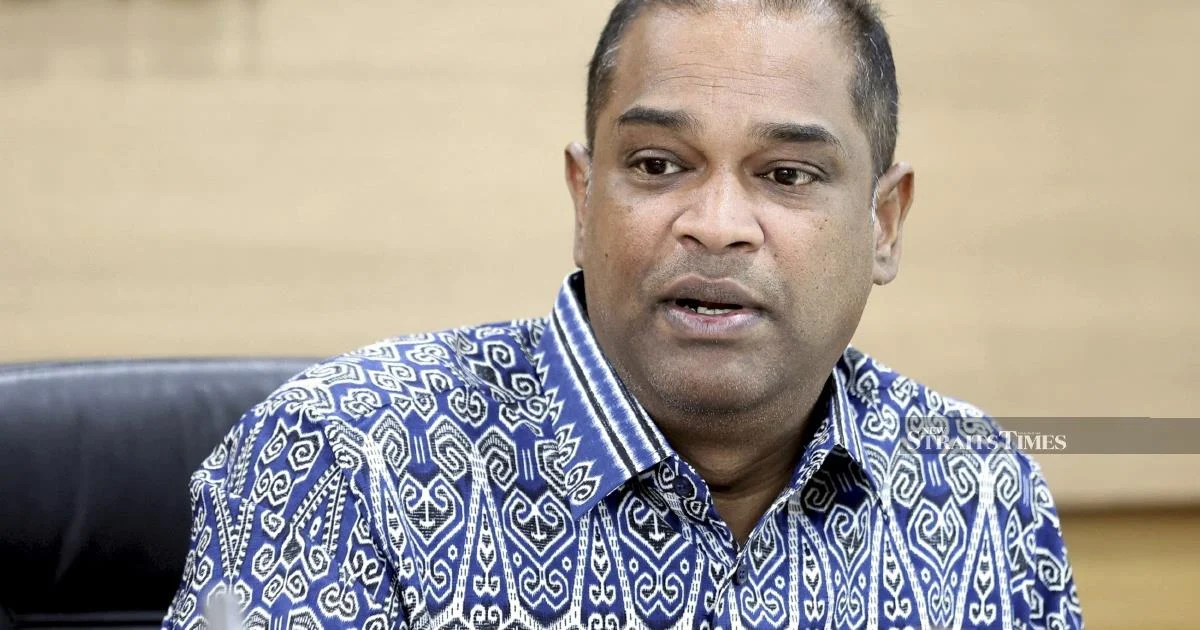
PKR vice-president Datuk Seri R. Ramanan has delivered a sharp rebuke to political figures whose actions and rhetoric threaten to compromise the neutrality of Malaysia's constitutional monarchy, particularly as the 16th Johor state election draws closer. Speaking in Johor Baru, Ramanan voiced concern that an emerging pattern of political manoeuvring has begun to blur the boundaries between the state's royal institution and the electoral process—a development he characterised as fundamentally incompatible with constitutional principles and democratic norms.
The remarks underscore mounting unease within opposition and reform-minded quarters regarding the instrumentalisation of royal symbolism and influence during campaign periods. As Johor, one of Malaysia's most politically significant states and a traditional stronghold of ruling coalitions, enters its pre-election phase, questions have surfaced about the extent to which various actors attempt to leverage royal endorsements or proximity to legitimise their political agendas. Such practices, analysts note, risk eroding public confidence in the impartiality of key constitutional actors.
Ramanan's intervention reflects a broader tension in Malaysian politics between those who advocate strict separation between the monarchy's ceremonial and constitutional functions and those who, either deliberately or through careless messaging, allow political narratives to absorb royal symbolism. The distinction holds particular weight in Johor, where the Sultan commands deep historical reverence and where electoral contests frequently invoke state pride and loyalty as mobilising factors. Politicians who blur these lines face accusations of leveraging institutional prestige for partisan gain.
The timing of Ramanan's statement carries significance given Johor's electoral calendar and the state's political ecology. As Malaysia's southernmost peninsula state and home to the capital Johor Baru, the territory has historically served as a barometer for national political sentiment. Previous elections have witnessed intense competition between Barisan Nasional, which has dominated state governance for decades, and opposition coalitions seeking to establish electoral footholds in this traditionally conservative region. The 16th state election thus represents not merely a local contest but a national political flashpoint.
Political observers note that the phenomenon Ramanan addresses—the instrumentalisation of royal institutions—has assumed increasing prominence across Southeast Asian democracies facing competitive electoral pressures. In Malaysia's context, where the constitutional monarchy occupies an exalted and protected status within the Federal Constitution, the risk of politicising royal imagery carries particular consequences. Beyond immediate electoral implications, such conduct potentially weakens institutional insulation that the monarchy requires to function effectively as a unifying national symbol transcending political division.
The PKR vice-president's comments implicitly challenge all political parties operating in Johor to maintain scrupulous boundaries between campaigning and references to, or invocations of, royal authority. This demand applies equally to government-backed coalitions and opposition movements, though observers acknowledge that those holding state machinery sometimes possess structural advantages in shaping narratives that associate governmental legitimacy with royal approval. Opposition parties must equally resist the temptation to invoke royal support or sentiment as campaign rhetoric.
For Malaysian readers and Southeast Asian observers monitoring democratic health in the region, Ramanan's intervention highlights a recurring challenge: how electoral democracies sustain institutional distinctness and constitutional separation of functions when political actors face intense competitive pressure. The monarchy, by design, operates outside formal party politics. Yet its symbols permeate national consciousness, and ambitious politicians may consciously or unconsciously allow their campaigns to absorb royal imagery and language. The consequences ripple beyond individual elections, potentially reshaping public perceptions of institutional independence.
The warning also reflects concerns within PKR and allied circles that governing coalitions in Johor, by virtue of controlling state apparatus and ceremonial access, exercise asymmetric capacity to embed themselves within royal symbolism and narrative. By explicitly calling out this practice, Ramanan seeks to establish a principle that transcends immediate electoral interests: that political parties of all stripes must exercise restraint and preserve the monarchy's institutional autonomy from partisan competition.
Looking ahead to the 16th Johor state election, Ramanan's statement effectively places political leaders on notice that observers will scrutinise whether campaigns maintain appropriate distance from royal institutions. This heightened watchfulness may influence how various parties craft messaging and structure their campaign events. Whether such admonitions prove sufficient to prevent future instances remains uncertain, given the magnetic attraction of royal symbolism in Johor's deeply rooted political culture.
The substance of Ramanan's critique also invites reflection on the broader health of Malaysian democracy. A mature democratic culture would feature widespread consensus that constitutional monarchies require protection from electoral competition, and that political parties possess sufficient other resources and messages to contest elections without appropriating royal authority. Ramanan's felt necessity to articulate this principle suggests the consensus may require reinforcement across Malaysia's political spectrum.