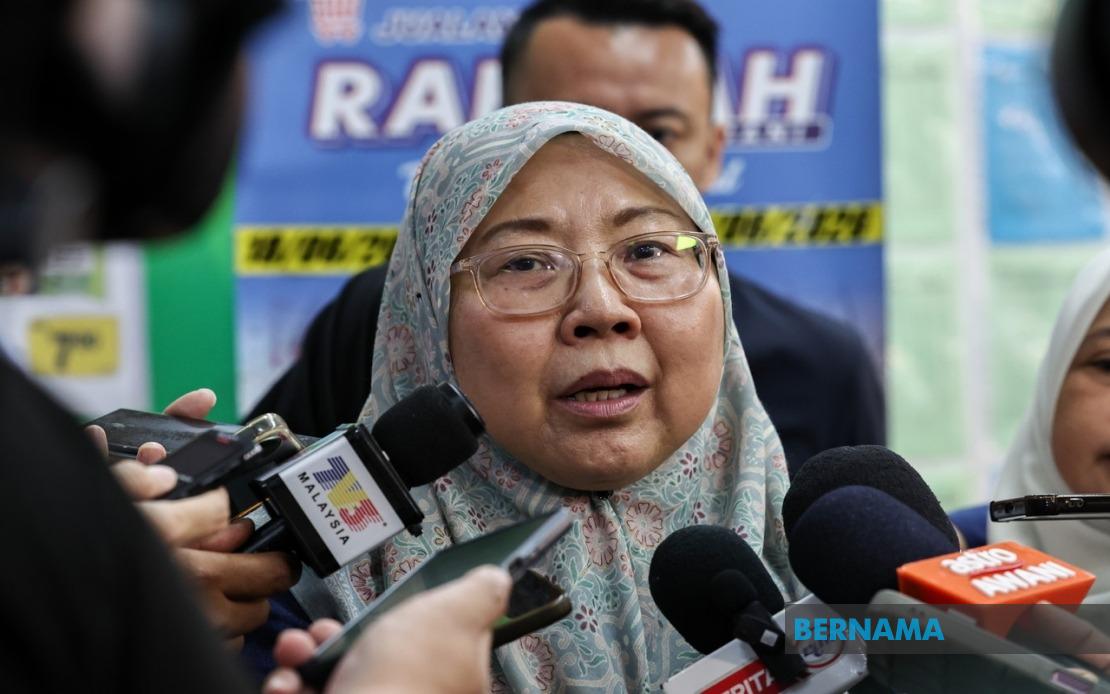
PKR's slate of candidates for the upcoming state elections in Johor and Negeri Sembilan stands at 99 per cent completion, party secretary-general Datuk Dr Fuziah Salleh announced on June 19. The formal declaration of the party's chosen representatives is anticipated within days, setting the stage for what promises to be a closely contested electoral battle in both states. The party's leadership has worked methodically to craft its roster, signalling that the announcement phase represents a crucial moment in the opposition's campaign preparation.
The People's Justice Party plans to contest 20 state seats across Johor's 56-seat assembly and 16 seats in Negeri Sembilan's 36-seat chamber. This allocation reflects careful calculations about where the party believes it can mount competitive challenges against the ruling Barisan Nasional coalition and other political rivals. Prior to the dissolution of these state assemblies, Barisan Nasional held commanding majorities—40 of 56 seats in Johor and 14 of 36 in Negeri Sembilan—while Pakatan Harapan controlled 12 and 17 seats respectively in the two states. The electoral mathematics suggest that PKR, as the largest component within Pakatan Harapan, faces an uphill struggle to dislodge entrenched incumbents, particularly in Johor where Barisan's dominance has proven remarkably durable across successive electoral cycles.
Dr Fuziah emphasised that PKR's candidate selection strategy balances experience with fresh talent, incorporating women and younger politicians into its lineup. This deliberate composition reflects broader discussions within Malaysian opposition circles about generational renewal and gender representation in elected office. The party has recognised that voters increasingly expect political formations to demonstrate commitment to diversity beyond rhetorical commitment, particularly among urban middle-class constituencies and younger demographic cohorts. However, the precise percentage of debut candidates and the specific breakdown by gender will remain undisclosed until the formal launch, a strategic choice that allows the party to control the narrative around its selections.
A contentious dispute over the Puteri Wangsa constituency in Johor threatens to fracture the Pakatan Harapan coalition at a critical juncture. Johor Amanah, the Islamic opposition party and coalition partner, claims entitlement to the seat based on what it regards as an unfulfilled arrangement dating to 2022. In that election, Puteri Wangsa was temporarily loaned to MUDA, the newer anti-corruption party, but PKR now asserts that the seat reverts to its control. This disagreement exemplifies the ongoing tension within Pakatan Harapan between its constituent parties over seat allocation and strategic positioning. Dr Fuziah deflected questions about the dispute, characterising it as a matter for senior leadership resolution rather than party secretariat determination, suggesting that tensions require intervention at the highest echelons of the coalition.
The broader context of these disputes reflects the fragility of opposition unity in Malaysia. Pakatan Harapan, which governed briefly from 2018 to 2020, has struggled to maintain cohesion as its components pursue divergent political strategies. Amanah's concerns about seat allocation in Johor carry particular weight given its stronghold status in certain constituencies and its political relevance in Muslim-majority areas. Simultaneously, the emergence of MUDA as a political force has created new competitive dynamics within the opposition constellation, complicating the division of electoral territory that once seemed settled between established players.
Separately, PKR faces internal discipline proceedings against Subang Member of Parliament Wong Chen, who publicly challenged the party to expel him following an investigation into alleged party violations. The situation underscores simmering tensions within PKR's organisational structure, where certain veteran parliamentarians maintain independent political profiles that occasionally clash with party directives. Dr Fuziah confirmed that the matter has been referred to PKR's Disciplinary Board for determination, suggesting that formal proceedings will proceed through established mechanisms rather than through ad-hoc leadership intervention. The outcome of this case will carry symbolic importance for questions about party discipline and the treatment of senior members who deviate from collective positions.
Johor's election timeline creates significant pressure on all participating parties to accelerate campaign preparations. The Election Commission designated June 27 as the nomination day, with polling scheduled for July 11, providing a compressed two-week campaign period following the State Legislative Assembly's dissolution on June 1. This compressed timeframe demands that candidates be officially announced promptly, as delayed announcements would severely constrain their ability to build ground-level campaign infrastructure. For PKR and its coalition partners, the urgency reflects the reality that they must mobilise supporters across multiple constituencies simultaneously while competing against an entrenched Barisan Nasional machine accustomed to electoral dominance in Johor.
Negeri Sembilan presents a somewhat different electoral landscape. The state assembly poll is scheduled for August 1, with nomination day set for July 18 and early voting permitted on July 28. The assembly's 36 seats are distributed such that Pakatan Harapan held 17 prior to dissolution, Barisan Nasional 14, and Perikatan Nasional 5, making it substantially more competitive than Johor. This configuration means that Negeri Sembilan represents genuine battleground territory where opposition parties harbour realistic expectations of improved performance or even control. The later election date compared to Johor affords parties somewhat more preparation time, though the compressed schedule remains demanding by historical standards.
PKR's representation in both states reflects its position as Pakatan Harapan's primary electoral vehicle, tasked with contesting the largest volume of seats within the coalition. This concentration of candidates on PKR inevitably magnifies the importance of its internal candidate selection process and the party's campaign execution capacity. The quality and electoral viability of individual candidates will substantially determine whether PKR can translate its coalition membership into parliamentary seats. Given that many candidates will be competing in constituencies where Barisan retains significant institutional and organisational advantages, the party's ability to identify and nurture candidates with genuine local credibility becomes paramount.
The political stakes in these two state elections extend beyond immediate parliamentary composition. Malaysia's federal political equilibrium remains delicate, with no party or coalition commanding overwhelming parliamentary dominance at national level. Strong performances by Pakatan Harapan in Johor and Negeri Sembilan would energise the opposition's narrative of rising political momentum, potentially influencing the timing and outcome of eventual federal elections. Conversely, decisive Barisan victories would reinforce its claim to remain Malaysia's natural governing force. PKR's candidate selections thus carry implications that transcend state-level politics, resonating through the national political system and shaping perceptions of which coalitions possess contemporary electoral appeal.


