The Philippine Department of Justice has initiated a formal investigation into possible charges against government officials in connection with a shooting incident at the Senate building on May 13 and the escape of Senator Ronald dela Rosa from protective custody the following morning. Justice Secretary Fredderick Vida confirmed that prosecutors are actively examining the circumstances surrounding both events, with particular focus on determining whether there is a connection between the two occurrences.
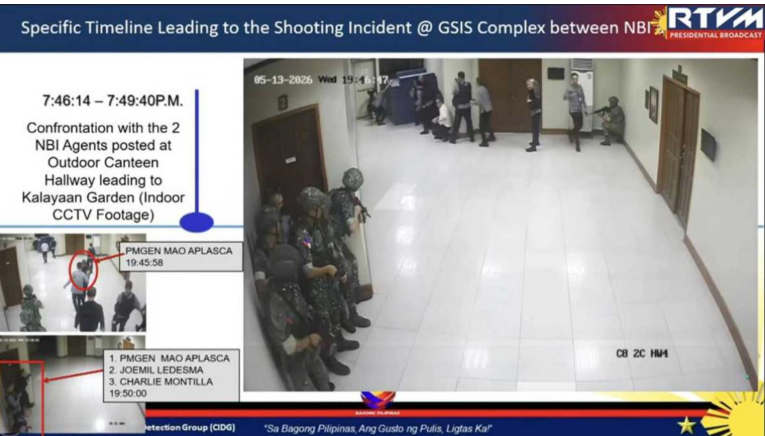
According to Vida's statement, the investigative panel has gathered multiple forms of evidence to reconstruct events at the Senate complex. Accounts from National Bureau of Investigation personnel, testimonies from media representatives who were present, and security footage from closed-circuit television cameras have all been incorporated into the inquiry. The CCTV evidence appears particularly significant, as it documents sniper fire originating from the fifth floor of the Senate building directed toward a clearly identifiable NBI vehicle positioned at the GSIS premises.
The timing of these two incidents—occurring within hours of each other—has raised serious questions about potential coordination or causation. The Justice Department's investigation focuses on whether the shooting was intended to facilitate dela Rosa's escape, whether it was meant to eliminate evidence or witnesses, or whether the two events represent unrelated criminal activities. The proximity of these events, both in time and location, strongly suggests investigators believe there may be substantive connections worthy of prosecution.
Vida exercised caution in discussing the scope of the investigation, noting that while many individuals involved appear to hold public office, the prosecution team has not yet identified specific targets for charges at this preliminary stage. This measured approach reflects the sensitivity of investigating senior government officials in a democratic context, where accusations without sufficient evidence could undermine institutional credibility. The Justice Department faces pressure to appear both thorough and impartial while dealing with allegations that could implicate high-ranking bureaucrats or security personnel.
The involvement of the National Bureau of Investigation as both a witness agency and apparent target of the shooting adds layers of institutional complexity to the probe. The NBI vehicle's presence at the GSIS compound suggests it was engaged in some form of protective or investigative operation, possibly related to dela Rosa's custody status. Understanding why an NBI asset was positioned at that location and what operations were occurring will be crucial to establishing motive and determining who benefited from the shooting incident.
For Southeast Asian readers, this case illustrates recurring challenges faced by democratic institutions in the region. The investigation demonstrates both the transparency mechanisms available within Philippine governance structures and the inherent difficulties in investigating allegations against the state apparatus itself. When public officials are potentially implicated in shooting incidents and prisoner escapes, the investigating agency must maintain credibility while pursuing facts that could expose systemic corruption or security failures.
The role of CCTV footage in this investigation reflects modern forensic capabilities available to law enforcement in the Philippines. Security cameras at government facilities can provide objective evidence of events that might otherwise rely on witness testimony vulnerable to manipulation or intimidation. However, video evidence alone cannot establish motive or identify persons giving orders; it merely documents what occurred and can corroborate or contradict witness accounts.
Dela Rosa's escape from protective custody raises fundamental questions about prison security procedures and whether official protocols were deliberately circumvented. If higher-ranking officials authorized his release or facilitated his departure, the shooting incident at the Senate could represent an attempt to create a diversion or cover story for what was actually a coordinated escape operation. Alternatively, the shooting might have been intended to destabilize the security environment sufficiently to enable an escape that officials would later claim resulted from security failures rather than deliberate action.
Vida's commitment to investigating the matter "professionally, objectively, and without fear or favor" represents the stated institutional standard, yet enforcement of such principles when powerful officials face potential prosecution remains challenging across Southeast Asia. The Justice Secretary's equally important caveat—that no person should face judgment before evidence is thoroughly examined—acknowledges the danger of premature accusations that could weaponize the investigation for political purposes.
The investigation's findings will carry implications extending beyond the immediate parties involved. If public officials at senior levels are found to have coordinated the shooting or facilitated the escape, it would signal serious institutional corruption within Philippine security and justice systems. Conversely, if the probe determines that security failures resulted from individual negligence rather than coordinated criminal conspiracy, it could prompt reforms in protective custody procedures and Senate security protocols.
Regional observers will closely monitor how Philippine institutions handle this investigation, as it tests whether democratic safeguards can function effectively when allegations touch senior government positions. The investigation's trajectory and ultimate conclusions may influence public confidence in Philippine governance institutions and shape how other Southeast Asian democracies approach comparable institutional crises involving potential official misconduct.
The Department of Justice's ongoing inquiry represents a critical moment for Philippine institutional credibility, demonstrating whether legal processes can operate independently and objectively when examining alleged crimes by the state apparatus itself.