Pakatan Harapan has moved to defuse tensions surrounding the role of Menteri Besar in the upcoming Johor state election, pledging unwavering commitment to the constitutional framework that grants the Sultan authority over the appointment. The coalition's stance represents a deliberate attempt to navigate the sensitive intersection of royal prerogatives and electoral democracy in one of Malaysia's most significant states, where the monarchy's institutional role remains constitutionally paramount.
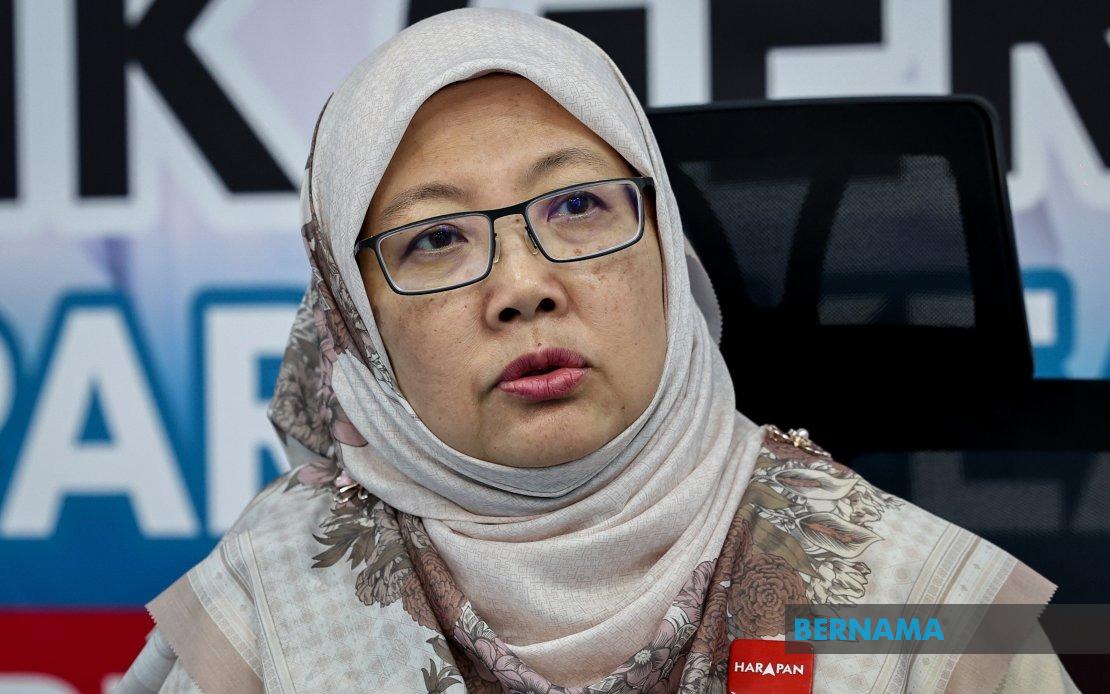
The undertaking emerged through Johor PKR chairman Datuk Seri Dr Zaliha Mustafa, who articulated PH's position that respecting the Johor State Constitution 1895 forms a non-negotiable foundation of the coalition's political agenda. Her remarks came in direct response to provocations from the incumbent Menteri Besar Datuk Onn Hafiz Ghazi, who had publicly called upon PH to pre-announce its intended chief minister candidate before the election takes place. This demand effectively sought to compel the opposition to bind itself publicly to a specific individual, thereby surrendering the latitude that constitutional arrangements traditionally provide to the reigning Sultan.
Dr Zaliha's strategic pivot away from the Menteri Besar nomination controversy underscores PH's recognition that Malaysian voters increasingly demand substantive engagement on governance matters rather than procedural parliamentary theatre. By declining to nominate a candidate prematurely, the coalition maintains compliance with constitutional practice whilst simultaneously refusing to dignify what many observers view as a trap designed to lock the opposition into predetermined commitments. The approach reflects sophisticated political awareness that Johor's electorate cares less about institutional machinations and more about tangible improvements to their material circumstances.
The Sultan of Johor occupies a uniquely powerful constitutional position within Malaysia's federal architecture. Unlike several other states where the chief minister selection has become increasingly contested terrain following electoral realignments, Johor's foundational documents explicitly vest appointment authority in the throne. This distinction carries historical weight; the Johor sultanate maintained independent statehood longer than most Malayan territories and negotiated entry into the Federation from a position of relative strength, securing enhanced constitutional protections for royal prerogatives. Understanding this context proves essential for Malaysian and regional observers seeking to comprehend why PH felt compelled to make such an emphatic constitutional commitment.
Dr Zaliha articulated PH's core campaign strategy as fundamentally oriented toward delivering policy solutions that enhance living standards, generate employment opportunities, and accelerate economic momentum throughout Johor. This messaging represents a conscious rejection of the incumbent's apparent strategy to reduce the election to a battle over procedural control rather than programmatic substance. The coalition's calculation suggests that Johor voters, like their counterparts across Malaysia, prioritize concrete governance outcomes over internal political squabbles about which faction claims credit for selecting administrative leadership.
The emphasis on listening to constituent concerns and translating those grievances into actionable policy responses positions PH as the solution-oriented alternative to a government increasingly associated with governance gridlock. By maintaining focus on delivering tangible improvements to economic productivity and quality of life, the coalition attempts to elevate the campaign discourse beyond institutional questions that may resonate within political circles but carry limited salience for ordinary Johoreans navigating inflation, employment precarity, and educational pressures.
PH's extensive roster of seasoned administrators and policy specialists provides genuine credibility to claims that the coalition possesses qualified personnel capable of stewarding state affairs effectively. Rather than personalizing the Menteri Besar question around particular individuals, this framing emphasizes institutional competence and the collective capacity of PH's leadership structures. The approach acknowledges that voter anxiety about leadership capability extends beyond the chief minister position to encompass the entire administrative apparatus and strategic vision that a PH state government would implement.
The dynamic between incumbent and opposition reflects broader patterns visible throughout Malaysian electoral politics, where efforts to control narrative focus frequently determine campaign momentum. By refusing to name a candidate whilst simultaneously reinforcing constitutional deference to royal authority, PH simultaneously appears both democratically progressive and institutionally respectful. This positioning proves particularly valuable in Johor, where the sultanate commands substantial social capital and where perceived disrespect toward royal institutions carries electoral consequences that no political coalition can afford.
The incident also illuminates tensions within Malaysia's constitutional settlement regarding the relationship between electoral mandates and executive appointment authority. In Westminster-derived systems, electoral outcomes typically determine the chief executive through parliamentary mechanics, but Malaysian constitutional architecture preserves royal discretion in several states. PH's commitment to respecting this framework, despite controlling federal government apparatus, demonstrates recognition that dismantling state-level constitutional provisions would generate backlash extending far beyond Johor's borders and would undermine the coalition's larger agenda of constitutional legitimacy.
For regional observers monitoring Malaysian political developments, this episode confirms that major political actors have internalized lessons from previous constitutional crises and are consciously avoiding provocative challenges to established royal prerogatives. The restraint demonstrated by PH, despite possessing substantial federal resources and organizational capacity, suggests that Malaysian political elites have developed shared commitment to respecting constitutional boundaries even when those boundaries might be theoretically contestable. This institutional maturation, however incremental, contributes to democratic stability across Southeast Asia's largest economy.