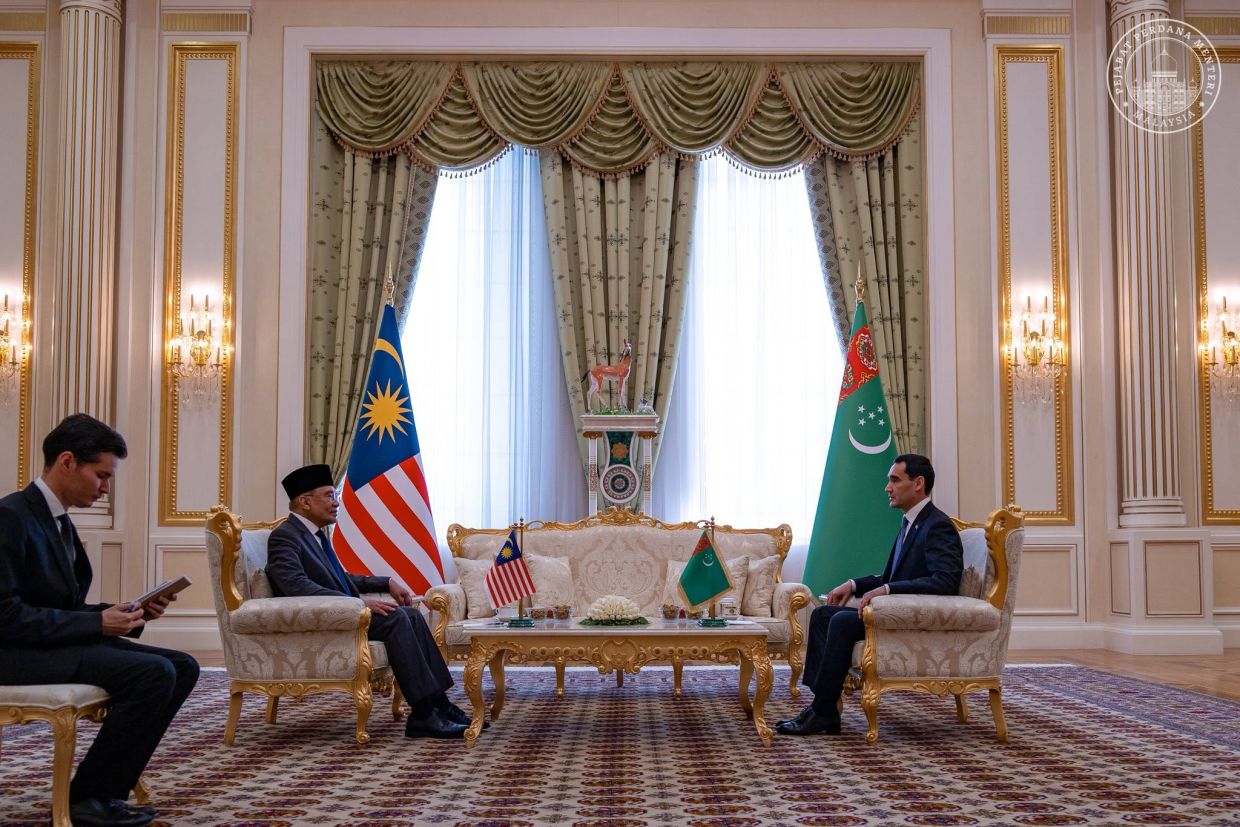
Prime Minister Datuk Seri Anwar Ibrahim and Turkmenistan President Serdar Berdimuhamedov have formalised a transformational strategic partnership between the Malaysian national oil company Petronas and Turkmenistan's energy authorities, signalling deepened engagement between Kuala Lumpur and Ashgabat across the energy spectrum. The agreement, signed during an official state visit to the Central Asian nation, represents a watershed moment in the countries' three-decade partnership in the energy sector, a relationship that has underpinned much of the economic cooperation between the two nations.
The timing of this partnership carries symbolic weight, coinciding as it does with the thirtieth anniversary of Malaysia-Turkmenistan cooperation in energy matters. According to a statement from the Prime Minister's Office, the pact does more than simply renew existing commitments; it charts a course toward expanded involvement in developing untapped energy resources and capitalises on Turkmenistan's position as custodian of some of the world's most substantial natural gas reserves. This positioning matters significantly for Malaysia's energy security strategy and for Petronas' global portfolio diversification at a time when renewable energy transitions are reshaping the sector worldwide.
At the bilateral level, the partnership carries implications that extend well beyond energy. The PMO emphasised that the arrangement strengthens the broader friendship between Malaysia and Turkmenistan while catalysing economic growth through talent development and technology transfer mechanisms. Both nations stand to benefit from knowledge-sharing arrangements that elevate human capital and industrial expertise within their respective sectors. For Malaysia, particularly, the development showcases the country's competitive capabilities in strategic industries on the global stage, reinforcing perceptions of Malaysian technical competence and project execution capacity.
The strategic dimension of this partnership also reflects confidence among international actors in Malaysia's role as a reliable energy sector partner. By securing renewed and expanded engagement with Turkmenistan—a nation sitting atop vast hydrocarbon reserves—Malaysia signals its capacity to navigate complex international energy relationships and deliver value-added expertise across the entire value chain. This confidence extends beyond bilateral relations; it positions Malaysia as a credible intermediary and technical leader within regional energy frameworks, particularly relevant given Southeast Asia's growing energy consumption and the need for stable supply arrangements.
Turkenistan holds particular significance within Malaysia's Central Asian strategy. In 2025, the nation ranked as Malaysia's fourth-largest trading partner among Central Asian countries, a position reflecting years of sustained commercial engagement. The bilateral trade relationship generated RM75.80 million in transactions, with Malaysian exports comprising RM75.50 million of this figure. This represents a nine percent increase from the prior year, demonstrating resilience and growth momentum in the commercial relationship despite global economic uncertainties. These trade volumes, while substantial, likely underrepresent the strategic value of the relationship, which extends into long-term investment and technical cooperation domains.
Petronas' investment footprint in Turkmenistan underscores the seriousness of Malaysia's commitment to the energy partnership. Since 1996, the state-owned enterprise has accumulated total investments valued at RM52.73 billion in Turkmenistan, making it one of the company's most significant international portfolios by cumulative capital deployment. This investment history demonstrates both Petronas' confidence in Turkmenistan's stable operating environment and the company's proven ability to manage complex projects in challenging geographies. The scale of these commitments suggests a long-term vision extending well beyond short-term commercial cycles.
The broader context illuminates why this partnership matters for Southeast Asia. Central Asia's energy resources have traditionally flowed eastward toward China and southward toward South Asia, with limited direct engagement from Southeast Asian actors. Malaysia's deepening involvement in Turkmenistan's energy sector—particularly in natural gas, a commodity increasingly valued for grid stability in renewable-heavy energy systems—opens alternative supply pathways and reduces regional dependency on traditional Middle Eastern suppliers. This diversification strengthens energy security across the ASEAN bloc and reduces vulnerability to supply disruptions in any single corridor.
From Petronas' perspective, the partnership addresses long-term corporate strategy around hydrocarbon reserves replacement and geographic diversification. As mature fields in Southeast Asia face production decline and energy markets transition toward lower-carbon resources, maintaining exposure to world-class gas reserves becomes strategically important. Turkmenistan's vast undeveloped gas resources provide a hedge against reserves depletion and offer opportunities for Petronas to apply its technical expertise in frontier exploration and development, sectors where Malaysian engineering prowess remains globally competitive.
The MADANI government's endorsement of this partnership reflects its broader strategic vision emphasising Malaysia's position as a hub for energy expertise and investment within Asia-Pacific. By championing Petronas' international expansion and facilitating bilateral state-level support for energy partnerships, the government seeks to elevate Malaysia's standing as a serious player in global energy markets. This positioning carries economic benefits extending beyond Petronas itself, generating employment in upstream sectors, supporting local supply chain development, and creating opportunities for Malaysian engineering and service companies to participate in Turkmenistan-based projects.
Looking forward, the partnership's potential extends into emerging energy domains. While traditional hydrocarbon extraction remains central to Petronas' Turkmenistan operations, the agreement's language around "future energy resources" hints at possible collaboration in energy transition technologies, natural gas processing innovations, and potentially carbon management solutions. Central Asian nations face increasing international pressure to decarbonise their resource-extraction economies, and Malaysian expertise in sustainable energy development could position Petronas as a preferred technical partner in these domains.
The ceremonial dimensions of the partnership—with Prime Minister Anwar leading the signing and President Berdimuhamedov offering the official welcome—underscore the political importance both governments attach to the relationship. Such high-level engagement signals domestic constituencies in both nations that energy partnerships merit sustained investment and protection from political fluctuations. For international investors monitoring Malaysia-Turkmenistan relations, this political commitment provides confidence that contractual obligations will be honoured and dispute resolution mechanisms will function reliably.
The partnership also carries symbolic implications within Malaysia's broader foreign policy orientation. By strengthening ties with Central Asia through energy cooperation, Malaysia demonstrates commitment to diversifying its international relationships beyond the traditional Southeast Asian focus. This approach aligns with strategic thinking that emphasises regional autonomy, reduced reliance on great-power alignments, and cultivation of partnerships based on complementary economic interests. For policymakers in Kuala Lumpur, energy partnerships with resource-rich nations like Turkmenistan offer concrete economic returns while advancing diplomatic objectives within non-aligned frameworks.
As implementation proceeds, the partnership's success will depend on navigating complex technical, financial, and regulatory challenges inherent in international energy development. Turkmenistan's investment climate, while generally stable, operates under government frameworks that prioritise state control over resource allocation and require sustained diplomatic attention. Petronas' experience managing operations across diverse regulatory environments—from Southeast Asia to West Africa—provides institutional knowledge relevant to Turkmenistan operations. The strategic partnership thus represents not merely a commercial arrangement but a long-term institutional commitment requiring sustained engagement at both corporate and governmental levels across the coming decades.