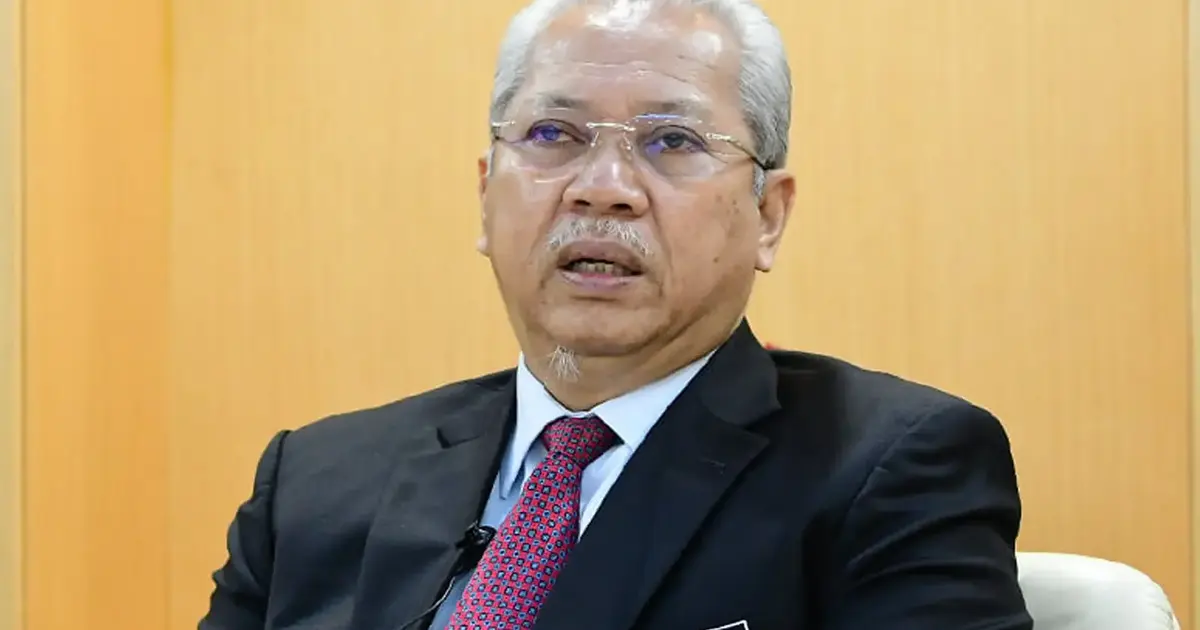
Perikatan Nasional will convene its Supreme Council on Monday to resolve a festering dispute over the coalition's logo and determine parliamentary seat allocations for the upcoming Johor and Negeri Sembilan state elections, coalition information chief Annuar Musa announced. The meeting represents a critical juncture for the opposition alliance as it seeks to present a unified front amid internal tensions that have threatened to undermine its electoral prospects in two strategically important states.
The most pressing issue facing the Supreme Council involves clarifying Bersatu's position within the PN framework, a question that has generated considerable uncertainty within the coalition ranks. According to Annuar Musa, the party's future relationship with PN cannot be adequately addressed through conventional channels and requires a full assembly of the coalition's top decision-making body. This suggests that previous attempts at backroom negotiations have failed to produce consensus on the matter, necessitating a more formal and comprehensive discussion among all component parties.
LogoUsage has emerged as an unexpectedly contentious issue for PN, with questions about which emblem will represent the coalition in the state elections proving surprisingly divisive. The logo dispute carries practical and symbolic implications for all participating parties, as it affects branding, campaign materials, and voter recognition. Coalition officials have indicated that the logo question cannot be divorced from the broader issue of Bersatu's role and representation within PN, suggesting these matters are intertwined in complex ways that require holistic resolution.
Seat allocation negotiations between PN's component parties have historically been contentious affairs, and the distribution of parliamentary constituencies in Johor and Negeri Sembilan elections promises to be no exception. These two states carry considerable political weight—Johor remains one of Malaysia's most populous and economically significant states, while Negeri Sembilan serves as a crucial battleground between major political blocs. The seat allocation process will determine not only which parties contest which constituencies but also the overall seat distribution and potential government formation outcomes following the elections.
The involvement of Annuar Musa in communicating the coalition's position underscores the seriousness with which PN leadership is treating these matters. As information chief, Musa serves as the official voice of the coalition on key strategic issues, and his public announcement suggests that PN intends to move decisively to resolve these disputes before the campaign period intensifies. The timing of the Monday meeting reflects growing awareness within the coalition that further delays could dampen morale and create additional recruitment complications for the elections.
Bersatu's uncertain status within PN has been a source of speculation among political observers for some time, with questions arising periodically about whether the party would remain committed to the coalition or pursue alternative political arrangements. The party's leadership has navigated complex political dynamics, seeking to maintain leverage within PN while preserving the option to pursue independent political interests. Monday's Supreme Council session will test whether the coalition can accommodate Bersatu's ambitions while maintaining cohesion among other member parties including Perikatan's other significant components.
For Johor voters and political stakeholders, the Supreme Council's decisions will carry immediate implications for the upcoming state election campaign. Seat allocations will determine which parties have realistic prospects in various constituencies, and the logo dispute's resolution will affect how PN presents itself to the electorate. Clarity on these issues is essential for allowing component parties to mount effective campaigns and mobilize their respective support bases coherently across the state.
Negeri Sembilan presents a somewhat different political equation, with state-level dynamics that differ notably from Johor's configuration. The seat allocation process for Negeri Sembilan will need to account for the state's unique political landscape and the relative strengths of PN's components in various constituencies. The Supreme Council's decisions regarding both states will need to reflect careful calibration of these diverse factors while maintaining overall coalition unity.
The resolution of these disputes carries significance beyond the immediate elections, as successful negotiation would demonstrate PN's ability to manage internal differences and present voters with a coherent alternative to the incumbent federal government. Conversely, failure to achieve consensus could expose fissures within the coalition that opposition politicians would eagerly exploit. Political analysts will scrutinize Monday's outcomes closely as barometers of PN's internal cohesion and electoral readiness.
The Supreme Council meeting also represents an opportunity for PN to reset narratives around its organizational effectiveness and leadership stability. Public disputes over logos and seat allocations create impressions of disorder and disarray, potentially undermining the coalition's broader political messaging. By resolving these issues decisively and transparently, PN can redirect focus toward policy platforms and electoral strategy for the Johor and Negeri Sembilan campaigns.
Observers note that the timing of the Monday meeting is strategically significant, occurring at a point where the coalition still has adequate time to implement whatever decisions emerge without appearing hasty or disorganized. This allows PN to demonstrate effective governance of its internal processes while giving component parties and candidates sufficient preparation time for campaigning in both states.