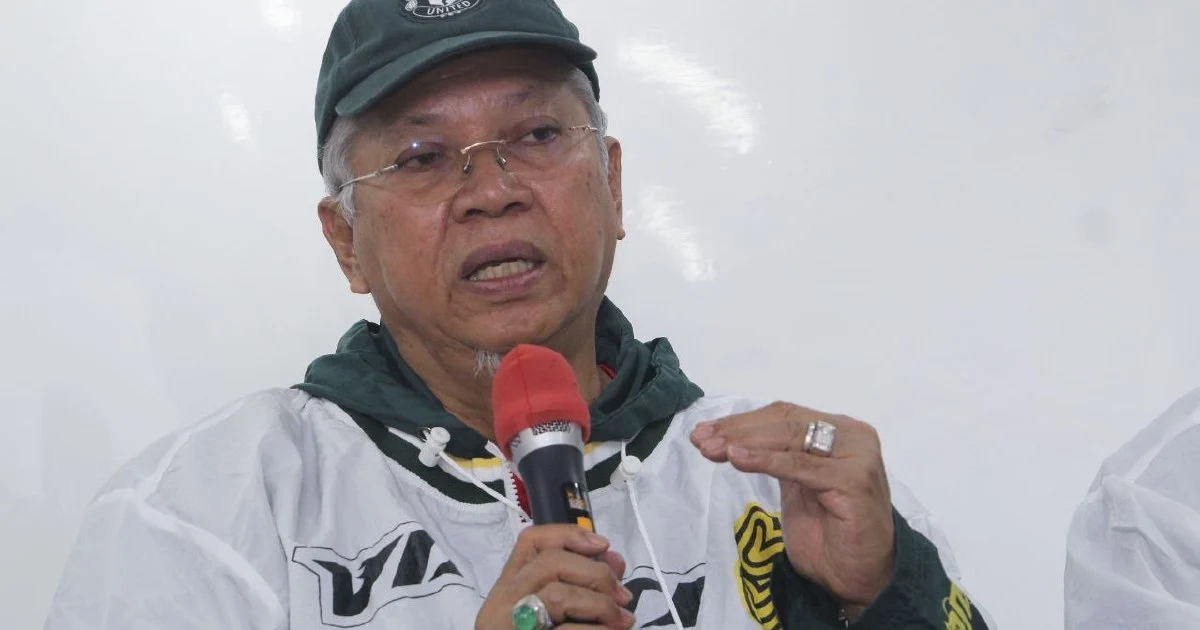
Perikatan Nasional signalled its readiness to contest a general election at any point in 2024, declaring that its party machinery has been positioned across the country to respond swiftly if snap polls are announced. Speaking in Kota Baru, senior PN leadership made clear the coalition maintains operational capacity to field candidates and mount campaigns without delay, suggesting the opposition bloc has invested considerable resources in maintaining electoral preparedness despite the absence of an immediate election announcement.
The statement reflects broader political tensions within Malaysia's parliamentary system, where coalition governments have faced growing pressure from their own backbenchers and shifting voter sentiment. By publicly declaring readiness, PN appears to be signalling confidence while simultaneously preparing its grassroots supporters for the possibility of early dissolution, a tactic commonly employed by opposition parties seeking to project strength and inevitability.
Malaysia's electoral landscape has grown increasingly volatile since the 2022 general election produced a hung parliament and ultimately enabled the formation of the Unity Government. The relative fragility of coalition arrangements has fuelled persistent speculation about snap elections, with observers noting that any significant loss of parliamentary seats or defections could trigger premature polls. PN's preparedness messaging must be understood within this context of precarious coalition arithmetic at the national level.
The coalition's claim of activated machinery at all levels suggests substantial investment in party infrastructure, particularly within its Malay-Muslim base constituencies where PAS maintains significant organisational presence. This grassroots readiness carries particular significance in constituencies where voters have demonstrated sensitivity to religious and cultural messaging, areas where PN traditionally performs competitively. The pre-positioning of campaign apparatus demonstrates the coalition recognises that early elections often reward parties with superior ground organisation.
Regionally, PN's electoral positioning varies considerably. In Kelantan, where the statement was made, PAS operates as a governing party with administrative resources, providing distinct advantages over federal-level opposition campaigning. Conversely, in states like Selangor and Perak, PN operates as a minority opposition force facing the Unity Government's institutional machinery. This uneven landscape requires the coalition to tailor its preparedness strategies by state and region, a complexity often underestimated in national-level political commentary.
The timing of such declarations frequently carries strategic weight. By announcing readiness before any formal election call, PN seeks to demonstrate unity and capability to its supporters while signalling to potential swing voters that a credible alternative government exists. Such positioning matters considerably in Malaysian politics, where voter perception of a party's viability directly influences electoral support, particularly among moderate middle-class voters who retain genuine persuadability between elections.
Peikatan Nasional's coalition composition, encompassing PAS, Bersatu, and various component parties, creates both organisational strengths and coordination challenges. PAS brings established grassroots networks built over decades of opposition and recent governance experience. Bersatu contributes former ruling-party machinery and the political infrastructure developed during its time in government. These complementary resources theoretically enable the coalition to mobilise rapidly, though historical evidence suggests friction between component parties sometimes impedes coordination during crucial campaign periods.
For Malaysian voters observing this political manoeuvring, the broader implication concerns governance stability and policy continuity. Early elections generate substantial economic uncertainty, discourage long-term business investment, and divert government attention from service delivery towards campaign preparation. PN's readiness messaging, while conventional opposition rhetoric, underscores the current reality that neither the government nor opposition can entirely discount snap poll scenarios, a condition that affects policy implementation and economic confidence beyond the immediate electoral domain.
The Opposition coalition's election preparedness also reflects lessons learnt from previous campaigns where organisational shortcomings disadvantaged PN candidates. Since the 2022 election, the coalition has invested in digital campaign infrastructure, candidate training programmes, and grassroots volunteer mobilisation, improvements aimed at translating voter sympathy into actual seat gains. Previous elections demonstrated that PN's vote share often exceeds its seat count due to suboptimal candidate deployment and geographic concentration of support, problems that could potentially be addressed through enhanced planning and analysis.
International observers tracking Malaysian politics note that snap elections have become increasingly frequent globally, reflecting both the instability of current coalition politics and deliberate tactical calculations by incumbent parties seeking opportune polling moments. Malaysia appears vulnerable to this trend given its post-2022 parliamentary arithmetic, making PN's preparedness stance rationally justified rather than merely opportunistic positioning. The coalition's activation of campaign machinery represents prudent political housekeeping in an environment where electoral timing remains genuinely uncertain.
Looking forward, PN's expressed readiness establishes baseline expectations for opposition performance, creating implicit commitments regarding seat targets and campaign intensity that will be measured against actual results should elections materialise. The coalition has positioned itself to argue that adequate preparation resources enable enhanced electoral performance, though numerous factors beyond preparedness—demographic shifts, policy performance evaluations, and leadership perception changes—ultimately determine electoral outcomes in Malaysia's complex political environment.


