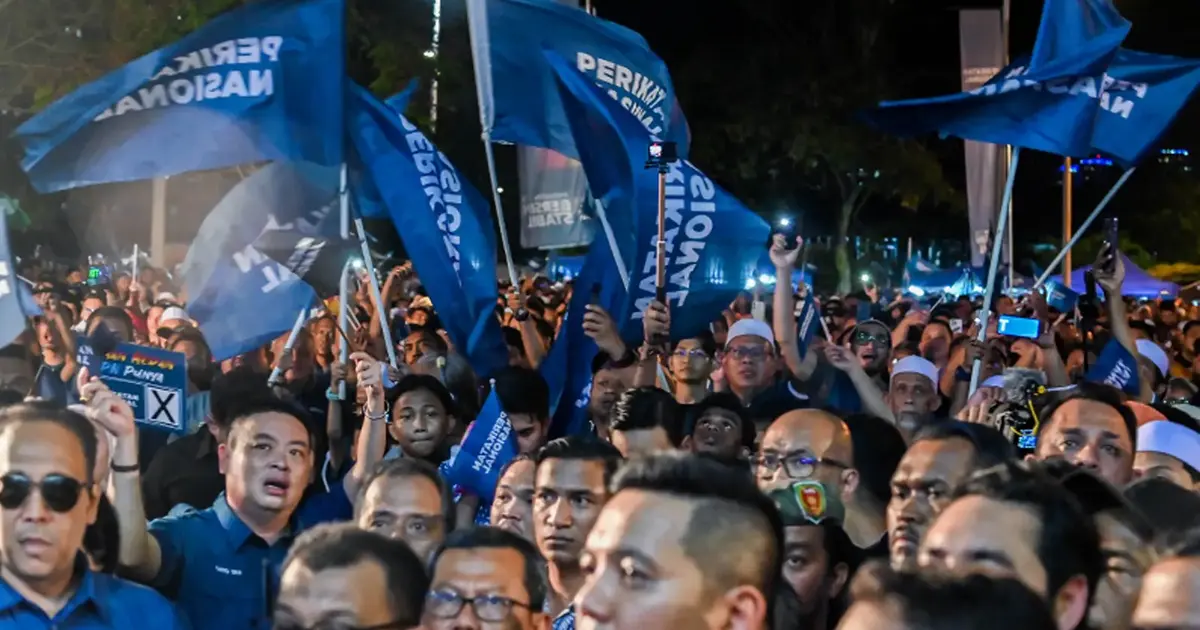
The Perikatan Nasional coalition faces mounting risks of internal collapse as relations between its two dominant components, PAS and Bersatu, continue to deteriorate, according to political analysts monitoring developments within the opposition alliance. The deterioration represents a significant threat to the coalition's cohesion and electoral viability, particularly as Malaysia enters a period of heightened political uncertainty ahead of potential national elections.
Yusri Ibrahim, chief researcher at the Ilham Centre, characterises the ongoing dispute between the two parties as having progressed into what he describes as a "guerrilla war" phase. This assessment suggests that the conflict has moved beyond public disagreements and parliamentary maneuvering into a more covert, fragmented form of internal sabotage and competing influence-building. Such territorial battles within coalitions typically precede larger fractures, as individual party leaders prioritise factional interests over collective institutional survival.
The friction between PAS and Bersatu reflects deeper structural incompatibilities within Perikatan Nasional. While both parties opposed the Pakatan Harapan administration and cooperated during the 2022 elections, their underlying ideological orientations and strategic ambitions diverge substantially. PAS, as an Islamic-based party with a decades-long history of grassroots organisation in rural and semi-urban areas, operates from a fundamentally different organisational logic than Bersatu, which emerged more recently as a faction-based party built around individual political personalities.
These organisational differences have manifested in competing claims over policy direction, leadership hierarchy, and resource allocation within the coalition. Each party seeks to advance its own interests within the broader alliance while simultaneously constraining the other's influence. Such dynamics are particularly acute in Malaysian coalition politics, where allocating ministerial posts, parliamentary committees, and campaign resources becomes a zero-sum contest between allied parties.
The timing of these tensions carries particular significance for Malaysian political realignment. As the ruling Pakatan Harapan government navigates its own internal contradictions—most notably between PKR and DAP over development priorities and seat allocations—the simultaneous fragmentation of the opposition coalition creates a volatile competitive environment. Neither bloc appears capable of commanding overwhelming voter confidence, suggesting that coalition stability will heavily determine electoral outcomes.
For Perikatan Nasional, the stakes involve more than mere internal discord. The coalition entered recent elections with a substantial vote share, particularly in northern and eastern states, and holds significant parliamentary representation. If internal conflict prevents the coalition from presenting unified campaigns and coherent policy messaging, that voter base could fragment toward independent candidates, regional parties, or even defect to competing coalitions. Such defections would substantially weaken the coalition's national bargaining position.
The "guerrilla war" characterisation is particularly illuminating because it suggests the conflict operates through informal channels—back-channel negotiations, media campaigns, selective information leaks, and factional organising—rather than formal institutional mechanisms. This form of conflict proves corrosive to coalition structures precisely because it operates outside transparent decision-making frameworks. Party members become uncertain about institutional loyalties and future allegiances, potentially triggering their own defections and organisational departures.
Historical precedent in Malaysian coalition politics suggests that such internal warfare rarely concludes with peaceful reconciliation. Instead, coalitions experiencing this intensity of friction typically proceed toward either formal dissolution, major restructuring with significant personnel changes, or a dramatic shift in internal power dynamics that marginalises one faction or forces a dominant party to assert authority. Each outcome carries different implications for Malaysian politics.
The vulnerability of Perikatan Nasional at this juncture also reflects the broader fragmentation of Malaysian political coalitions. Both government and opposition blocs have experienced membership volatility, defections, and internal policy conflicts that undermine their institutional capacity. This structural weakness potentially creates openings for new political formations or individual politicians to accumulate bargaining power by offering themselves as coalition brokers or kingmakers.
For Malaysian voters concerned with political stability and policy consistency, the deterioration of Perikatan Nasional represents another indication that existing coalition structures increasingly struggle to accommodate diverse party interests and organisational cultures. The repeated pattern of coalition tensions across both government and opposition suggests systemic challenges within Malaysia's coalition-dependent political system rather than temporary management difficulties.
Observers of Malaysian politics recognise that the next phase of this conflict will likely determine whether Perikatan Nasional survives as a coherent electoral force or fragmentizes into competing factions. The party leadership's ability to establish agreed-upon mechanisms for resource distribution, policy coordination, and leadership succession will prove decisive. Without such frameworks, the guerrilla war characterisation suggests fighting will only intensify.


