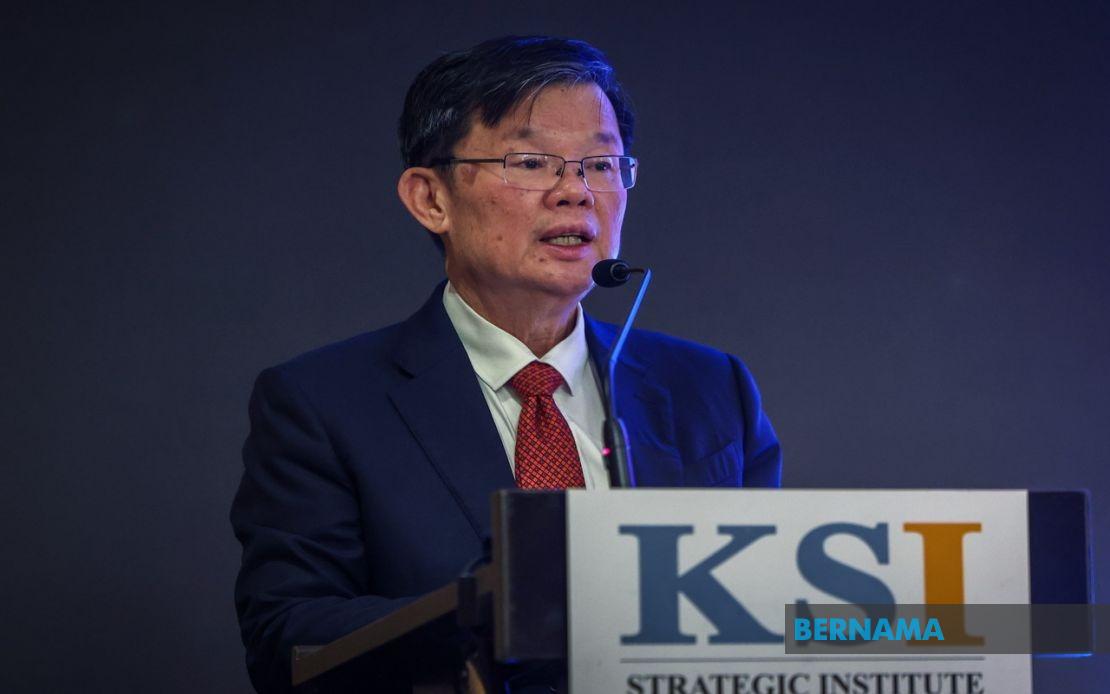
Penang's Pakatan Harapan coalition has renewed its commitment to fielding more women candidates in the forthcoming state election, but the recruitment pipeline remains constrained by a shortage of suitable candidates willing to contest, according to coalition chairman Chow Kon Yeow. Speaking during the World Women Economic and Business Summit 2026 in George Town on June 15, the Penang Chief Minister acknowledged that while the aspiration to boost female political participation is genuine, converting this into electoral reality depends on having enough qualified women prepared to put themselves forward for nomination.
The 30 per cent representation target has become a cornerstone of Malaysian political discourse since its introduction in 2009, yet the nation remains significantly short of this benchmark. Current figures paint a sobering picture: women comprise merely 13.5 per cent of Members of Parliament and 12 per cent of state assemblypersons across the country. This persistent gap underscores how systemic barriers and cultural attitudes continue to discourage female involvement in electoral politics, even as progress accelerates in professional and entrepreneurial spheres. For Penang specifically, Chow stressed that his coalition remains proactive in supporting gender parity goals, yet the practical challenge of identifying sufficient candidates qualified and motivated enough to contest elections keeps proving elusive.
The distinction Chow drew between aspiration and implementation reflects a reality many parties across Southeast Asia grapple with. While political organisations publicly champion women's advancement, the candidate selection process often reveals structural constraints that hinder recruitment. These include limited access to party networks, insufficient mentoring pathways, and inadequate support systems for potential female candidates navigating both campaign pressures and domestic expectations. The Penang PH leader suggested that the issue lies not primarily with party reluctance but rather with the broader pool of candidates willing to subject themselves to the intense scrutiny and personal demands inherent in political contests.
Chow's remarks carry particular weight given Malaysia's position within the region. As a nation with rising female participation in education, business, engineering, and public service, the disconnect between professional advancement and political representation becomes increasingly glaring. Women have demonstrated capability and excellence across sectors, yet the transition into electoral politics remains disproportionately difficult. This phenomenon suggests that barriers are not rooted in ability but rather in institutional design, campaign culture, and the specific pressures—real or perceived—facing female candidates in ways male counterparts do not experience identically.
The Chief Minister proposed concrete mechanisms to address this bottleneck. Political parties, he argued, should institutionalise the 30 per cent target directly into their candidate selection frameworks, making it a binding procedural requirement rather than an aspirational goal that can be deferred. This approach would move beyond rhetorical commitment to enforceable policy. Beyond nomination processes, Chow identified the need for equal gender representation on party decision-making committees, ensuring that women occupy positions where candidate selection and resource allocation decisions are made. Such structural changes would increase female influence over the very mechanisms that determine candidate viability and campaign support.
Equally important, Chow highlighted the necessity of strengthening mentoring and resource access for emerging women leaders. The political pipeline requires intentional cultivation at multiple stages—identification of potential candidates, capacity building, campaign finance access, and sustained support through contested elections. Without deliberate institutional investment in these areas, even parties genuinely committed to gender parity will continue facing recruitment challenges. This mirrors approaches adopted in corporate governance across Malaysia and Singapore, where formal mentorship programmes and targeted leadership development for women have yielded measurable improvements in female representation at senior levels.
The Penang context adds nuance to this broader Malaysian conversation. As a state governed by PH and positioned as relatively progressive on social issues, Penang's experience with candidate recruitment holds lessons for the coalition nationally. If even a state with strong PH organisational capacity and progressive credentials struggles to identify sufficient willing female candidates, the challenge likely intensifies in more conservative regions. This suggests that the bottleneck is not merely a supply problem but reflects how political candidacy—with its demands, risks, and cultural baggage—discourages female participation even among capable, qualified women.
The timing of Chow's remarks during an economic and business summit is instructive. He deliberately linked women's political participation to their proven success in economic spheres, underscoring that female candidates possess the competence, intelligence, and drive necessary for elected office. The problem is not capability but rather the specific environment and expectations surrounding electoral politics. By presenting this argument at a business-focused venue, Chow implicitly challenged both the private sector and society broadly to recognise that structural barriers—not inherent limitations—explain the representation gap.
For Malaysian political observers and regional analysts, the Penang PH position illustrates a broader challenge confronting Southeast Asian democracies. Gender parity in political representation requires moving beyond symbolic commitments to systematic institutional reform. This includes creating formal candidacy pipelines for women, establishing quota systems with teeth, ensuring party structures themselves reflect gender balance, and redesigning campaigns to accommodate diverse family and social circumstances. Without these measures, even well-intentioned parties will continue facing recruitment difficulties, perpetuating the current gender imbalance in legislatures across the region.
The path forward likely involves recognising that increasing women's political representation is not solely a matter of persuading individual women to stand for election. Rather, it requires transforming the political environment itself—its reward structures, support systems, and cultural assumptions—to make electoral participation equally viable and attractive for women as for men. Penang PH's acknowledgment of current limitations, paired with its stated commitment to institutional changes, suggests a movement in this direction. Whether such reforms translate into meaningfully higher women candidate numbers in the next state election will provide an important regional case study on whether Asian democracies can effectively bridge the gap between gender parity aspirations and electoral reality.