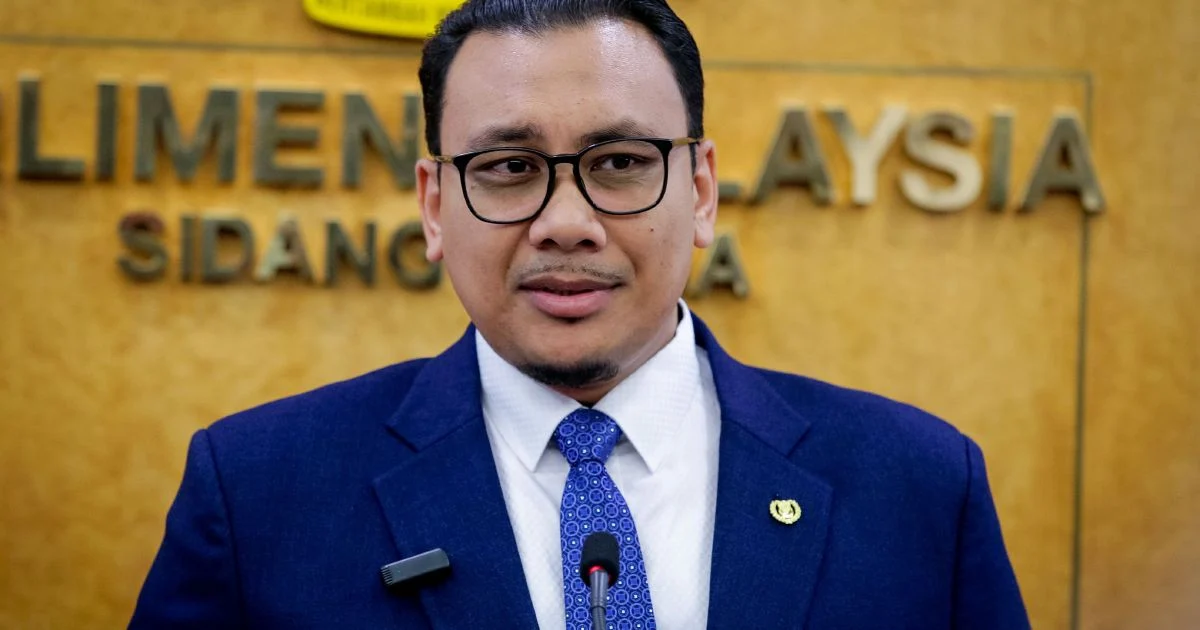
The youth wing of Pan-Malaysian Islamic Party has escalated its response to an alleged social media attack on the family of its leader. Afnan Hamimi Taib Azamudden, who heads PAS Youth, has instructed his legal representatives to proceed with formal legal proceedings in response to a Facebook post he claims originated from a senior figure within the Barisan Nasional coalition partner Bersatu. The move reflects the increasingly fraught relationship between coalition partners and the willingness of political actors to pursue judicial remedies for online disputes.
The precise nature of the alleged insulting content has not been fully detailed in public disclosures, though the youth leader characterises the post as attacking both his father and the broader family unit. This escalation comes at a time when Malaysian social media discourse has become increasingly contentious, with politicians frequently engaging in rhetorical combat through digital platforms. The decision to pursue formal legal action rather than respond through public statements suggests the PAS Youth leadership views the matter as sufficiently serious to warrant intervention through the courts.
Bersatu, officially the Malaysian United Indigenous Party, joined the Barisan Nasional coalition in 2023 and has since become a significant component of the ruling alliance alongside UMNO and MIC. This internal alliance tension highlights the fragility of the coalition arrangement, where political rivalries and personal grievances can create friction even among ostensibly allied parties. The incident underscores how personality-driven politics and family connections remain central to Malaysian political dynamics, with attacks on political figures often extending to their relatives.
The reliance on legal mechanisms to address political speech raises broader questions about the relationship between defamation law and political discourse in Malaysia. Courts have historically been called upon to adjudicate disputes between politicians, though such cases raise complex questions about the boundaries between legitimate political criticism and actionable defamation. For observers of Malaysian politics, this development signals that coalition partners remain willing to engage in adversarial legal postures even while sharing government responsibility.
The involvement of lawyers and the formal instruction to pursue legal remedies indicates that PAS Youth regards the alleged post as crossing a threshold from ordinary political disagreement into personal attack territory. In Malaysian political culture, where family honour carries significant weight, any perceived insult to a politician's relatives can provoke stronger reactions than attacks on the politician individually. This particular case appears to reflect that dynamic, with the youth leader taking action motivated partly by defense of his father's reputation.
Bersatu's position within Malaysian politics has been complicated by internal leadership transitions and its relationship with former Prime Minister Muhyiddin Yassin. The party joined Barisan Nasional partly to stabilise its political standing after the collapse of the Perikatan Nasional coalition in 2022. However, tensions with other coalition components, including PAS, occasionally surface publicly and through social media channels, suggesting that underlying ideological and practical differences persist beneath the surface of electoral cooperation.
The timing of this legal action carries implications for coalition unity as the government approaches potential electoral tests. Any high-profile legal dispute between PAS and Bersatu could attract media attention and potentially embarrass the broader alliance, though both parties likely anticipate that the matter will be resolved quietly through legal processes. For Malaysian voters and political observers, such internal alliance tensions provide insights into the actual state of cooperation between coalition parties and whether their electoral partnership reflects genuine political alignment or pragmatic power-sharing arrangements.
The incident also reflects the broader evolution of Malaysian political communication, where Facebook and other social media platforms have become primary venues for political messaging and counter-messaging. Unlike traditional press conferences or parliamentary statements, social media posts operate with minimal institutional oversight and can escalate disputes rapidly before official responses are formulated. This particular case demonstrates how platform-based communication can trigger formal legal machinery, creating consequences that informal digital exchanges might not otherwise generate.
PAS Youth's decision to pursue legal action rather than respond solely through counter-messaging on social media suggests a calculated strategy aimed at deterring future similar posts and establishing a clear boundary against what the youth leader views as unacceptable political behaviour. Whether other Malaysian politicians facing online criticism will follow suit remains to be seen, though the precedent could influence how political figures respond to social media attacks in the future. The case will likely proceed through the courts over coming months, with the legal system ultimately determining whether the post meets the threshold for actionable defamation under Malaysian law.