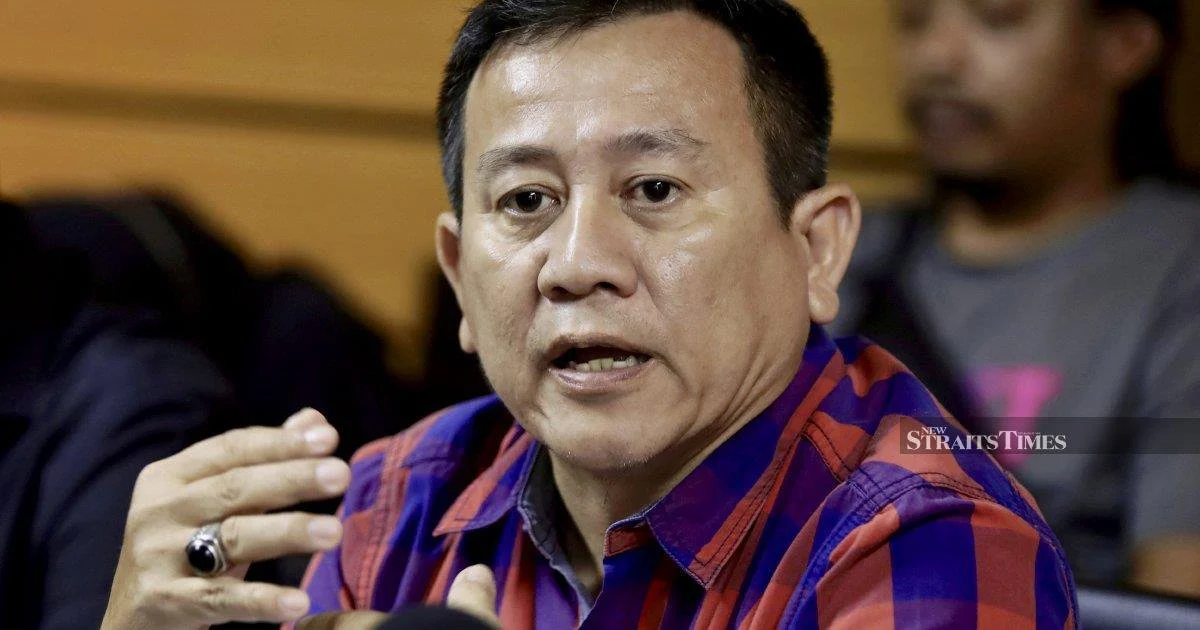
A senior figure within Bersatu has publicly voiced concerns about the Islamic Party of Malaysia's (PAS) intensifying bid to cement its authority over the Perikatan Nasional coalition, with recent adjustments to the partnership's top-level structure signalling what party officials characterise as an assertive power play. Datuk Tun Faisal Ismail Aziz, who serves as the information chief for Bersatu, has interpreted these organisational shifts as deliberate moves by PAS to fortify its standing within the broader political alliance, marking what observers describe as a notable escalation in intra-coalition dynamics.
The restructuring of Perikatan Nasional's leadership hierarchy has become a focal point for political commentary in Malaysian circles, with commentators viewing these changes through the prism of coalition management and power distribution among member parties. Tun Faisal's remarks suggest growing friction beneath the surface of what has been portrayed as a united political bloc, particularly regarding questions about how decision-making authority flows through the alliance's institutional framework. Such tensions between coalition partners are not uncommon in Malaysian politics, where multi-party alliances must constantly balance the interests and ambitions of diverse membership bases.
The Perikatan Nasional, formed in 2020 and repositioned following the 2022 general election, brings together parties with distinct ideological orientations and electoral bases. PAS, as the dominant Islamic party in the coalition, naturally wields considerable influence, yet the suggestion that it is actively expanding this influence through structural changes raises questions about the alliance's internal governance. For Bersatu, which emerged from UMNO and has sought to establish itself as a significant player in Malaysian politics, maintaining relevance within Perikatan Nasional is strategically crucial, making concerns about disproportionate power concentration particularly acute.
The broader implications of PAS's consolidation efforts extend beyond internal coalition mechanics to touch on how the Perikatan Nasional might evolve in the coming years. With PAS strengthening its institutional position within the alliance, there is potential for the coalition to reflect increasingly the priorities and worldview of the Islamic party. This could influence policy directions, particularly regarding matters touching on religion, culture, and governance approaches that touch on Islamic principles, domains where PAS has traditionally emphasised its leadership credentials.
Tun Faisal's public characterisation of PAS's approach as iron-fisted represents a calculated political statement, signalling to Bersatu's membership and supporters that the party is vigilant about protecting its interests within the coalition. In Malaysian coalition politics, such public warnings often serve multiple purposes: they alert party members to the stakes involved in ongoing negotiations, they position speakers as defenders of their party's autonomy, and they communicate negotiating positions to other stakeholders without resorting to closed-door discussions alone.
The timing of these observations also matters in the context of Malaysian political cycles. With regional and eventually national electoral considerations potentially on the horizon, coalitions naturally experience heightened internal tensions as member parties position themselves to maximise their electoral prospects and post-election bargaining power. PAS's efforts to consolidate its structural influence might be interpreted as a proactive measure to strengthen its hand in potential future negotiations with coalition partners or, alternatively, as preparation for scenarios where the coalition's composition might shift.
For ordinary Malaysians and political observers, such internal coalition dynamics carry practical implications. The stability and coherence of the Perikatan Nasional affects the political landscape's competitive structure, influencing how effectively different political blocs can govern or offer alternatives. Likewise, the relationship between PAS and Bersatu within the coalition has ramifications for how policies are formulated and implemented, particularly in states where these parties hold significant political sway. The Muslim-majority composition of both parties means their cooperation remains essential for governing coalitions that seek legitimacy among Malaysia's predominantly Muslim population.
Bersatu's decision to voice these concerns publicly rather than manage them through private channels suggests the party considers this matter sufficiently important to alert its political constituency. This approach reflects broader patterns in Malaysian politics where coalition partners use media commentary and public statements to negotiate internal disputes, believing that transparency with supporters provides political cover for difficult negotiations. The frank characterisation of PAS's behaviour as increasingly iron-fisted also serves to frame Bersatu as the more conciliatory coalition partner, potentially useful positioning if intra-alliance disputes intensify.
Moving forward, the relationship between PAS and Bersatu will warrant close monitoring as it directly affects the Perikatan Nasional's stability and effectiveness. Whether these structural changes represent a manageable adjustment to coalition governance or signal deeper fissures remains to be seen. The Islamic party's consolidation efforts, if unchecked, could indeed marginalise smaller coalition partners, though such developments might also trigger realignments that reshape Malaysia's political configuration. For now, Tun Faisal's remarks serve as a public reminder that behind every coalition's unified facade lies complex negotiations over power, influence, and organisational authority.


