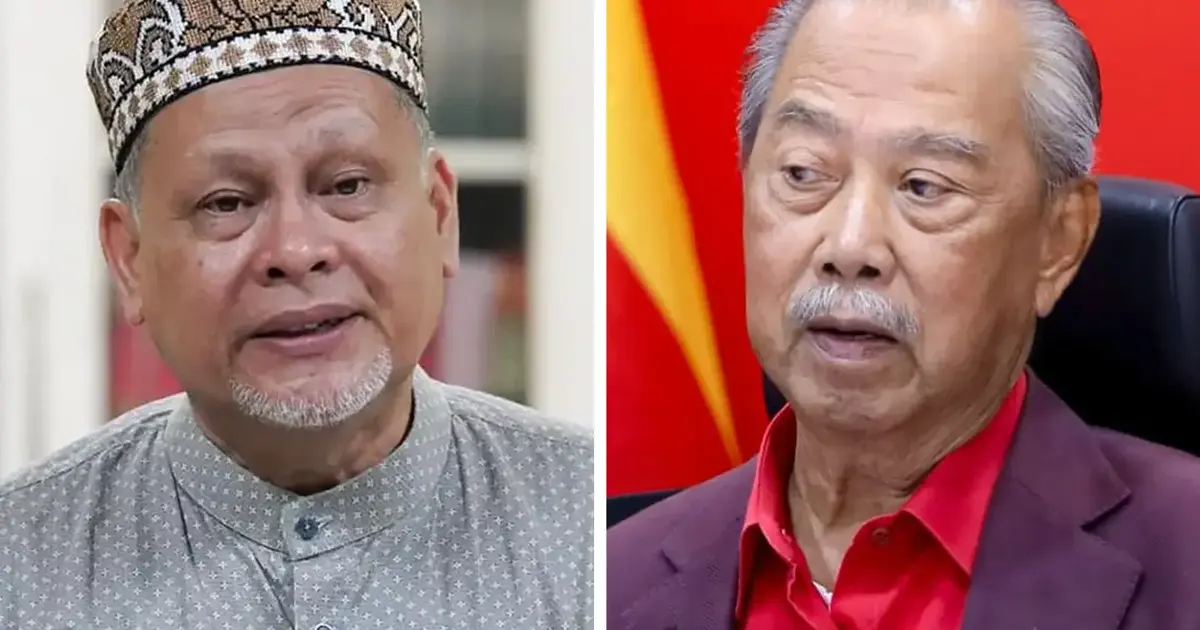
The relationship between PAS and Bersatu faces new strain after PAS vice-president Amar Abdullah publicly criticized Bersatu president Muhyiddin Yassin over recent statements about electoral competition. Amar Abdullah characterised Muhyiddin's talk of mounting challenges against PAS-held seats as fundamentally incongruous with their status as coalition partners, signalling that the Perikatan Nasional alliance operates under implicit rules about loyalty that cannot be casually disregarded. The rebuke represents an escalation in simmering tensions between two major Malay-Muslim parties that have jointly governed in various state administrations but maintain divergent political ambitions.
Muhyiddin Yassin, who chairs Bersatu and serves as opposition leader in parliament, has recently signalled intentions to expand his party's parliamentary representation and electoral footprint. However, Amar Abdullah's response suggests this ambition, if directed against PAS constituencies, violates an unspoken covenant within the Perikatan Nasional framework. The PAS official described such positioning as inherently contradictory—a party cannot simultaneously claim partnership while preparing to contest against allies in competitive electoral battles. This framing imposes a binary choice on Bersatu: maintain the coalition arrangement and refrain from challenging PAS, or pursue aggressive electoral expansion under a different political arrangement.
The timing of this public disagreement carries implications beyond internal coalition management. Malaysia's political landscape has grown increasingly fragmented following the 2022 general election, which produced a parliament without a single dominant coalition. The Perikatan Nasional alliance, comprising PAS, Bersatu, and smaller parties, forms the primary opposition bloc but remains vulnerable to internal fractures. When constituent parties publicly squabble over electoral boundaries and competitive intentions, external observers and potential defectors perceive weakness. For a coalition seeking to position itself as a credible alternative government, such open disagreements undermine coherence and raise questions about governance capacity.
PAS, as the coalition's largest component by parliamentary seats, enjoys considerable negotiating power over seat allocation and electoral strategy. The party has successfully consolidated Islamist politics under its banner and competes not only with Barisan Nasional but also with Anwar Ibrahim's Democratic Action Party for religious conservative voters. By publicly demanding that Bersatu choose between loyalty and expansion, PAS reasserts its dominance within the opposition coalition and establishes boundaries that newer parties must respect. Amar Abdullah's intervention serves as a public reminder that PAS will not passively accept smaller allies positioning themselves as equals in the political arena.
Bersatu's strategic position presents genuine complexity. The party has suffered from internal divisions, leadership transitions, and the departure of prominent members since its formation in 2016. Muhyiddin's tenure as opposition leader has given Bersatu renewed prominence, yet the party remains significantly smaller than PAS in parliamentary representation. Coalition membership provides protection and institutional legitimacy, but it also constrains electoral ambitions by reserving certain constituencies for partners. Bersatu faces pressure to demonstrate growth and relevance to members who might otherwise defect to larger, more established parties offering clearer pathways to advancement.
The broader context involves Malaysia's constitutional monarchy system and the expectation that opposition coalitions will eventually become government coalitions. Political observers note that parties typically resolve such tensions either through explicit power-sharing agreements that designate safe seats for each partner, or through mergers that eliminate duplication. The Perikatan Nasional has not formally published such seat-sharing arrangements, leaving ambiguity that allows for exactly this type of dispute. Unlike some democracies where coalitions negotiate coalition agreements signed before elections, Malaysian parties often operate on looser understandings that become contentious when tested.
For Malaysian voters and political analysts, this exchange illuminates the challenge of opposition governance. While Pakatan Harapan's collapse in 2020 demonstrated the fragility of centrist coalitions, the Perikatan Nasional faces different pressures rooted in ideological competition and personality-driven leadership. PAS and Bersatu share Malay-Muslim constituencies but project different visions of Islamic governance and state power. The party machinery matters less in this relationship than personal networks and strategic calculations about future dominance. Muhyiddin and PAS president Abdul Hadi Awang maintain separate bases of support, making coordination perpetually contingent.
The implications for Southeast Asia's broader political ecosystem merit consideration. Malaysia's opposition coalition dynamics influence regional perceptions of democratic competition and pluralism. When major opposition parties engage in public disputes over basic principles like coalition loyalty, it suggests either maturation toward transparency or instability depending on interpretation. Regional observers in Singapore, Indonesia, and Thailand watch Malaysian political arrangements for lessons about managing diverse coalition partners and maintaining coherent opposition movements. The Perikatan Nasional's trajectory will partially determine whether diverse but competing parties can sustain effective collaborative arrangements without formal institutional safeguards.
Looking ahead, Bersatu must decide whether Amar Abdullah's intervention reflects formal PAS policy or represents one official's forcefully expressed opinion. If the former, Muhyiddin faces immense pressure to either scale back expansion rhetoric or initiate coalition-exit discussions with remaining allies. If the latter, Bersatu gains negotiating room to continue exploring electoral opportunities while ostensibly remaining committed to Perikatan Nasional. The next political moves—whether Muhyiddin responds, whether PAS escalates pressure, or whether both parties seek negotiated clarification—will signal whether this coalition can weather internal disagreement or faces the potential unraveling that has historically characterized Malaysian opposition politics.