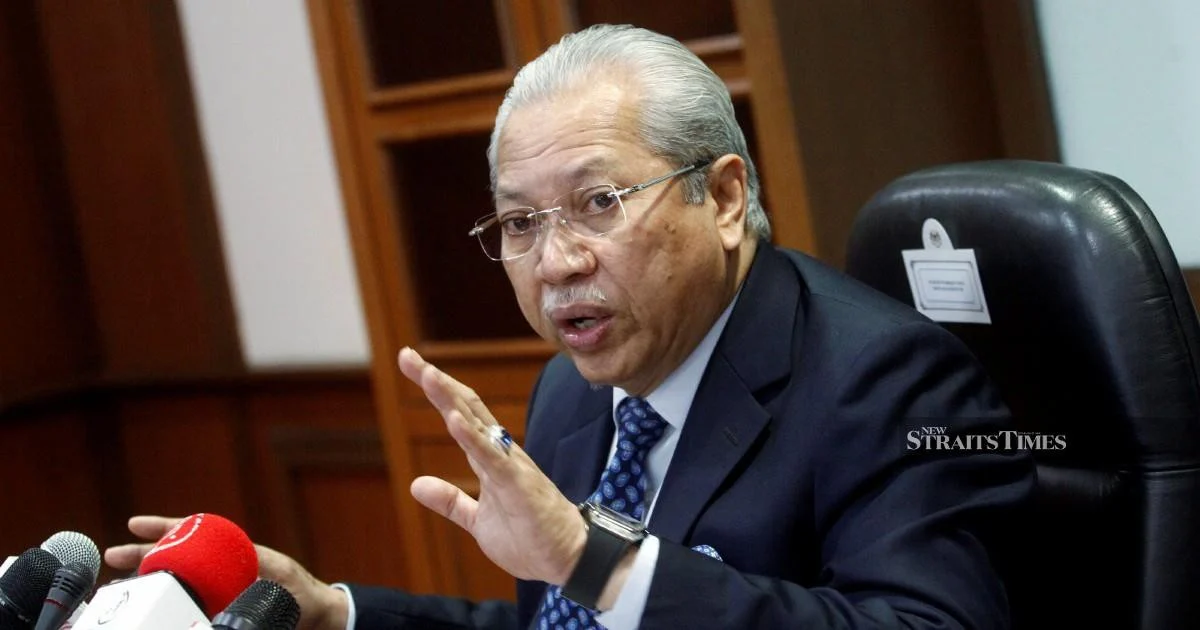
PAS President Annuar Musa rejected suggestions that his party had initiated moves to remove Bersatu from the Perikatan Nasional coalition, dismissing accounts of a deliberate campaign to undermine the smaller party's position within the alliance. Speaking in Kota Baru, the Pas leader made clear that while tensions have surfaced between the two organisations, these disagreements have not translated into any formal attempt to exclude Bersatu from the PN structure.
The remarks come amid what observers have characterised as a cooling relationship between PAS and Bersatu, the two principal components of Perikatan Nasional. The coalition, which emerged as a significant force in Malaysian politics following the 2022 general election, has faced questions about its internal cohesion as both parties navigate their separate political interests and strategic objectives. Annuar's intervention appears designed to quell speculation that internal fractures could destabilise the alliance ahead of potential future electoral contests.
Rivalries between PAS and Bersatu have occasionally surfaced in public discourse, with commentary suggesting fundamental differences in their approaches to governance and coalition management. However, the distinction between surface-level disagreements and deliberate removal efforts remains significant. PAS, as the larger partner by parliamentary representation and electoral performance, technically possesses greater influence within PN structures, yet Annuar's statement emphasises restraint in exercising such leverage against its junior ally.
For Malaysian political observers, the clarification carries implications beyond simple coalition housekeeping. Perikatan Nasional represents a consolidation of Malay-Muslim political interests that fractured following the collapse of the previous BN-PAS alliance. Any permanent rupture between PAS and Bersatu could substantially weaken the coalition's ability to function as a cohesive political force, potentially opening space for realignment with other parties or constituencies. Annuar's categorical denial therefore serves both to stabilise internal confidence and to project outward unity to potential supporters and wavering coalition members.
Bersatu, led by Muhyiddin Yassin, emerged from UMNO but has pursued an independent trajectory since. The party's entry into PN created space for a political coalition explicitly constructed around Malay and Islamic-centred governance frameworks. Yet Bersatu's relatively smaller parliamentary footprint compared to PAS has occasionally raised questions about its negotiating position and influence in coalition decision-making. These structural asymmetries, combined with distinct organisational cultures and leadership personalities, have naturally generated friction points.
The timing of Annuar's statement reflects broader volatility in Malaysian coalitional politics. Neither PN as an opposition-leaning alliance nor the ruling Pakatan Harapan coalition operates with absolute stability. Political managers in both blocs must constantly manage intra-coalition tensions while maintaining public appearances of unity. For PAS, explicitly denying involvement in exclusionary tactics against Bersatu reinforces its commitment to PN's continued operation as a functional political entity capable of presenting itself as an alternative government.
Southeast Asian coalition dynamics more broadly demonstrate that multi-party alliances invariably experience internal strains. The durability of such arrangements depends heavily on leaders' ability to manage disputes without allowing them to metastasise into existential threats. Annuar's intervention suggests that while PAS-Bersatu tensions exist, they remain within manageable boundaries. The alternative—visible, escalating conflict over coalition membership—would damage both parties and invite intervention from external actors seeking to exploit divisions.
From a regional perspective, Malaysia's coalition fluidity distinguishes it within Southeast Asia's political landscape. Thailand's rigid party coalitions, Indonesia's more fragmented system, and Singapore's dominant-party model all operate differently. Malaysia's experience with multiple consecutive coalition reconfiguraciones offers unique lessons about maintaining multi-party structures amid ideological convergence and organisational rivalry.
Bersatu's position within PN also reflects broader calculations about political viability. The party's founders, primarily defectors from UMNO, recognised that a genuinely separate political identity required coalition partnership with PAS to achieve electoral relevance. Bersatu alone lacks the grassroots machinery and demographic reach that PAS commands. This mutual dependence, while occasionally creating friction, ultimately incentivises continued cooperation over dramatic ruptures.
The clarification from Annuar thus represents calculated political messaging—reinforcing PN's operational continuity while acknowledging that disagreements naturally occur within any coalition structure. For Malaysian voters and political analysts observing these dynamics, such statements offer windows into how coalition leaders balance competing interests. PAS has effectively communicated that internal management differences need not portend fundamental instability, even as both parties continue pursuing distinct political objectives within the broader PN framework.