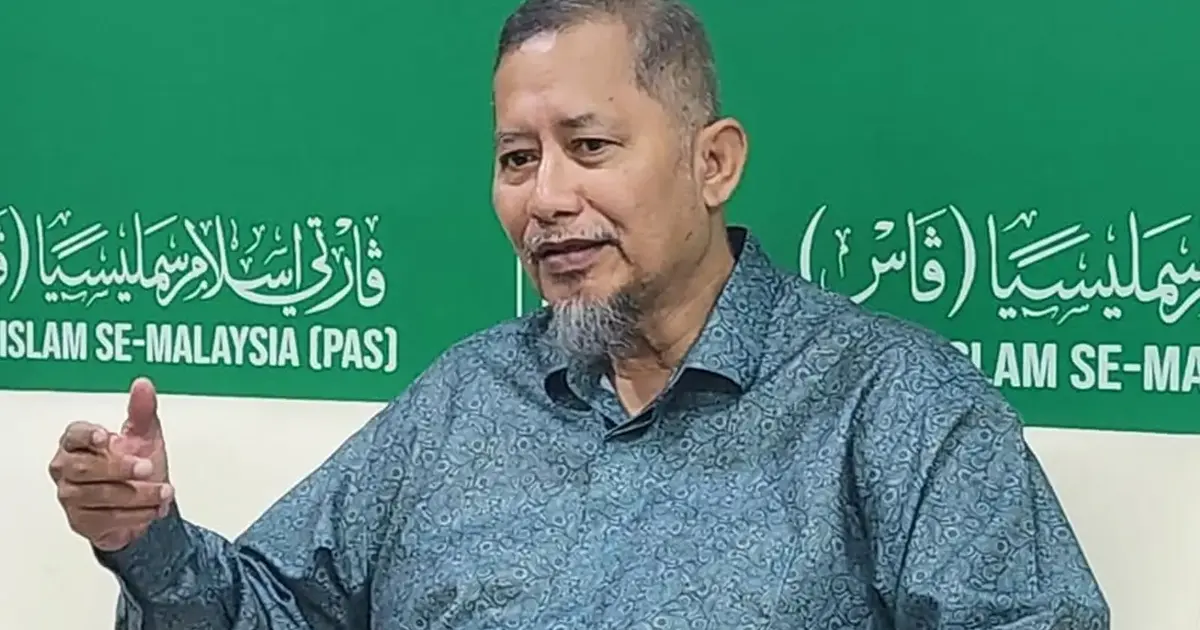
PAS has thrown down a gauntlet to Bersatu, with party treasurer Iskandar Abdul Samad declaring that the Islamic party would emerge victorious should the two groups find themselves at odds during polling day. The assertion reflects intensifying tensions within Malaysia's opposition coalition as both parties jostle for influence and dominance among their overlapping voter bases.
Iskandar's pronouncement carries considerable weight within PAS circles, as the treasurer's position places him among the party's senior decision-makers and strategic voices. His confidence appears rooted in the calculation that PN supporters—voters aligned with the broader Perikatan Nasional coalition of which both parties are members—would ultimately gravitate toward PAS in a head-to-head contest. This confidence suggests that PAS views itself as the stronger draw among the opposition electorate, particularly in constituencies where the two parties might directly compete.
The tension between PAS and Bersatu has simmered for months, reflecting deeper structural problems within the opposition. While both parties have nominally aligned under the PN banner, they maintain separate organisations, distinct policy priorities, and competing leadership ambitions. Bersatu, led by former Prime Minister Muhyiddin Yassin, has sought to position itself as a progressive alternative within the opposition, while PAS has consolidated its Islamic credentials and grassroots mobilisation capabilities across the Malay-Muslim heartland.
Electoral mathematics underscore the significance of Iskandar's remarks. Malaysia's first-past-the-post system means that vote-splitting between ideologically similar or structurally aligned parties can devastate both competitors. In the 2022 general election, the opposition's failure to present a unified front in multiple constituencies cost candidates dearly, allowing government-backed candidates to sneak through with reduced majorities. For PAS and Bersatu, a repeat of such fragmentation could undermine their collective capacity to challenge the Barisan Nasional-led administration.
PAS brings formidable advantages to any electoral encounter. The party commands deep roots in rural and semi-urban Malay communities across the peninsula, particularly in Kelantan, Terengganu, and Kedah where it has governed extensively. Its ability to mobilise religious sentiment and frame political contests through an Islamic lens resonates powerfully with a significant voter cohort. The party's state-level infrastructure and decades of community presence provide organisational advantages that Bersatu, despite its national profile and former chief executive's stature, has struggled to replicate.
Bersatu's weakness at grassroots level remains its persistent vulnerability. Despite Muhyiddin's national prominence and the party's initial momentum following its 2020 formation, Bersatu has failed to establish the kind of entrenched local networks that guarantee electoral competitiveness. The party relies heavily on personality politics and the machinery inherited from Umno defectors, yet lacks the independent organisational capacity that PAS has cultivated over decades. This structural disparity would likely prove decisive if the two camps genuinely confronted each other without electoral pacts or seat-sharing arrangements.
Regionally, such competition carries implications for Southeast Asia's broader political landscape. Malaysia's opposition movements influence thinking across the region regarding coalition-building, voter mobilisation, and navigating between Islamic and secular political frameworks. A dominant PAS emerging from direct competition with Bersatu would reinforce the ascendancy of religion-inflected political organising throughout Southeast Asia. Conversely, if Bersatu managed to maintain competitive parity, it would demonstrate that modern centrist positioning can challenge traditional communal power bases.
Iskandar's confidence also reflects calculations about the future orientation of Perikatan Nasional itself. By publicly asserting PAS superiority within the coalition, the treasurer signals that his party views itself as the coalition's natural leader. This positioning becomes relevant if opposition politics undergo further realignment or if negotiations over electoral cooperation and leadership succession intensify. PAS may be signalling to Bersatu that any future partnership would necessarily place PAS in a dominant position.
The statement also carries domestic political significance for PAS's internal cohesion. By projecting strength and confidence, party leadership demonstrates competence to the membership and reaffirms that PAS can compete effectively in contemporary electoral contests without compromising its Islamic identity. This messaging matters for retaining party discipline and preventing defections to rival Islamic movements or to other opposition formations that might offer different strategic calculations.
Looking ahead, whether PAS and Bersatu actually contest electorally remains uncertain. Malaysian opposition coalitions have historically demonstrated remarkable flexibility in forging electoral arrangements when facing governing coalitions deemed threatening enough to require unified opposition. However, Iskandar's remarks indicate that if such arrangements falter, PAS enters any confrontation with substantial confidence in its competitive advantages. For Bersatu, the treasurer's words represent a challenge to demonstrate that party affiliation and modern political positioning can overcome traditional organisational deficits in Malaysia's electoral terrain.


