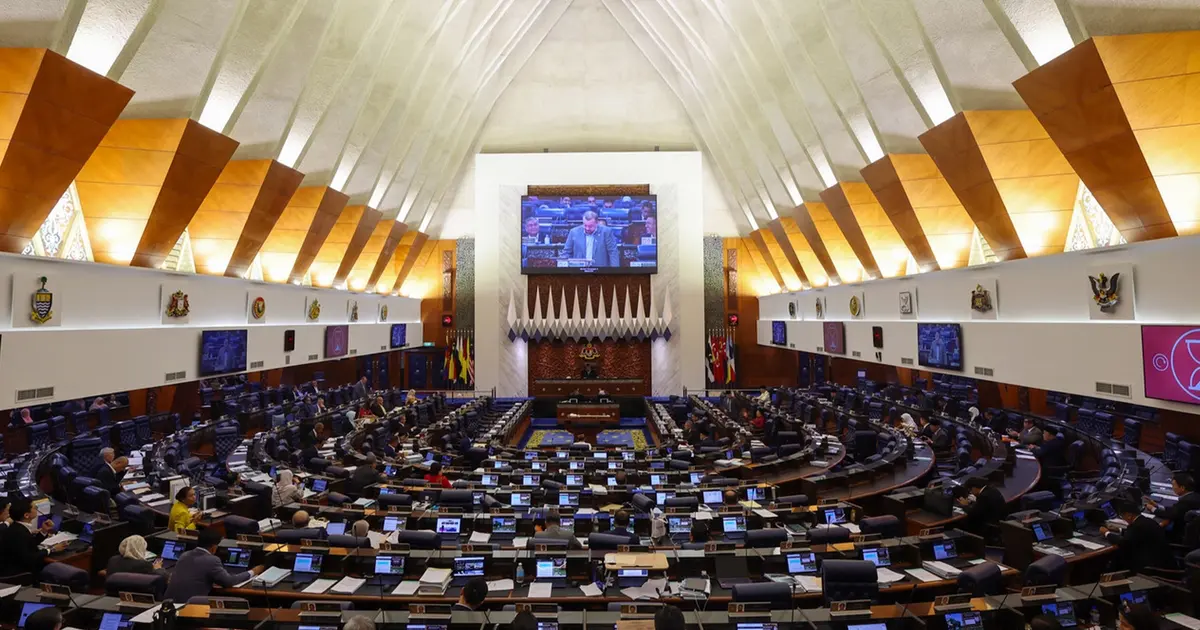
The Dewan Rakyat is preparing for a significant legislative session beginning Monday, with the contentious prime ministerial term limit bill dominating the agenda alongside three other substantive proposals. The measure capping a premier's tenure at a maximum of 10 years represents one of the most politically charged constitutional amendments attempted in recent parliamentary history, reflecting deeper debates about executive power and governmental stability in Malaysia's Westminster-derived system.
The two-thirds majority requirement for constitutional amendments has emerged as a formidable obstacle to reform. During the previous parliamentary sitting, legislators failed to marshal sufficient support for the prime minister's tenure restriction, highlighting the difficulty of achieving consensus on measures that reshape the nation's highest office. This mathematical hurdle has prompted stakeholders to recalibrate their approach and build broader coalitions ahead of the coming debate.
The 10-year ceiling represents a moderate position within international comparative frameworks. Most established democracies employ term limits for chief executives, with two-term arrangements predominating globally. Malaysia's proposal sits comfortably within this international norm, though its adoption would mark a significant departure from the country's post-independence constitutional practice, which has historically placed no formal restrictions on prime ministerial re-election.
Support for the measure stems from arguments centring on democratic renewal and the prevention of excessive executive accumulation of power. Proponents contend that term limits encourage healthy institutional rotation, reduce the risk of authoritarian governance patterns, and create opportunities for new leadership voices to emerge within ruling coalitions. These arguments resonate particularly among legislators concerned about governance vulnerabilities exposed during extended tenures.
Opposition, conversely, emphasises constitutional continuity and the dangers of destabilising precedent. Critics worry that artificial tenure restrictions could create lame-duck governance dynamics in a prime minister's final years, complicating policy implementation and national planning. Some constitutional scholars also question whether such amendments address the underlying parliamentary accountability mechanisms that ostensibly check executive overreach in Westminster systems.
The three companion bills alongside the term limit proposal remain inadequately detailed in available reporting, suggesting complex legislative negotiations occurring beyond public scrutiny. These additional measures likely address complementary governance architecture questions, potentially touching on ministerial accountability, parliamentary procedures, or institutional oversight mechanisms. Their interconnected consideration implies deliberate effort to package constitutional reform comprehensively rather than pursuing piecemeal amendments.
The parliamentary calendar itself carries significance. Monday's resumption of Dewan Rakyat proceedings reflects Malaysia's ongoing commitment to functioning legislative processes and constitutional governance, despite periodic political turbulence. The commitment to revisiting previously failed measures demonstrates institutional persistence and the normative expectation that controversial policy questions return for renewed deliberation rather than indefinite postponement.
Regional observers watching Malaysia's constitutional trajectories will note this development's implications for Southeast Asian governance patterns. Constitutional amendments touching executive power necessarily involve questions of democratic resilience, institutional design, and the balance between governmental effectiveness and popular sovereignty. Malaysia's specific approach to prime ministerial tenure shapes perceptions about Westminster adaptability in postcolonial Asian contexts and influences neighbouring democracies contemplating similar reforms.
The political arithmetic favouring passage remains uncertain. Coalition mathematics in Malaysian parliament frequently produce surprising outcomes, particularly on measures touching constitutional fundamentals where party discipline occasionally fractures in response to conscience votes or factional pressure. The 10-year ceiling's appeal transcends strict party boundaries, with some government and opposition legislators viewing executive term limits as prudent governance safeguards regardless of partisan advantage.
Successful passage would establish precedent influencing future constitutional deliberation. Once term limits enter Malaysia's foundational law, subsequent governments would face complicated questions about application, enforcement mechanisms, and potential amendments adjusting the threshold itself. These secondary implications likely inform current calculations among legislators weighing the proposal's merits and risks.
The coming parliamentary week therefore represents a critical juncture in Malaysian constitutional development. The term limit bill's fate hinges on technical constitutional requirements, parliamentary coalition alignment, and principled convictions about optimal executive governance structures. Whether legislators coalesce around the two-thirds threshold required for passage will illuminate prevailing thinking about prime ministerial power, institutional accountability, and the character of Malaysian democracy in the contemporary era.