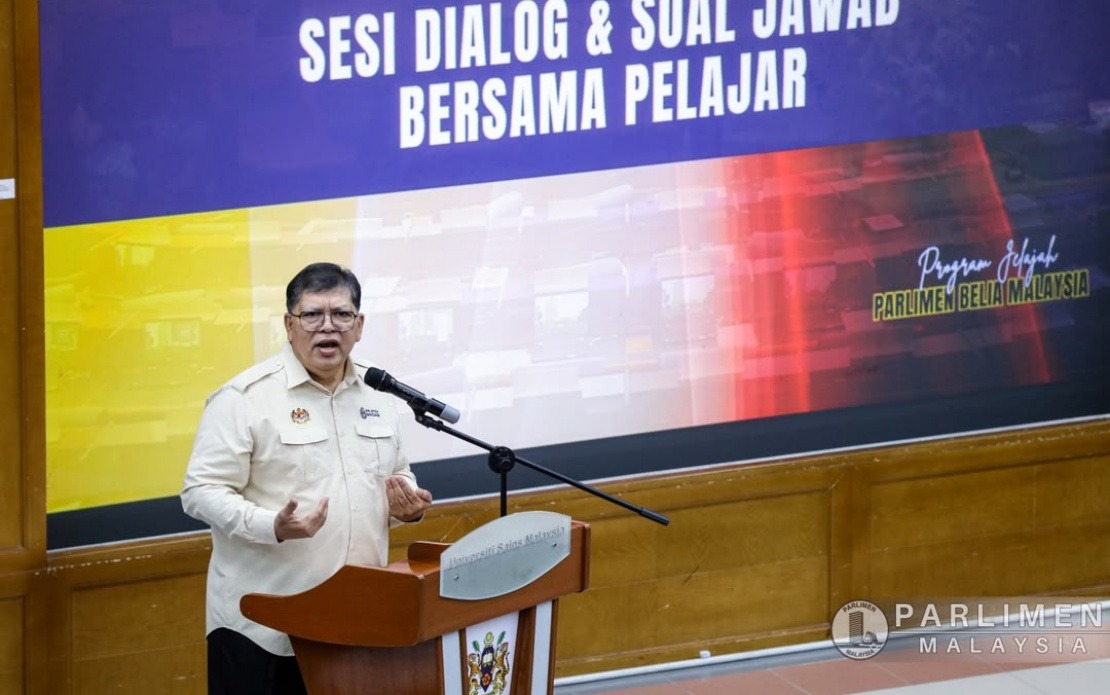
Parliament must function as a beacon of democratic practice and institutional integrity, serving as both a legislative chamber and a moral exemplar for the country's next generation of leaders. This was the central message from Dewan Rakyat Speaker Tan Sri Johari Abdul as Malaysia prepares for the inaugural sitting of the newly restructured Malaysian Youth Parliament scheduled to commence on September 11. The occasion underscores a critical juncture in how the nation's highest legislative institution presents itself to younger citizens who will inherit responsibility for stewarding democratic processes in the decades ahead.
The Speaker's remarks reflect a broader recognition that parliamentary proceedings have moved far beyond the walls of the chamber itself. In an age of social media connectivity and live broadcast technology, every utterance, gesture and procedural moment within the Dewan Rakyat reaches a potentially vast audience instantaneously. Members of Parliament are therefore not merely representing their constituencies in legislative debates; they are simultaneously performing democracy itself for public scrutiny. Young observers, in particular, absorb messages about how power operates, how disagreement is managed and how institutional norms are either respected or eroded through the everyday conduct of sitting members.
Johari emphasised that the Malaysian Youth Parliament participants require more than theoretical knowledge of democratic structures. They need living examples of what mature, responsible parliamentary conduct looks like in practice. This encompasses debates grounded in factual evidence rather than rhetorical flourish, exchanges conducted with courtesy despite policy disagreement, and deliberations genuinely oriented toward solving public problems rather than scoring political points. The parliamentary culture that members help create through their individual choices will directly shape the political sensibilities and leadership values of participants who represent the future demographic in electoral politics.
The Malaysian Youth Parliament itself represents an evolved institutional approach to youth political engagement. Operating on the structural model of the national legislature, the platform accommodates 222 seats distributed across parliamentary constituencies nationwide. Within this framework, more than ten youth-led party organisations have already formed, though these function purely as internal parliamentary caucuses rather than registrants in the formal political party system. This separation intentionally allows young people to experience competitive parliamentary politics and party dynamics without immediately enmeshing them in the divisive machinery of actual electoral competition. The non-partisan orientation theoretically permits participants to focus on policy substance and legislative process rather than partisan loyalty.
Since October 2023, when the government transferred full operational responsibility from the Ministry of Youth and Sports to Parliament Malaysia itself, the initiative has gained institutional anchoring and seniority. The Speaker now serves as programme patron, and parliamentary resources and expertise directly shape curriculum and procedural frameworks. This shift signals recognition that youth political education requires grounding in actual parliamentary infrastructure and knowledge, delivered by practitioners embedded in the legislative system. By relocating youth parliament to the parliament building rather than treating it as a peripheral youth ministry programme, the government has effectively elevated its status and integration within mainstream democratic institutions.
Registration efforts are currently targeting 300,000 Malaysians between ages 18 and 30, with the electoral process unfolding across carefully sequenced milestones. Nomination day falls on July 8, followed by official candidate announcements on July 11. A 27-day campaign period from July 12 through August 7 will allow competing parties and candidates to canvas support among the youth population. Voting itself will occur online via the dedicated e-PBMy system, with a 24-hour window from 10 am on August 8 until 10 am on August 9, ensuring accessibility across the geographically dispersed population.
The operational calendar reflects thoughtful design oriented toward sustaining meaningful engagement across the two-year membership term. Rather than holding continuous sittings that might generate burnout or dilute participation quality, the Youth Parliament will convene three times annually, with each sitting spanning two days. This cadence permits sufficient interval for members to prepare substantively, engage with constituents, and develop legislative proposals between sessions. The compressed sitting format ensures focused debate while minimising the burden on young people who typically juggle parliamentary involvement with university studies, early career responsibilities or other commitments.
For Malaysian readers and observers of regional democratic development, the Youth Parliament initiative carries significance beyond its immediate participant cohort. The experiment speaks to how Southeast Asian democracies are attempting to bridge widening generational divides in political engagement and institutional trust. Youth across the region have increasingly expressed disengagement from formal political structures, viewing traditional parliamentary systems as unresponsive to their concerns or insufficiently representative of their values. By creating a parallel legislative space where young people can directly experience how parliamentary debate, committee work and electoral competition function, Malaysia is attempting practical inoculation against democratic alienation.
The Speaker's exhortation to current Members of Parliament to model behavioural excellence carries implicit acknowledgment that youth observation of legislative proceedings has previously revealed less edifying spectacles. Parliamentary sessions in Malaysia, like legislatures across Asia and globally, have sometimes been marked by heated exchanges, inflammatory language, procedural disruption and conduct that critics describe as unseemly. Whether the 2024-2025 cohort of Youth Parliament participants will observe sustained improvement in legislative deportment remains to be seen, but the institutional focus on exemplary behaviour suggests the Speaker recognises both the challenge and the opportunity embedded in having young future leaders witness parliament in action.
The Malaysian Youth Parliament portal at https://pbmy.parlimen.gov.my/my/ provides the formal gateway for prospective participants seeking registration and additional information. The initiative represents a deliberate investment in democratic infrastructure at the generational level, predicated on the assumption that direct participation in structured political processes, combined with exposure to dignified parliamentary conduct, can cultivate more engaged and responsible future leaders. Whether this intervention successfully addresses underlying factors driving youth political disengagement, or merely engages an already-interested subset, will likely become clearer only after multiple parliamentary terms have elapsed and participants transition into broader civic and electoral roles.
The Malaysian Youth Parliament concept also offers a potential model with relevance for other ASEAN democracies grappling with similar generational political participation challenges. Thailand, the Philippines, Indonesia and other regional neighbours have struggled with youth political engagement and institutional trust. Malaysia's institutional commitment to embedding youth in parliamentary structures, rather than confining them to purely consultative or advisory roles, represents a more radical devolution of genuine political voice and experience. If executed consistently and with institutional backing, such models could prove replicable and instructive for regional democratic development.