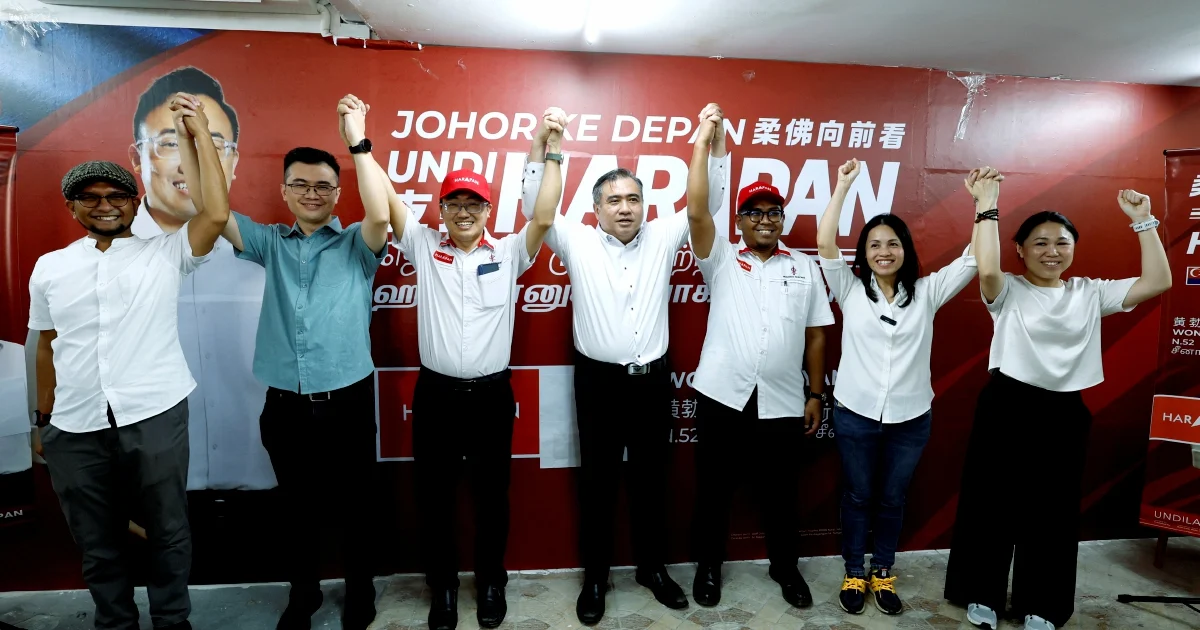
Pakatan Harapan has signalled it will not formally announce its chief ministerial candidate for Johor until after the coalition crosses the finish line in the forthcoming state election. The strategic decision reflects the opposition bloc's determination to concentrate campaign energies on securing voter support before committing publicly to specific leadership arrangements.
Party officials have made clear that naming the prospective Johor Menteri Besar remains contingent on Pakatan Harapan first securing a majority in the state assembly. This approach differs markedly from the practice of front-loading leadership announcements that some political coalitions adopt. Instead, PH's top decision-making body—the coalition's leadership council—will make the final determination only once an election victory becomes concrete.
The strategy reflects lessons learned from previous electoral contests across Malaysia, where early announcements of chief ministerial candidates sometimes invite controversy or create internal friction within governing coalitions. By deferring the decision, Pakatan Harapan insulates itself from potential divisive debates over who merits the top state position, allowing component parties to maintain unified messaging during the critical campaign phase.
For Johor voters, the announcement structure means the election will proceed without a formally designated opposition face for the state's top administrative role. Some political observers suggest this approach demands greater voter faith in Pakatan Harapan's broader agenda and institutional capability, rather than pivoting campaign narratives around a single personality. The tactic also prevents incumbent authorities from targeting attacks on a pre-identified opposition leader throughout the campaign period.
The decision touches on broader coalition dynamics within Pakatan Harapan, which comprises multiple parties with distinct bases and leadership hierarchies. Determining who occupies the Menteri Besar position inevitably involves complex inter-party negotiations around portfolio distribution, cabinet composition, and representation. Deferring these discussions until after an election victory allows the coalition to approach such negotiations from a position of strength, equipped with clear electoral data about voter preferences and regional performance patterns.
Johor represents significant political weight within the Malaysian federation, historically serving as a traditional Barisan Nasional stronghold. Any successful opposition assault on the state would reshape the national political equilibrium and provide momentum for Pakatan Harapan's broader ambitions. The coalition's focus on winning first reflects the magnitude of this undertaking and the political capital required to dislodge entrenched incumbency.
For Malaysian voters accustomed to knowing opposition leadership beforehand, the approach represents a subtle shift in electoral culture. Internationally, such deferred announcements occur occasionally when coalitions remain fluid or internally contested. However, in the Malaysian context where leadership identity traditionally carries substantial electoral weight, Pakatan Harapan's calculation suggests confidence that policy platforms and performance track records can substitute for named personalities during campaign phases.
The leadership council structure that will ultimately decide the Menteri Besar post comprises representatives from constituent parties within Pakatan Harapan. These include senior figures from Democratic Action Party (DAP), Amanah, and other coalition members. Their eventual deliberations will balance factors including electoral performance by party representatives, demographic considerations, administrative experience, and the imperative to maintain inter-party equilibrium within the governing coalition.
This timing approach also allows Pakatan Harapan to retain flexibility regarding coalition composition itself. Should unexpected developments emerge during campaigning—such as significant shifts in internal party dynamics or unexpected electoral opening—the deferred decision-making process permits recalibration without public commitment to particular individuals. Such flexibility has proven valuable in previous Malaysian electoral cycles where political trajectories shifted rapidly.
For Southeast Asian observers tracking Malaysian political development, the decision illustrates how opposition coalitions navigate the tension between maintaining campaign focus and addressing public appetite for leadership clarity. Neighbouring democracies occasionally employ similar strategies, though the practice remains less common in Malaysia's historically personalistic political culture.
The announcement reflects pragmatic political calculations about when different messages resonate most effectively with voters. During campaign phases, Pakatan Harapan's messaging emphasizes collective vision, institutional reform, and policy platforms. Once electoral success becomes reality, subsequent announcements about leadership appointments and cabinet positions can anchor post-election consolidation efforts and demonstrate the coalition's capacity to execute governance transitions smoothly.
Looking ahead, Johor voters will render their electoral judgment without knowing specifically which senior opposition figure will occupy the Menteri Besar office should Pakatan Harapan prevail. The coalition's confidence in proceeding under such conditions suggests calculated faith that broader themes around governance, service delivery, and policy direction can capture voter mandates even without pre-announced leadership faces. Whether this approach strengthens or complicates opposition fortunes in Johor will become apparent once electoral results materialise.