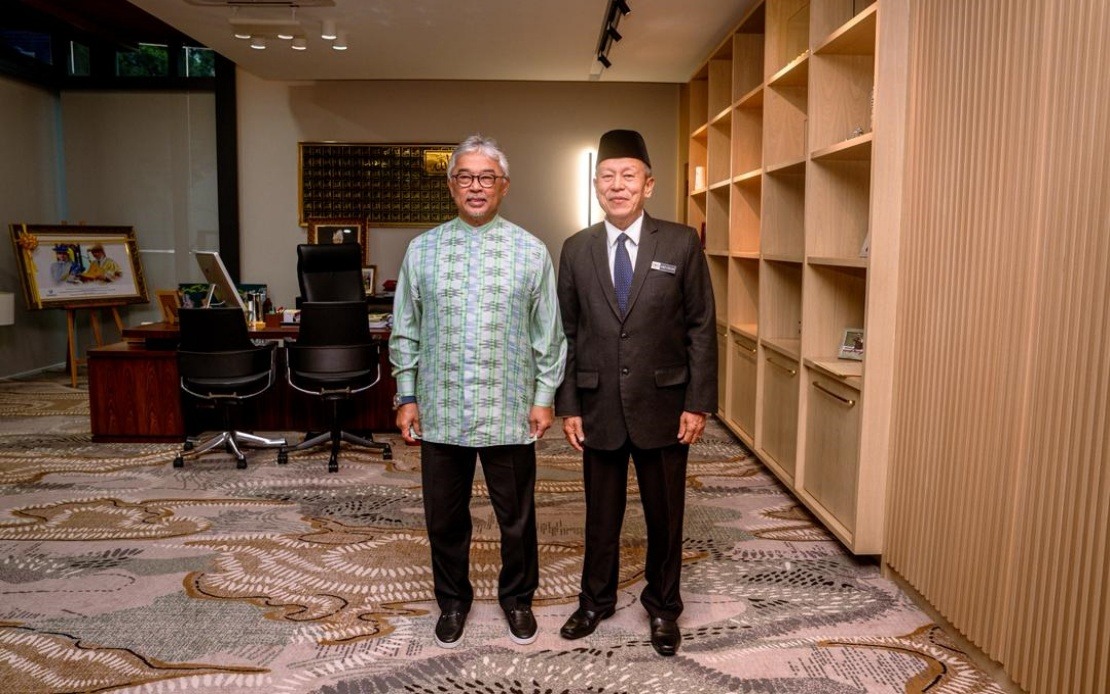
The Sultan of Pahang, Al-Sultan Abdullah Ri'ayatuddin Al-Mustafa Billah Shah, held an audience with Malaysian Anti-Corruption Commission (MACC) chief commissioner Datuk Seri Abd Halim Aman at Shahzan House in Ampang yesterday. The hour-long meeting underscores the continued engagement between Malaysia's constitutional monarchy and key institutional players in the nation's fight against graft, reflecting the palace's active interest in governance matters affecting the kingdom.
During the private audience, the MACC chief briefed the Sultan on the commission's recent operational developments and strategic direction. The briefing provided Al-Sultan Abdullah with an overview of how the institution is responding to corruption challenges across both the public and private sectors, and the mechanisms it has deployed to detect and prosecute financial misconduct at various administrative levels.
Beyond operational updates, the discussion encompassed a broader framework for strengthening integrity standards across Malaysian government agencies and the wider public service. The MACC presented proposals and initiatives aimed at creating a more transparent institutional environment, where accountability mechanisms are robust and public officials understand the consequences of deviating from established ethical standards. Such presentations to the monarchy are typically designed to secure endorsement for systemic reforms that require widespread adoption across the bureaucracy.
Governance issues featured prominently in the conversation, reflecting growing concerns about administrative efficiency and decision-making processes within the civil service. The MACC has increasingly positioned itself not merely as an investigative body, but as a facilitator of institutional reform that addresses corruption at its roots by improving how government operates. The Sultan's willingness to engage with these discussions signals royal support for comprehensive anti-corruption approaches that go beyond prosecution of individual cases.
The commission also used the platform to address public perception and institutional credibility. In Malaysia's political environment, where confidence in enforcement agencies can fluctuate with changes in government or leadership, maintaining support from respected figures like the Sultan is valuable for projecting independence and legitimacy. The audience allowed the MACC to demonstrate that its work enjoys backing from Malaysia's highest constitutional authorities, potentially reinforcing public trust in its investigative and prosecutorial decisions.
Abd Halim expressed his appreciation for the Sultan's engagement with the commission's mandate and his openness to receiving detailed briefings on anti-corruption strategy. Such gratitude is customary but also meaningful in the Malaysian context, where royal patronage carries symbolic weight within the civil service and bureaucratic structures. A Sultan's demonstrated interest in an agency's work can enhance its internal standing and encourage cooperation from government departments that might otherwise be reluctant to facilitate investigations.
The chief commissioner conveyed particular thanks for Al-Sultan Abdullah's continued support of the MACC's enforcement operations and advocacy for integrity-based governance. This acknowledgement reflects an understanding that anti-corruption work depends not only on legal authority but on political will and institutional backing from figures with moral standing in Malaysian society. The palace's endorsement of the commission's role in upholding transparent governance becomes part of the broader narrative about institutional accountability that the MACC seeks to promote.
For Malaysian readers, the significance of this audience extends beyond ceremonial protocol. It demonstrates that institutional accountability remains a priority concern at the highest levels of governance, even as Malaysia navigates complex political transitions and evolving civil service challenges. The Sultan's engagement suggests that strengthening integrity across government is not a temporary initiative dependent on particular administrations, but a continuing constitutional priority.
The timing of such meetings can also reflect responses to specific governance challenges or public concerns about corruption that have emerged recently. By holding structured briefings with senior institutional figures, the MACC creates opportunities to align enforcement strategy with broader governance objectives and to secure support for initiatives that may require cooperation across multiple government agencies. These interactions help position anti-corruption efforts as a shared responsibility rather than the work of a single enforcement body operating in isolation.
For Southeast Asia more broadly, Malaysia's institutional approach to anti-corruption—involving active royal engagement with enforcement agencies and regular briefings on strategic developments—offers a model distinct from purely executive-driven accountability systems. The involvement of constitutional monarchies in governance oversight creates additional layers of institutional oversight that can sometimes insulate enforcement agencies from purely political pressures that plague anti-corruption commissions in neighbouring countries.
The Sultan's receptiveness to detailed operational briefings also reflects an understanding that effective governance requires regular communication between the palace and key institutional actors. By maintaining informed awareness of how major enforcement bodies operate and what challenges they face, Al-Sultan Abdullah positions himself as an engaged constitutional figure rather than a ceremonial figurehead, a role that carries weight in Malaysian political culture and administrative practice.