The perpetual summer dilemma of Malaysian and Southeast Asian fashion lovers—whether to go barefoot or endure the sweat of conventional socks with sandals—may finally have an elegant solution. Open-toe socks, a quirky hybrid that exposes the toes while covering the arch and top of the foot, are rapidly gaining traction as the season's unexpected style statement, driven by early heat waves across the region and endorsements from luxury fashion houses.
Retailers across Asia are reporting remarkable growth in this niche category. Sales data from South Korea, where the trend originated, reveals that summer footwear such as mules, slides, and flip-flops experienced an 80 percent sales increase during the week of May 31 to June 7 compared to the same period last year. More strikingly, transaction values for socks specifically designed to be worn with flip-flops surged 1,664 percent between May 14 and June 14, while search volumes climbed 3,227 percent. These figures underscore not merely passing curiosity but sustained, growing consumer interest in the category.
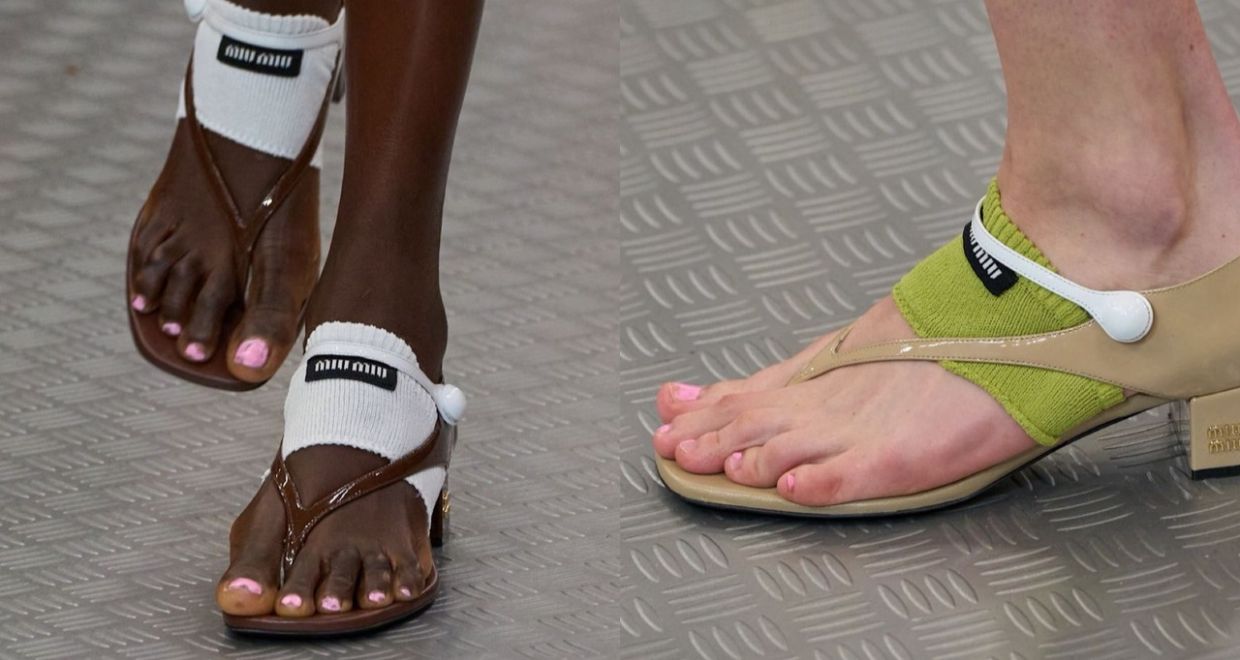
The trend's legitimacy traces directly to the haute couture sphere. Luxury Italian brand Miu Miu debuted open-toe socks in its 2025 Spring/Summer collection, presenting an unconventional sock design that wraps only around the arch rather than covering the entire foot. This high-fashion endorsement provided the credibility needed for the style to transition from fringe concept to mainstream consideration. Subsequently, South Korean celebrity Cha Jung-won amplified the trend's appeal by sharing social media posts pairing sky-blue flip-flops with beige knit leg warmers, demonstrating how the look works in practice and reaching millions of fashion-conscious followers.
What distinguishes summer versions from traditional winter leg warmers is their fundamental construction philosophy. The contemporary open-toe socks employ sheer, mesh, and loosely knitted fabrics that prioritise breathability and aesthetic impact over thermal insulation. Rather than functioning as warmth providers, they operate as sophisticated accessories that introduce colour layering, texture, and visual interest to otherwise minimal summer footwear. This material innovation makes the concept genuinely wearable during tropical and subtropical climates, where traditional socks would prove unbearably uncomfortable.
Beyond aesthetics, practical benefits make the style particularly appealing for regional consumers. The foot coverage reduces friction and chafing caused by flip-flop and sandal straps—a genuine concern during prolonged wear in warm weather. During Southeast Asia's monsoon seasons, when rain boots become necessary, open-toe socks provide a protective barrier against skin irritation without the suffocating feeling of conventional sock-and-boot combinations. This functional dimension transforms the trend from pure fashion caprice into a genuinely useful wardrobe solution.
Fashion retailers and stylists are actively guiding consumers on implementation. Neutral foundations such as grey, black, and white work universally with most summer wardrobes and serve as low-risk entry points for those hesitant about the trend. A grey open-toe sock paired with black flip-flops or ballerina flats complements denim, Bermuda shorts, and satin skirts without demanding excessive coordination. For those seeking bolder self-expression, vivid hues including yellow, pink, and sky blue enable more striking visual statements. Deliberately mismatching sock and shoe colours creates an intentional, fashion-forward aesthetic that distinguishes confident styling from accidental combinations.
Styling experts emphasise restraint in surrounding elements. Since open-toe socks and coordinated footwear already command visual attention, the remainder of the outfit should remain understated and familiar—typically a simple t-shirt with shorts or a shirt paired with a skirt. This principle prevents the overall look from becoming visually chaotic while allowing the sock-and-shoe combination to function as the focal point. Patterns such as dots or florals on the socks create particularly effective visual impact against plain clothing pieces.
The trend represents a broader shift in how fashion-conscious consumers approach summer dressing across Malaysia and Southeast Asia. Rather than viewing socks as purely functional winter necessities meant to remain hidden, this movement celebrates them as legitimate style accessories worthy of visibility and intentional coordination. The psychological permission to reveal what was previously concealed reflects evolving attitudes toward individualistic fashion expression and willingness to embrace unconventional combinations.
For Malaysian retailers and fashion brands, open-toe socks present an accessible merchandising opportunity. The category requires minimal inventory space compared to traditional footwear, appeals to trend-conscious younger consumers and fashion enthusiasts, and offers healthy margin potential. Local designers and brands could readily develop variations reflecting Malaysian aesthetic preferences, incorporating batik patterns, tropical colours, or culturally resonant designs into mesh and sheer fabric formats.
As Southeast Asia's climate becomes increasingly unpredictable with temperature extremes and monsoon intensity variations, practical fashion solutions that prioritise both comfort and style gain heightened relevance. Open-toe socks address the specific needs of tropical and subtropical living—breathability without sacrificing functionality—while offering aesthetic pleasure. This convergence of practicality and fashion-forward thinking may explain the trend's staying power beyond mere seasonal novelty.
The open-toe sock phenomenon ultimately reflects how global fashion currents increasingly flow through digital platforms and social media rather than traditional seasonal shows alone. A luxury house innovation, amplified by celebrity endorsement and retail data confirmation, rapidly permeates consumer consciousness across borders. For Malaysian fashion followers observing this development, the trend offers permission to experiment with unexpected combinations and reconsider conventional categorisations of appropriate seasonal dressing.