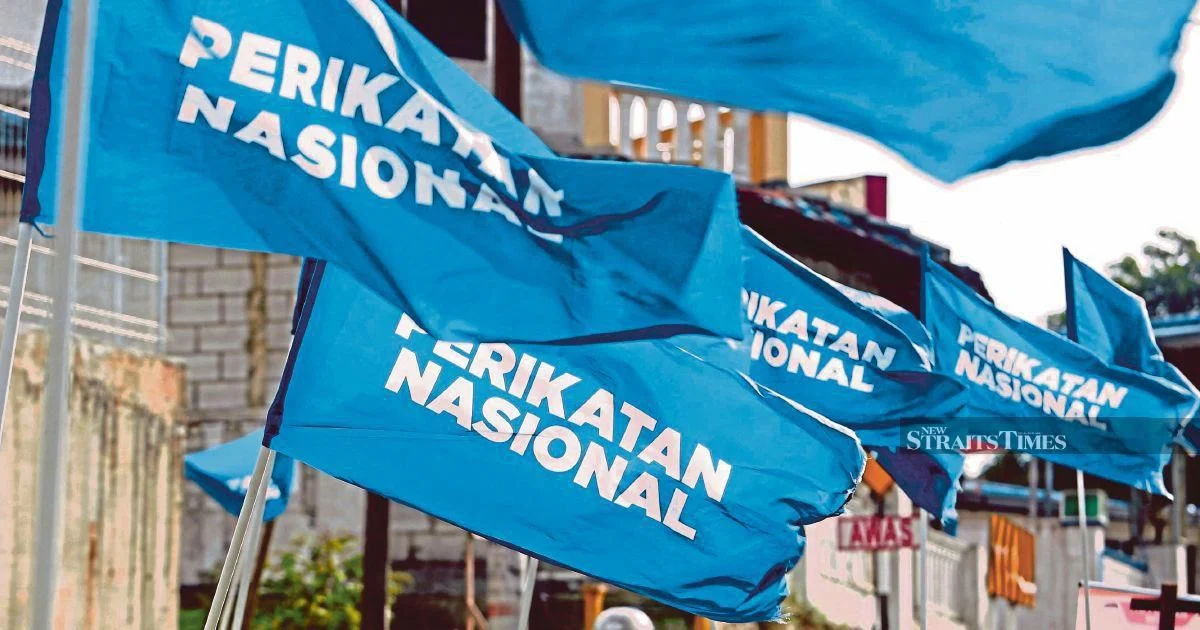
The three-party Perikatan Nasional coalition faces mounting internal strain as Pas leadership moved to challenge Bersatu's use of the shared coalition emblem for the approaching state elections in Johor and Negri Sembilan. The dispute, emerging from Kota Baru, reflects escalating governance disputes within the opposition alliance and underscores fragile unity at the top levels of Malaysian politics.
Pas officials contend that use of the PN logo represents a significant coalition matter requiring explicit authorisation from the coalition chairman. This assertion effectively constrains Bersatu's ability to independently deploy the shared brand, a symbol carrying considerable weight in electoral mobilisation. The assertion reflects competing interpretations of PN governance protocols and raises fundamental questions about how decisions affecting all member parties ought to be structured.
The coalition logo carries symbolic and strategic importance beyond mere branding. In Malaysian electoral politics, coalition symbols communicate voter intent directly—they signal party allegiance, endorsement patterns, and campaign coordination. Unauthorised deployment risks confusing voters, fragmenting voter mobilisation efforts, and suggesting inconsistent messaging from ostensibly united partners. For Bersatu, logo access represents operational autonomy in state campaigns; for Pas, it represents a test of collective governance.
Peikatan Nasional comprises three parties with distinct political bases and territorial strongholds. Pas maintains significant grassroots networks, particularly across northern and eastern Malaysia. Bersatu, under Muhyiddin Yassin, controls considerable party machinery and federal government leverage. The third partner, PAS, brings its own voting constituencies and organisational capacity. Coalition architecture requires mechanisms for resolving resource-allocation disputes, particularly regarding jointly-owned assets like logos and branding.
The Johor and Negri Sembilan elections represent a crucial testing ground for the broader coalition at a time when internal cracks risk becoming structural failures. These contests carry implications extending well beyond the immediate state competitions—they signal the coalition's viability as a national political force capable of challenging the federal government. Any appearance of disunity during campaigns risks undermining the coalition's electoral messaging and eroding voter confidence in its competence and stability.
Pas leaders framed their position within established coalition protocols, suggesting that governance structures exist precisely to prevent such disputes. By invoking the coalition chairman's exclusive authority over logo deployment, Pas attempted to establish precedent that major decisions cannot proceed unilaterally. This reflects broader anxiety within the coalition that individual parties might exploit shared assets for personal advantage without consultation or consensus.
Historically, Malaysian political coalitions have struggled with precisely these internal tensions. The Barisan Nasional's longevity stemmed partly from clear hierarchical structures and defined decision-making processes, though this rigidity also generated its own grievances. Perikatan Nasional positioned itself as a more flexible alliance, yet this adaptability creates ambiguity regarding authority and resource control. The current dispute demonstrates how such ambiguity can rapidly metastasise into operational paralysis.
For Malaysian observers, the PN tensions illuminate broader instability within opposition politics. Unlike the government coalition, opposition alliances typically form reactively around shared opposition rather than positive governance visions. When electoral circumstances shift or individual party interests diverge, these coalitions lack sufficient structural adhesive to maintain cohesion. The logo dispute exemplifies this dynamic—absent overwhelming external pressure, internal interests reassert themselves.
Bersatu's position in this dispute warrants careful analysis. As the coalition partner most closely associated with recent federal government dynamics and Muhyiddin Yassin's political leadership, Bersatu requires significant electoral momentum to justify its continued coalition participation. The party faces potential pressure to demonstrate independent political capability, particularly given its relatively smaller parliamentary representation compared to Pas. Using the PN logo strategically might represent an attempt to leverage coalition branding benefits while establishing Bersatu's autonomous electoral presence.
Pas, conversely, appears concerned about logo dilution and wants to retain collective gatekeeping power over coalition resources. As the coalition's largest party by parliamentary representation, Pas possesses the strongest claim to steering coalition priorities. Asserting control over logo deployment constitutes a assertion of this hierarchical position and a warning against individual party adventurism.
The practical implications extend beyond symbolic politics. Campaign materials, broadcasting spots, and voter communications all incorporate coalition logos as part of coordinated messaging strategies. Unauthorised logo use risks fragmenting campaign coherence and confusing voters about which candidates or messages carry coalition endorsement. In competitive electoral environments, such confusion translates directly into lost votes and missed opportunities.
Moving forward, the coalition faces a governance imperative. Either explicit protocols governing logo use must be established and widely accepted, or the PN risks becoming increasingly dysfunctional as minor disputes balloon into major confrontations. The Malaysian political landscape already contains numerous examples of coalitions fracturing over precisely such governance failures, with devastating consequences for all involved parties.
For Southeast Asian observers, the PN tensions illustrate how opposition coalitions in regional democracies frequently prove brittle. Unlike institutionalised governing coalitions with shared interest in power retention, opposition coalitions operate under constant centrifugal pressures. The Johor and Negri Sembilan elections will test whether PN can function effectively despite these internal tensions, or whether further fragmentation lies ahead.


