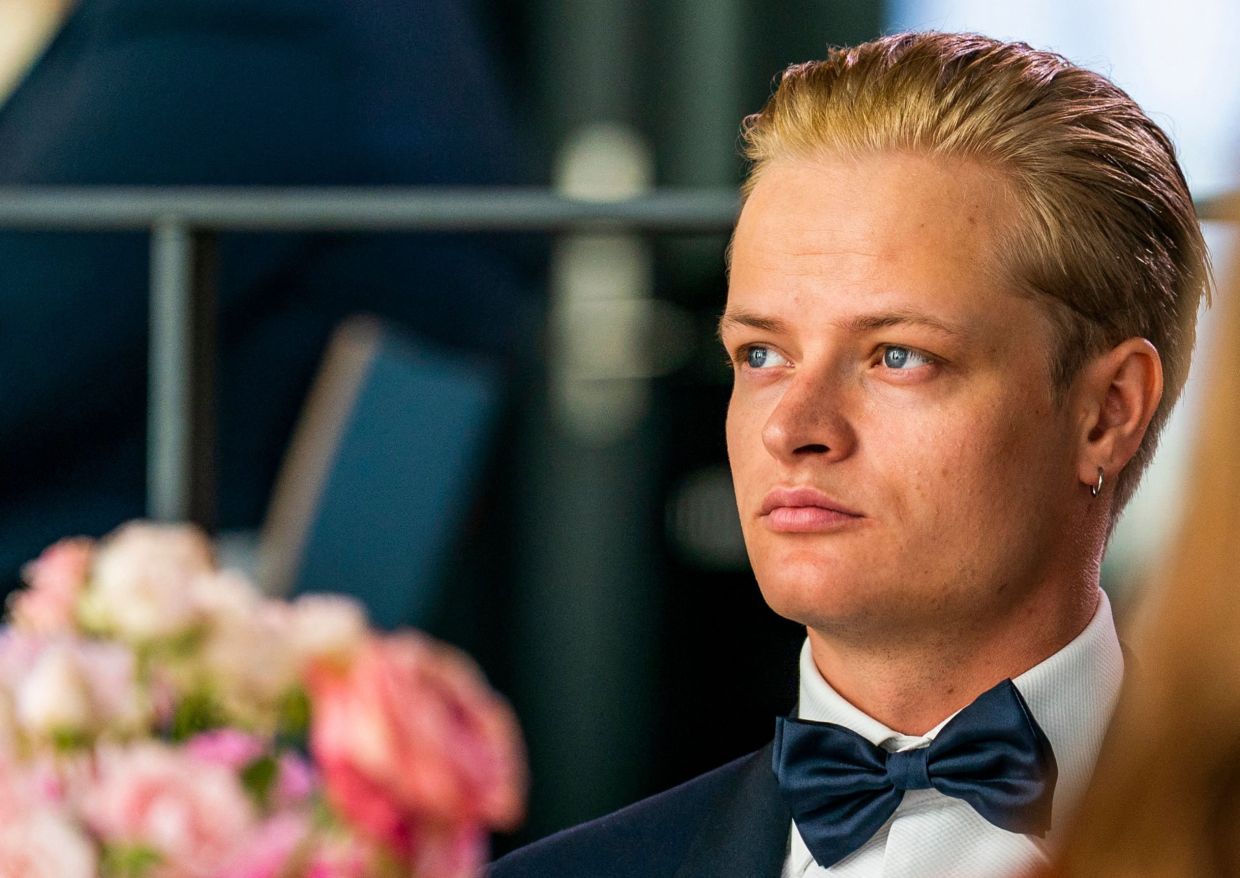
Marius Borg Høiby, the eldest son of Norway's Crown Princess Mette-Marit, received a four-year prison sentence on Monday following his conviction on two rape charges out of four brought against him. The Oslo District Court also found him culpable of assault and misconduct within intimate relationships, and ordered him to provide financial restitution to his victims. The conviction marks the conclusion of a high-profile case that has captivated global media attention owing to Høiby's proximity to the Norwegian throne.
The 29-year-old faced an extensive array of 40 criminal charges encompassing offences ranging from serious sexual assault to lesser infractions including drug-related crimes, assault, and breaches of a restraining order. Høiby had been accused of sexually assaulting four women between 2018 and 2024, with the alleged victims reportedly incapacitated or incapable of resistance at the time of the incidents. While he maintained his innocence regarding the rape allegations throughout proceedings, he acknowledged culpability for numerous minor offences, a strategic admission that contrasted sharply with his blanket denial of the most serious charges.
The sentencing represents a substantial compromise between competing legal arguments presented during the trial. Prosecutors sought a sentence of seven years and seven months, reflecting the gravity of the charges and the pattern of alleged offending. In contrast, defence counsel advanced a more lenient position, requesting his acquittal on all rape counts and proposing a maximum penalty of 18 months for the lesser offences to which he had confessed. The court's determination of four years reflects judicial assessment of the evidence presented and the balance between culpability and mitigating factors.
The six-week trial, which concluded in March, examined extensive testimonial evidence from multiple accusers alongside documentary material retrieved from Høiby's mobile telephone, encompassing messages, photographs, and video recordings. This digital evidence formed a crucial component of the prosecution's case, providing corroborating material beyond witness statements alone. The trial proceeded with considerable international journalistic coverage, a phenomenon largely attributable to Høiby's familial relationship with one of Europe's principal royal households rather than any inherent public interest in ordinary criminal proceedings.
Høiby's position within the Norwegian royal structure occupies a peculiar space. Born to Crown Princess Mette-Marit prior to her marriage to Crown Prince Haakon, the heir to Norway's throne, he possesses no formal royal title and carries no official ceremonial or constitutional duties. Nevertheless, his upbringing within the royal household and his mother's elevated status ensured he would inevitably face heightened media scrutiny and public interest should legal difficulties arise. His lack of formal royal standing has not insulated him from the consequences of his alleged actions, nor prevented the case from becoming a significant international news narrative.
Notably, Høiby remained absent from the courtroom during Monday's verdict pronouncement, citing health considerations. Instead, he observed the reading of the judgment through a video connection from his place of detention, a procedural accommodation reflecting either medical constraints or judicial discretion regarding his physical presence. The verdict remains subject to appeal, and Høiby retains the legal right to challenge the conviction and sentence before higher courts, a potential avenue that his legal representatives may explore in coming months.
During pre-trial proceedings, there had been substantive legal contestation regarding whether Høiby ought to receive temporary release pending the verdict. Appeals courts consistently ruled against such provisional freedom, determining that his detention should continue through the legal process. These rulings gained particular resonance given the deteriorating health circumstances of Crown Princess Mette-Marit, who suffers from pulmonary fibrosis and is awaiting lung transplantation. Her medical condition introduced an additional dimension of complexity to the case, as it raised questions about familial circumstances during this period of legal jeopardy.
The trial unfolded amid additional reputational pressures on the Norwegian royal institution stemming from revelations regarding Mette-Marit's previous social contacts with Jeffrey Epstein, the American financier convicted of sex trafficking. The crown princess subsequently acknowledged poor judgment in maintaining association with Epstein and issued a public apology for the connection. She faces no allegations of impropriety herself, though the disclosure invited renewed examination of the royal family's social circles and decision-making processes regarding personal relationships.
For Malaysian and Southeast Asian observers, this case illuminates tensions inherent in contemporary monarchies regarding accountability and privilege. While Høiby's lack of formal royal title theoretically positioned him outside royal immunity frameworks, his mother's status and upbringing in palace surroundings inevitably complicated legal proceedings and generated international commentary. The case demonstrates that even in constitutional monarchies with established rule-of-law traditions, the intersection of royal family connections and serious criminal charges creates complex legal and public relations challenges that transcend conventional criminal procedure. The verdict's finality will depend upon appellate outcomes, yet the broader implications for royal accountability in the modern era remain evident.


