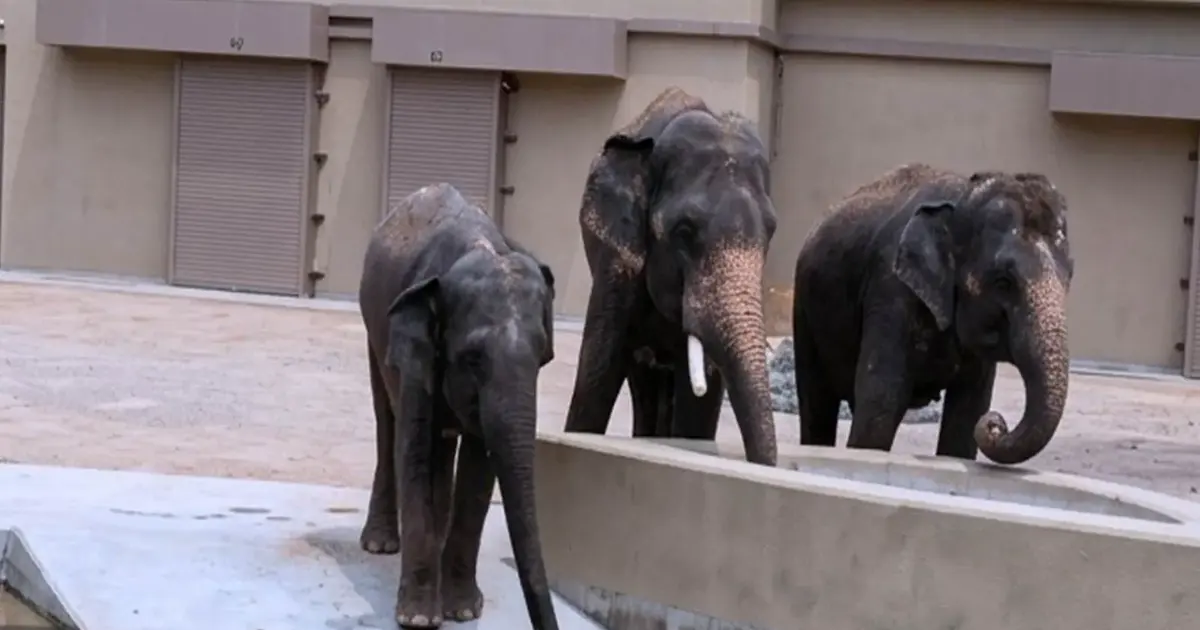
An NGO leader and legal advocate has raised serious allegations regarding a multimillion-ringgit transaction connected to the relocation of elephants to Japan, asserting that substantial sums may have been diverted away from government accounts and into private hands. Rajesh Nagarajan, who leads the civil society organisation, contends that approximately RM50 million changed hands during the elephant transfer arrangement, yet this money did not flow through official state coffers as would be expected in a legitimate wildlife transaction. His assertion has prompted fresh scrutiny of how major animal welfare and conservation dealings are structured and monitored in Malaysia.
The allegation strikes at a fundamental concern regarding transparency and accountability in high-value transactions involving natural resources and protected wildlife. Malaysia's elephant populations represent significant national assets, both from conservation and economic perspectives, and any transfer of these animals to foreign facilities necessarily involves government oversight and approval. The fact that substantial payments may have circumvented official channels raises questions about whether proper regulatory frameworks and auditing mechanisms were applied, or whether such safeguards were deliberately bypassed to obscure the flow of funds.
Rajesh Nagarajan has publicly urged the Malaysian Anti-Corruption Commission (MACC) to launch a formal investigation into the matter, signalling that he believes the irregularities warrant scrutiny by the nation's principal corruption-fighting agency. This appeal suggests that the concern extends beyond simple administrative mismanagement or accounting confusion, touching instead on potential criminal conduct. The explicit request for MACC intervention indicates that those raising the alarm believe institutional oversight mechanisms may not have functioned properly during the elephant transfer process, or that oversight was compromised.
The transfer of elephants to Japan carries particular significance for Malaysia's conservation credentials and international standing. Such arrangements typically involve detailed negotiations, veterinary assessments, facility inspections, and various government approvals spanning wildlife authorities, the Environment Ministry, and potentially cabinet-level consideration. The movement of large animal populations across borders is tightly regulated under international conservation agreements, making any shadow financial arrangements especially problematic both legally and ethically.
For Malaysian readers and observers of governance issues, this case exemplifies the broader challenge of monitoring high-stakes transactions that combine wildlife protection, international diplomacy, and substantial financial flows. The alleged diversion of RM50 million represents resources that could theoretically have been directed toward domestic elephant conservation, habitat protection, or support for communities living alongside these animals. If moneys genuinely bypassed government accounts, it raises uncomfortable questions about how decisions regarding Malaysia's natural heritage are being made and by whom.
The allegation also touches on wider concerns about accountability within wildlife and environmental sectors, where funding arrangements can be complex and international in scope. Zoo and wildlife facility transactions, particularly those involving Asian megafauna destined for overseas institutions, have historically attracted scrutiny in various countries due to welfare concerns, financial irregularities, and questions about whether such arrangements genuinely serve conservation objectives. Malaysia's reputation as a country committed to protecting its natural heritage depends significantly on ensuring that elephant transfers and similar high-profile wildlife transactions occur with full transparency and proper oversight.
Rajesh Nagarajan's role as both an NGO leader and lawyer positions him to understand the legal and procedural frameworks that should govern such arrangements, lending weight to his concerns about procedural irregularities. His willingness to call publicly for MACC investigation suggests a conviction that voluntary compliance or internal government processes may be insufficient to establish accountability. This stance reflects a more general pattern observed in several nations where civil society organisations play an increasingly critical role in monitoring government transactions that lack adequate public visibility or media coverage.
The RM50 million figure, if accurate, represents a substantial amount by Malaysian standards, equivalent to the annual operating budgets of many government agencies or the funding for significant infrastructure projects. The scale of the alleged diversion makes clear that this is not a matter of marginal accounting discrepancies but rather a question of whether fundamental financial controls were respected or overridden during the elephant transfer process. How such a quantity of money could allegedly move into private accounts without triggering standard government audit and accountability mechanisms requires serious institutional examination.
Moving forward, the outcome of any MACC investigation could have implications extending beyond this specific case. A thorough probe might establish precedents regarding how wildlife transactions are monitored, establish clearer frameworks for international animal transfers, and potentially lead to stronger oversight mechanisms within relevant government departments. For Malaysia's standing internationally as a wildlife custodian and a country serious about combating financial irregularities, demonstrating the capacity to investigate and address such allegations decisively matters considerably. The MACC's response to these allegations will likely signal whether Malaysia's institutional safeguards are functioning adequately to protect public assets and ensure transparency in consequential government decisions.


