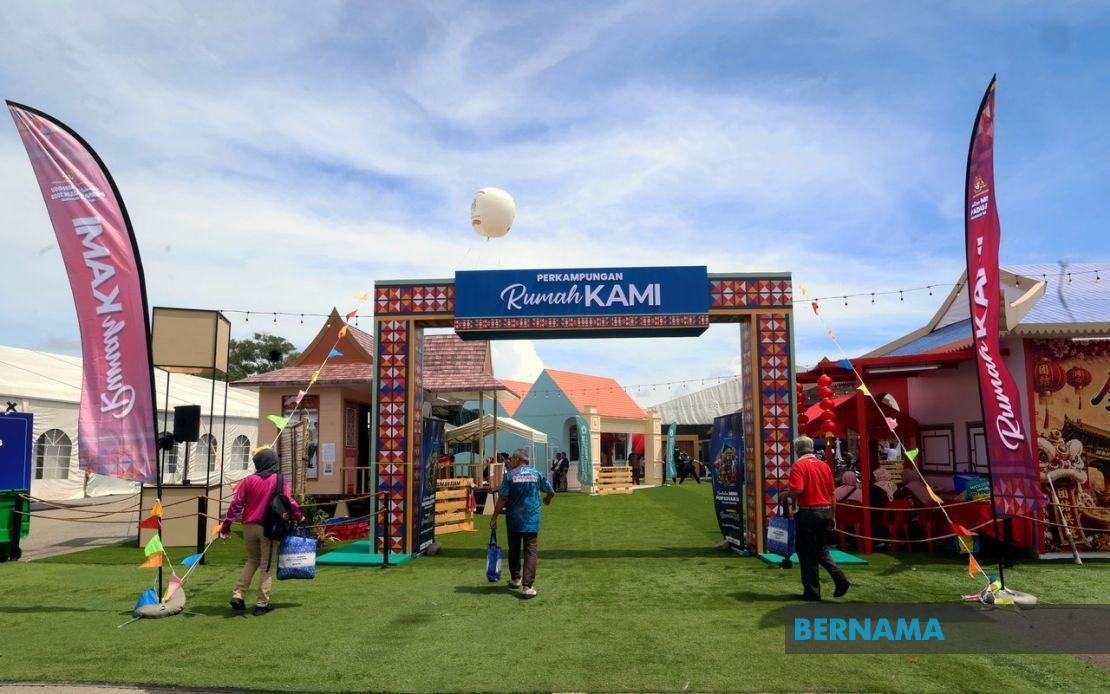
Kota Kinabalu made history this month as National Unity Week 2026 concluded with unprecedented visitor numbers, drawing 284,448 people across its four-day run from June 11 to 14. The figure represents the strongest showing for the national programme since its introduction in 2023, signalling deepening public engagement with Malaysia's multicultural fabric. National Unity Minister Datuk Aaron Ago Dagang attributed the surge in attendance to Malaysians' expanding recognition of how the nation's varied cultural traditions, historical heritage and distinctive community identities form the bedrock of social cohesion and national resilience.
The ministry's analysis of visitor behaviour revealed which elements of the event resonated most powerfully with attendees. Three exhibition zones dominated public interest throughout the celebration. The Ethnic Village drew large crowds by presenting authentic glimpses into the everyday lives, customs and practices of Malaysia's principal communities. Adjacent to this, the Ethnic Houses exhibition provided deeper cultural immersion by highlighting the distinctive architectural styles, artefacts and traditions of communities including the Bajau, Melanau, Banjar, Kedayan and Portuguese populations—groups whose contributions to the national narrative are often underrepresented in mainstream discourse. Perhaps most significantly, the Negara Bangsa and Raja Kita Exhibition succeeded in capturing young Malaysians' imagination, effectively communicating national history in ways that resonated across age groups and demographic categories.
The strong turnout underscores a subtle but important shift in how Malaysians approach the question of national identity. Rather than viewing unity as a top-down imposition or a rhetorical exercise confined to official ceremonies, the visitor numbers suggest genuine grassroots interest in understanding how Malaysia's different communities actually live, what they value and how their histories intersect with the broader national story. This represents meaningful progress for a country that has periodically grappled with communal tensions and competing narratives about belonging.
However, Datuk Aaron's accompanying remarks introduced a more cautious note into the celebratory narrative. He emphasised that successful nation-building cannot rest on episodic events, no matter how well-attended. Rather, consolidating national unity demands sustained, methodical effort that transcends election cycles and ministerial tenures, with the fruits of such work passed deliberately to successive generations. This acknowledgement reflects realistic understanding that a single week of cultural showcases, however impressive in scale, cannot dismantle structural divisions or resolve substantive disagreements about resource distribution, representation and historical interpretation.
In response to the event's success, the Ministry of National Unity announced plans to institutionalise National Unity Week as an annual national fixture. This decision aims to transform what began as an experimental initiative into a regular platform where Malaysians from disparate backgrounds can gather, interact and deepen mutual comprehension. The ministry framed this continuation not merely as a bureaucratic exercise but as a deliberate strategy to manufacture recurring opportunities for cross-community contact and relationship-building.
The government's broader vision, articulated through Datuk Aaron's statements, aligns with the MADANI administration's stated commitment to forging national unity through mechanisms that transcend conventional divisions of ethnicity, faith tradition and geography. This philosophical stance differs from earlier approaches that sometimes emphasised official hierarchy or state-mandated narratives. Instead, the current framework privileges organic interaction and grassroots cultural exchange as pathways to cohesion.
The Kota Kinabalu event carries particular significance for East Malaysia, a region that sometimes feels peripheral to national conversations and policy priorities despite its substantial population and distinctive cultural heritage. Hosting such a major celebration in Sabah signals recognition of Borneo's integral role within the Malaysian federation and creates a rare opportunity for East Malaysians to showcase their communities to audiences who might otherwise encounter their cultures only through distant media representations or official statistics.
For Malaysian policymakers monitoring social cohesion, the record attendance offers a data point suggesting that structured opportunities for cultural exploration hold genuine appeal. Yet the challenge ahead involves translating episodic enthusiasm into durable shifts in attitudes and sustained commitment to pluralistic values. Annual celebrations can plant seeds, but their effectiveness ultimately depends on how experiences and insights from such events permeate everyday interactions, educational curricula, workplace cultures and civic institutions throughout the year.
The ministry's explicit call for collaboration across sectors—encompassing government bodies, commercial enterprises, civil society groups and individual Malaysians—reflects acknowledgement that unity cannot be manufactured through state action alone. Private sector participation in future iterations of National Unity Week could amplify reach and inject resources, whilst civil society involvement ensures that programming remains responsive to community concerns rather than becoming a static ritual.
Looking ahead, the trajectory of National Unity Week will merit close observation. Whether the programme can sustain momentum beyond its inaugural three years, whether attendance patterns reveal meaningful demographic diversity, and whether participants report lasting behavioural or attitudinal changes—these measures will ultimately determine whether the initiative contributes substantively to the long-term national unity project or remains a well-intentioned but ultimately circumscribed annual exercise.


