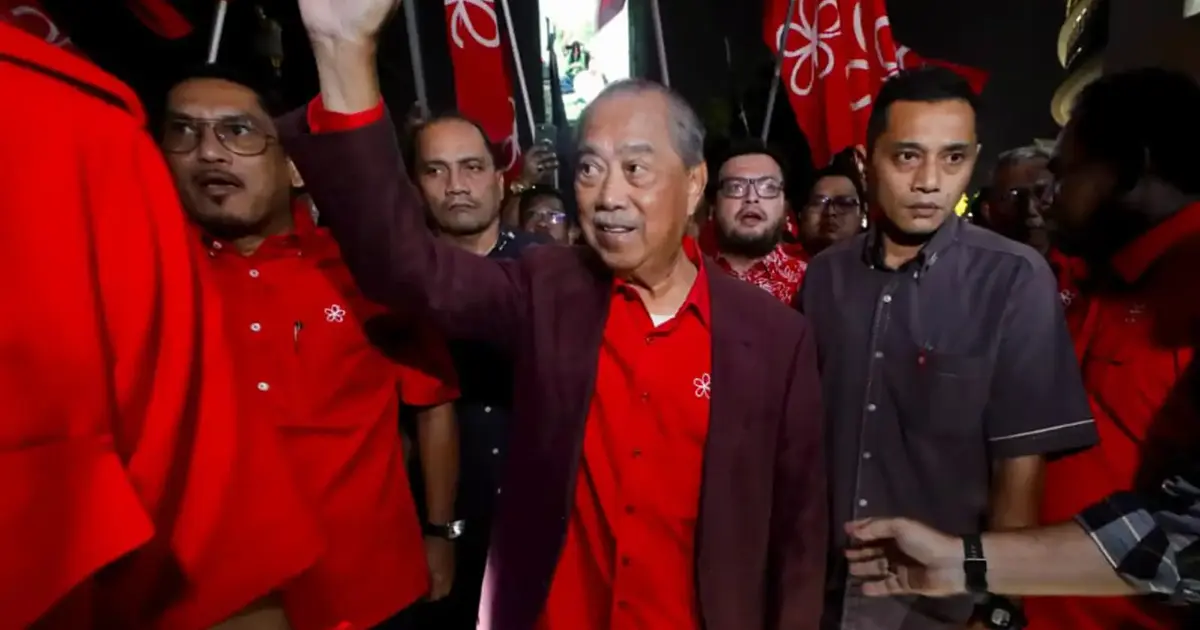
Former Prime Minister Muhyiddin Yassin has drawn the backing of more than 200 supporters in advance of a significant Bersatu party assembly, signalling continued momentum within Malaysia's Malay-Muslim political faction at a time of shifting coalition alignments. The rally underscores Muhyiddin's enduring influence within Bersatu, the party he founded and leads, despite the complex political terrain that has defined Malaysian politics since the 2022 general election.
The timing of the gathering coincides with mounting pressure on Bersatu to clarify its strategic direction on multiple fronts. The party faces critical electoral challenges in two states with differing political compositions and voter demographics, while simultaneously navigating its relationship with PAS, the Islamic Party that has emerged as a dominant force in Malaysia's Islamist political landscape. For Bersatu, balancing these competing interests represents a test of its political relevance and bargaining power within the broader Malay-Muslim coalition.
Johor's electoral cycle presents particular significance given the state's economic importance and its historical role as a bellwether for national political sentiment. The state has traditionally been contested terrain, and forthcoming elections will reflect how effectively Bersatu can mobilize its grassroots base and communicate its policy platform to a diverse electorate. Meanwhile, Negeri Sembilan offers a different calculus, with its own political traditions and voter preferences that require tailored approaches distinct from Johor's campaign strategy.
The question of Bersatu's alignment with PAS carries substantial weight for party members and potential coalition partners alike. These two organizations represent different strands within Malaysia's Islamic political movement, with PAS maintaining a more purist ideological stance while Bersatu has positioned itself as pragmatic and development-focused. Understanding how the meeting will shape their working relationship—whether towards closer cooperation, managed distance, or potential tension—will influence calculations throughout the broader political ecosystem.
Muhyiddin's ability to marshal significant grassroots support demonstrates that despite criticisms and internal challenges, he retains credibility among core party supporters. The show of strength through rallying over 200 adherents provides the Bersatu leadership with a consolidated foundation for the discussions ahead, suggesting that any decisions made at the forthcoming meeting will carry the backing of a mobilized membership base.
For Malaysian political observers, the Bersatu assembly arrives at a moment when coalition configurations remain fluid. The ruling Pakatan Harapan coalition continues to navigate its own internal dynamics, while Perikatan Nasional—which includes both Bersatu and PAS—represents an alternative political formation with growing electoral appeal in certain constituencies. How Bersatu positions itself through its state election preparations and PAS coordination will significantly influence the national political trajectory heading into future electoral contests.
The meeting's focus on state-level elections reflects the reality that much of Malaysia's contemporary political contestation occurs at the sub-national level. State governments control significant resource allocation, development priorities, and policy implementation in areas ranging from land administration to Islamic affairs. Bersatu's performance in Johor and Negeri Sembilan will carry implications beyond those states, serving as indicators of the party's organizational capacity and electoral appeal among crucial demographic groups.
Since Muhyiddin's emergence as a national figure, Bersatu has functioned as a vehicle for his political ambitions while attempting to carve a distinct identity within Malaysia's crowded Malay-Muslim political marketplace. The party has experienced both triumphs—including roles in federal government—and setbacks that have tested its cohesion and strategic clarity. The upcoming assembly represents an opportunity for leadership to recalibrate messaging and tactical approaches in light of evolving political conditions.
The relationship between Bersatu and PAS remains instructive for understanding Malaysia's broader political evolution. Both parties draw significantly from Malay-Muslim constituencies, yet they present different governance philosophies and coalition logics. Whether they move toward deeper integration, maintain parallel organizing, or experience growing friction will affect not only their respective electoral prospects but also the stability and composition of any future federal government.
Party meetings of this nature typically involve frank discussions about resource allocation, candidate selection, and messaging coherence across multiple elections. The presence of over 200 supporters suggests that Bersatu intends to approach these deliberations with broad participation rather than top-down imposition, though the actual outcomes will depend on how diverse viewpoints within the party leadership are reconciled. The decisions emerging from this assembly will likely shape Bersatu's electoral performance throughout the remainder of this political cycle.


