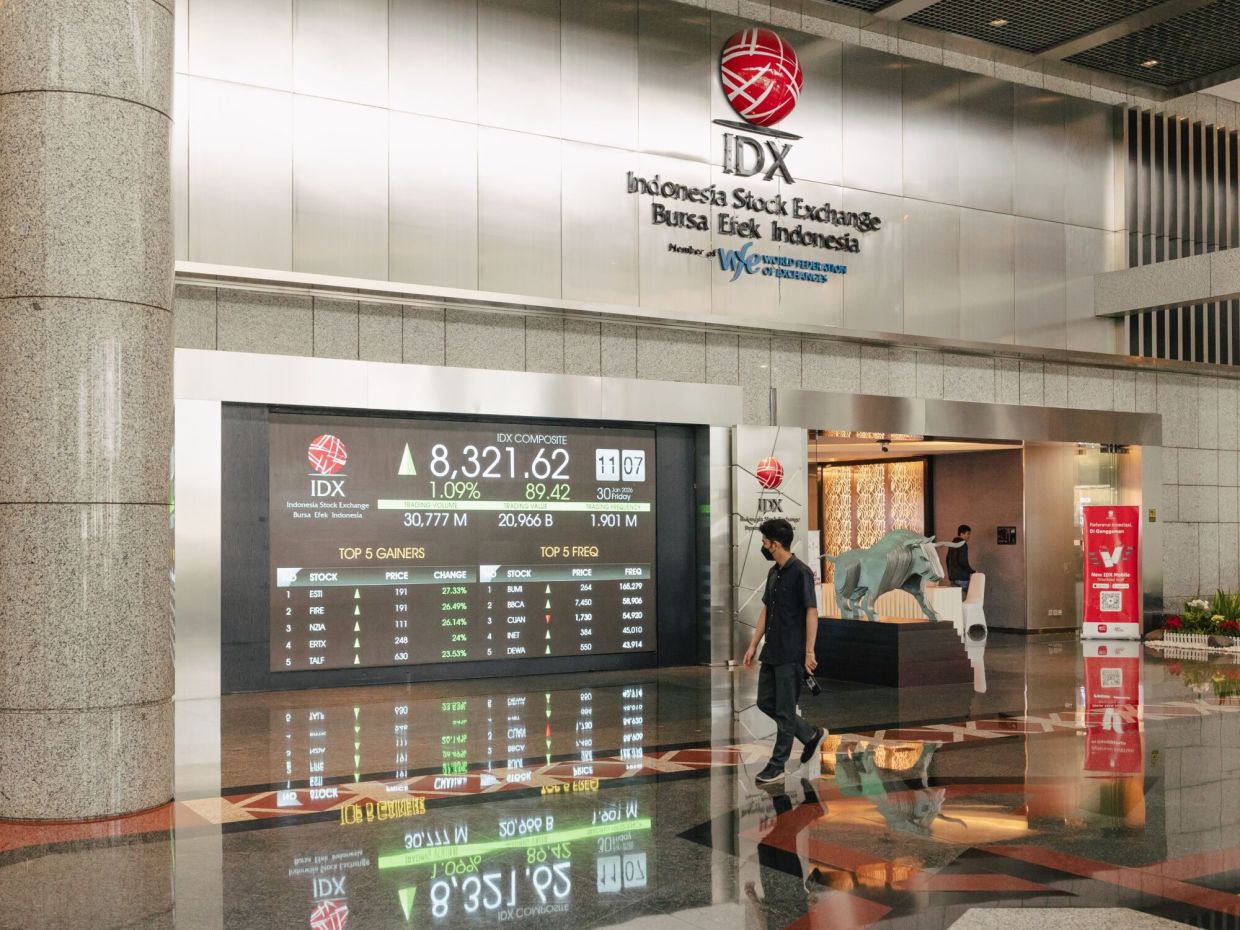
Indonesia's struggle to maintain its emerging market status with major index provider MSCI intensified on Thursday when the influential benchmarking firm released a market accessibility review highlighting fresh concerns about the transparency and integrity of the Southeast Asian nation's capital markets. The assessment focuses on opacity surrounding share ownership structures and coordinated trading patterns, delivering another setback to a market that has already become the worst performer among major global equity exchanges in recent months.
The timing of MSCI's review carries particular significance as the index provider prepares to announce next week whether it will strip Indonesia of its emerging market classification and demote it to frontier status, a decision that analysts warn could precipitate outflows exceeding $13 billion. Such a downgrade would have cascading effects across the region's financial system, as passive investment funds tracking MSCI indexes would be forced to unwind Indonesian holdings, while active managers benchmarked against these indices would face pressure to substantially reduce their exposure to the market.
MSCI's latest action represents an escalation of concerns first raised in January when the firm initially flagged Indonesia's investability issues and signalled the possibility of a downgrade. That earlier warning prompted a sharp deterioration in market sentiment and triggered a series of reform initiatives from Indonesian authorities, including a doubling of the minimum free float requirement for listed companies to 15 percent and the sudden resignation of both the stock exchange chief and the financial services regulator on the same day. Despite these remedial steps, the Thursday review suggests fundamental structural problems persist that cannot be quickly addressed through administrative changes alone.
In its detailed assessment, MSCI specifically downgraded Indonesia's information flow criterion to negative status, reflecting deep concerns about the accessibility and reliability of data regarding who actually owns shares and how trading activity flows through the market. This opacity in fundamental ownership metrics directly undermines the market's price discovery mechanism and prevents international investors from accurately calculating the true proportion of freely tradeable shares available to global buyers, a critical metric known as free float. The inability to assess free float reliably creates significant practical difficulties for global fund managers attempting to properly allocate capital and manage portfolio risk.
The index provider's decision to maintain negative sentiment on information flows despite Indonesia's previous reform efforts suggests that technical adjustments to regulatory requirements may not suffice to address what MSCI perceives as structural governance weaknesses. The firm appears particularly concerned about patterns in share trading and ownership concentration that fall outside normal market parameters, pointing to potential coordination among major shareholders or other activities that could distort price formation and disadvantage minority investors seeking to trade in an orderly fashion.
Not all market observers view MSCI's latest assessment as entirely negative for Indonesia's prospects. Mohit Mirpuri, a fund manager at SGMC Capital based in Singapore, offered a somewhat more measured interpretation, suggesting that the review, while raising legitimate concerns, was more nuanced than initial headlines suggested. Mirpuri highlighted that only one of MSCI's multiple accessibility measures actually deteriorated, while Indonesia continued to demonstrate competitive performance relative to other major Asian markets including South Korea, China and India across several key evaluation criteria. His analysis suggests that MSCI has not reached a blanket condemnation of Indonesian market structure but rather identified specific problem areas requiring attention.
This interpretation aligns with Mirpuri's base case expectation that Indonesia will retain its emerging market status when MSCI announces its verdict next week, though such optimism may face headwinds from the broader macroeconomic backdrop. The Indonesian stock exchange and the country's financial services regulator have not yet publicly responded to queries about the MSCI review, leaving their strategic response still undisclosed as the critical decision deadline approaches.
Indonesia's capital markets have faced mounting pressure from multiple directions beyond MSCI's accessibility concerns. The January warning from MSCI prompted authorities to implement the free float reform mentioned above, leading top officials to resign in what appeared to be a coordinated effort to signal serious commitment to change. In subsequent months, MSCI extended its review timeline in April, and by May had removed six listed companies from its indexes, most with connections to prominent business tycoons, triggering another round of market weakness that underscored investor anxiety about the trajectory of regulatory enforcement.
The broader economic context compounds these market-specific concerns. Under President Prabowo Subianto, Indonesia has implemented various populist policies that have raised questions among global investors about fiscal discipline and policymaking consistency. These concerns have coincided with severe pressure on the Indonesian rupiah, which has declined to historic lows, forcing the central bank to raise interest rates repeatedly in recent weeks in an effort to stabilise the currency and signal commitment to macroeconomic management. The apparent disconnect between policy ambitions and currency market dynamics has further eroded international investor confidence.
Currency market dysfunction represents another dimension of Indonesia's investability challenge that MSCI has specifically noted. The index provider identified a critical gap: Indonesia lacks an efficient offshore currency market while simultaneously facing constraints on onshore forex trading. This limitation creates genuine practical obstacles for foreign institutional investors who need to hedge currency exposure or efficiently repatriate capital, forcing them to navigate an insufficiently developed market infrastructure that may impose unexpected costs or execution challenges.
The loss of investor confidence extends well beyond equity markets. International credit rating agencies Moody's and Fitch both downgraded their outlooks for Indonesian sovereign debt to negative status earlier this year, attributing their actions to diminished credibility in the policymaking process. For an economy with $1.4 trillion in annual output that once occupied a privileged position among emerging market destinations, this shift in sentiment represents a significant turning point in how major financial institutions assess Indonesia's medium-term trajectory.
The cumulative effect of these pressures appears evident in market performance data. The Jakarta benchmark stock index has fallen 29 percent so far in 2026, marking a dramatic erosion of value. Foreign investors, the critical source of international capital inflows that emerging markets depend upon for growth, have sold approximately $3.65 billion worth of Indonesian equities this year, demonstrating rapid capital flight and a rotation away from Indonesia toward more stable emerging market alternatives. This combination of falling asset prices and accelerating foreign selling creates a self-reinforcing negative dynamic that becomes progressively difficult to reverse without major policy interventions or a significant shift in external circumstances.