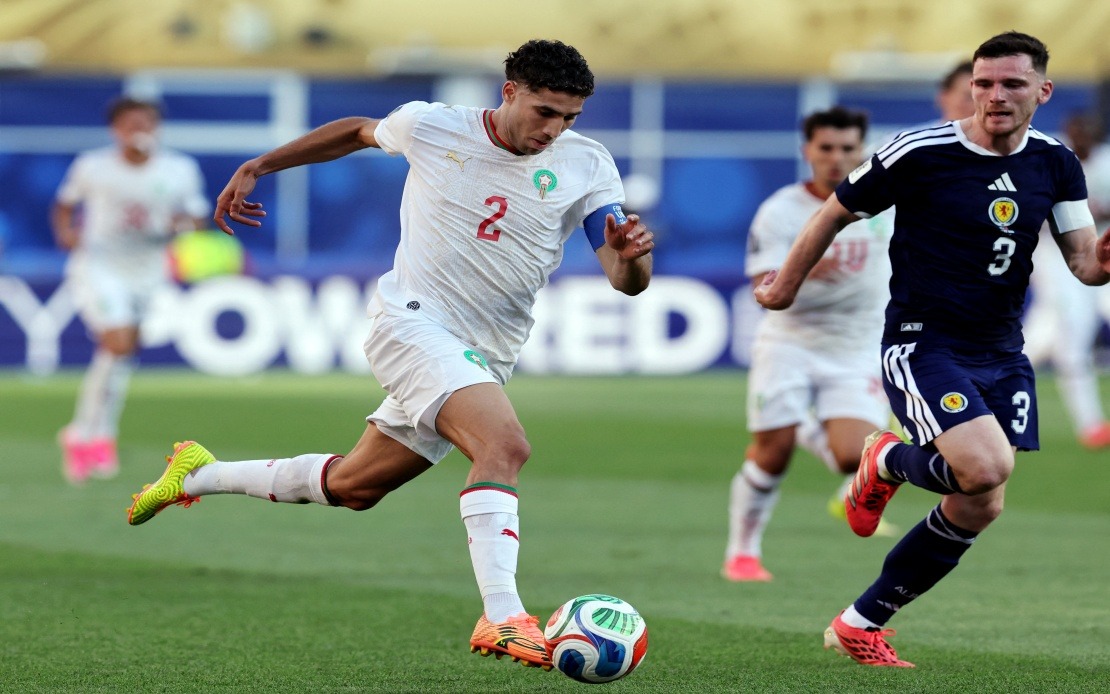
The spotlight on Achraf Hakimi intensified dramatically during Morocco's 1-0 World Cup victory over Scotland on Friday in Foxborough, Massachusetts, when the captain faced sustained boos and jeers from sections of the crowd—a demonstration of public sentiment compounded by courtroom developments unfolding simultaneously in France. Hours before the match kickoff, a Versailles appeal court had announced that the Paris Saint-Germain right back would stand trial on rape charges, creating an unprecedented backdrop for international competition and placing Hakimi at the centre of unwanted attention precisely when his focus should have remained entirely on sporting performance.
The atmosphere surrounding Hakimi's participation became noticeably hostile from the moment lineups were announced. Supporters opposing his presence made their displeasure known through persistent whistling and booing whenever he touched the football, creating an uncomfortable environment that typically affects player confidence and mental fortitude during high-stakes matches. Such treatment at a World Cup stage is exceptionally rare and reflects the polarising nature of the legal allegations hanging over the defender's career.
Despite these challenging circumstances, Morocco coach Mohamed Ouahbi moved swiftly to defend his captain and minimise the distraction to the broader squad. In addressing media questions after the victory, Ouahbi deliberately sidestepped engaging with the legal details or the crowd's reaction, instead choosing to focus entirely on Hakimi's sporting contributions to the team's success. This deliberate compartmentalisation suggests the coaching staff's strategy to shield their player from additional external pressures while attempting to insulate the group from potential morale damage.
Ouahbi's statement of support was unequivocal and public in nature. He indicated that the Moroccan camp stood unified behind Hakimi and would not allow external circumstances to undermine confidence in their captain. By publicly forecasting that the defender would use the World Cup platform to demonstrate his elite-level capabilities as a right back, Ouahbi attempted to reframe the narrative away from controversy and toward athletic achievement. This leadership approach reflects the delicate balance required when managing a player facing serious allegations while maintaining team cohesion and public messaging.
The coach further emphasised that Hakimi's actual performance during the Scotland match reflected a player functioning effectively under pressure. According to Ouahbi, the right back demonstrated considerable tactical sharpness and maintained composure throughout ninety minutes of play, suggesting that despite external turmoil and vocal opposition, Hakimi had succeeded in maintaining professional focus. This assessment of in-match performance contradicts any notion that the hostile reception had visibly destabilised the defender's contribution.
Hakimi himself had broken silence on the court proceedings through social media following the Versailles appeal court's announcement, indicating that he finally had opportunity to address the allegations properly through legal channels. His statement suggested frustration at previous procedural delays and appeared to signal his intention to vigorously contest the charges through the justice system. The 25-year-old has consistently maintained his innocence regarding allegations that he raped a 24-year-old woman at his residence in 2023, and the court's decision to proceed to trial represented a significant development in what has been a prolonged and distressing legal process.
The timing of the trial announcement so close to the World Cup match creates an exceptionally complex situation within international football. Players competing at this level typically require singular focus and freedom from off-field distraction to perform optimally, yet Hakimi faces the simultaneous demands of representing Morocco while navigating serious judicial proceedings in France. This convergence of events presents psychological and professional challenges that extend well beyond typical World Cup pressures.
That other Moroccan squad members declined to comment on the case demonstrates clear team discipline and an apparent agreement to maintain focus on football matters. Such coordination in messaging suggests coaching staff guidance to preserve squad unity and prevent the legal situation from fragmenting the group's concentration or creating internal discord. This calculated restraint reflects maturity in handling a sensitive situation that could easily have become divisive had players engaged freely with media inquiries.
For Malaysian and Southeast Asian readers, Hakimi's situation illustrates how international football increasingly intersects with legal systems and social media discourse in ways that transcend sporting boundaries. The incident raises broader questions about duty of care toward athletes facing serious allegations, the appropriate balance between presumption of innocence and public accountability, and how national teams navigate reputational and competitive considerations when players encounter criminal justice processes.
The Versailles court's decision to proceed to trial follows Hakimi's own appeal against an earlier investigating judge's ruling, indicating that the legal process itself remains contested and unresolved. The coming months will determine not only the trial outcome but also whether Hakimi can compartmentalise these proceedings sufficiently to maintain elite-level performance at both club and international level. His ability to continue functioning as a professional athlete while facing trial will be closely monitored within European football circles and provides an unprecedented test case for how sports institutions manage such extraordinary circumstances.
Outahbi's unwavering public support, combined with team discipline in avoiding commentary, signals that Morocco intends to weather this storm by maintaining focus on performance metrics and allowing judicial processes to unfold independently. Whether this strategy proves sufficient to protect squad morale and Hakimi's mental wellbeing throughout the tournament remains an open question that extends far beyond typical World Cup narratives.