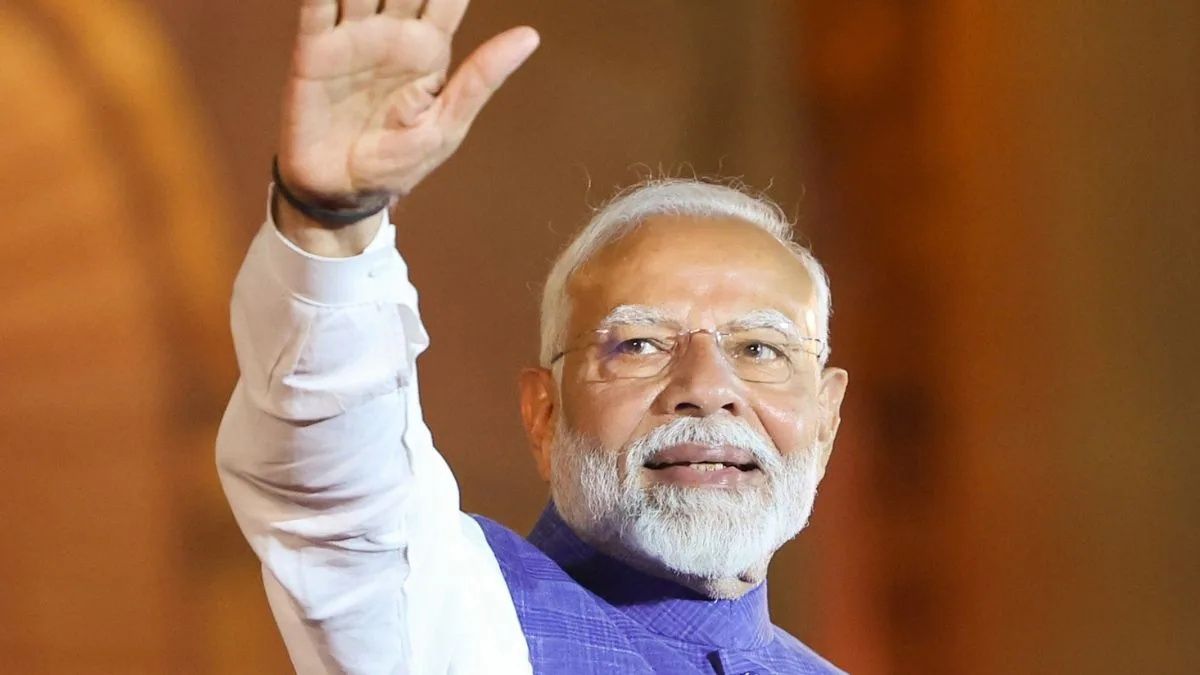
Prime Minister Narendra Modi will take centre stage at India's 12th International Day of Yoga celebrations at Kolkata's historic Red Road on Sunday, June 21, underscoring his commitment to advancing the philosophy of "Healthy Body, Healthy Mind" across the nation. The choice of Kolkata as the venue for this year's main national event marks a significant shift in the Modi government's regional focus, following the Bharatiya Janata Party's decisive victory in the recent West Bengal Assembly elections that displaced the long-ruling Trinamool Congress from power. The decision to host the celebration in the state's capital signals New Delhi's intent to maintain momentum in a region that has traditionally remained outside the saffron party's political stronghold, with senior BJP leaders already indicating that West Bengal will command considerable attention from the central government in the years ahead.
The Red Road, one of Kolkata's most vibrant public spaces, serves as more than a symbolic venue for the occasion. The sprawling thoroughfare carries deep historical resonance, embodying India's military traditions, civil gatherings, and environmental consciousness. By selecting this location, organisers have opted for a setting that resonates with the city's identity and offers ample space for the anticipated record-breaking turnout. The early morning event will feature mass demonstrations of the Common Yoga Protocol, with thousands of participants ranging from top dignitaries and government officials to ordinary citizens participating in synchronized yoga practices. The scale of participation is expected to exceed previous years, reflecting growing public engagement with yoga as a wellness practice.
The overarching theme for this year's International Day of Yoga, "Yoga for Healthy Ageing," addresses a critical demographic challenge facing not just India but the entire region. As populations across Asia experience rising life expectancy, the focus has shifted from merely extending lifespan to ensuring that additional years translate into active, independent, and fulfilling lives. According to Union Minister of State for Ayush Prataprao Jadhav, yoga offers a time-tested holistic framework for achieving this balance by simultaneously strengthening physical resilience, enhancing mental well-being, and improving overall quality of life. This positioning reflects a broader strategic shift within India's health policy, leveraging traditional wellness systems to address contemporary ageing-related challenges that resonate across Southeast Asia.
The Ministry of Ayush has orchestrated an unprecedented mobilization effort to amplify the reach of this year's celebrations beyond the main event in Kolkata. The government's Yoga Sangam Portal has already registered 600,000 organisations, marking a historic milestone in collective participation across India's institutional landscape. This extraordinary figure encompasses schools, corporate offices, wellness centres, community organisations, and residential complexes, all preparing to conduct simultaneous yoga sessions aligned with the prime minister's event. The scale of this coordination demonstrates how yoga has evolved from a niche wellness practice into a mainstream health initiative with institutional backing and widespread acceptance among both public and private sector organisations.
The international dimensions of the 12th International Day of Yoga underscore India's growing soft power influence through its traditional knowledge systems. Approximately 2,500 organized events are scheduled to take place worldwide, with Indian diplomatic missions across 211 countries facilitating celebrations in their respective locations. This global footprint positions yoga not merely as an Indian cultural export but as a universally applicable wellness framework that transcends geographical and cultural boundaries. For Southeast Asian nations with growing health consciousness and interest in alternative wellness approaches, India's standardized Common Yoga Protocol provides a template for systematic implementation and measurement of yoga's health benefits.
The Ministry of Culture has complemented the health-focused celebrations by incorporating cultural heritage into the festivities. The decision to organise yoga programmes at 100 iconic locations nationwide bridges India's wellness traditions with its architectural and cultural landmarks. This initiative serves dual purposes: it democratizes access to yoga celebrations beyond the main venue in Kolkata, ensuring participation from diverse geographic regions, while simultaneously reinforcing the connection between yoga practice and India's civilizational heritage. Such integration of health initiatives with cultural promotion reflects a sophisticated understanding of how wellness messaging can strengthen national identity and cultural pride.
Kolkata has witnessed substantial preparatory activities in the months leading to the main celebration. The city hosted "Daud Se Dhyan 2026 – From Movement to Stillness," a distinctive initiative that combined yoga with the government's Swachhata Se Swagat Programme. This blended approach merged health and environmental consciousness, emphasizing how personal wellness connects to civic responsibility and broader community well-being. Such groundwork has created institutional momentum and public awareness, ensuring that the June 21 celebrations arrive at a moment of heightened community readiness and enthusiasm.
The West Bengal government has ensured maximum participation by mandating involvement in International Day of Yoga celebrations for all state government employees. Workers have been directed to participate at their offices, residential complexes, or designated public venues including Red Road and Milan Mela grounds. This top-down approach to participation, while administratively ensuring attendance figures, also reflects the political significance the state government attributes to the event, particularly given its recent electoral realignment and the need to demonstrate alignment with central government priorities.
The emphasis on healthy ageing carries particular relevance for Southeast Asia, where demographic transitions are occurring at accelerating rates. Malaysia, Singapore, Thailand, and Vietnam face similar challenges of ageing populations requiring sustainable health solutions. India's systematic approach to promoting yoga as a preventive health framework offers practical insights for regional policymakers considering how traditional wellness systems can complement modern healthcare infrastructure. The standardization of yoga protocols and their integration into institutional settings provides a replicable model that transcends purely individual practice.
Beyond the immediate health benefits, the strategic positioning of this celebration in Kolkata reveals deliberate political calculations about regional consolidation. The Modi government's emphasis on West Bengal reflects broader aspirations to establish deeper roots in eastern India, a region where the BJP historically maintained minimal presence. By leveraging wellness initiatives and cultural programming, New Delhi is constructing soft power infrastructure that normalizes central government engagement with regional constituencies. This approach offers lessons for understanding how health policy increasingly intersects with political strategy in contemporary India.
The unprecedented organisational scale of this year's International Day of Yoga celebrations demonstrates how India is systematically mainstreaming yoga within institutional and policy frameworks. The convergence of health ministry coordination, cultural ministry integration, diplomatic outreach, and state-level administrative mobilization creates a comprehensive ecosystem supporting yoga's advancement as a public health priority. For neighbouring Southeast Asian nations observing these developments, India's institutional approach to wellness promotion presents both a cultural export strategy and a practical governance model for addressing population health challenges through evidence-based traditional practices.