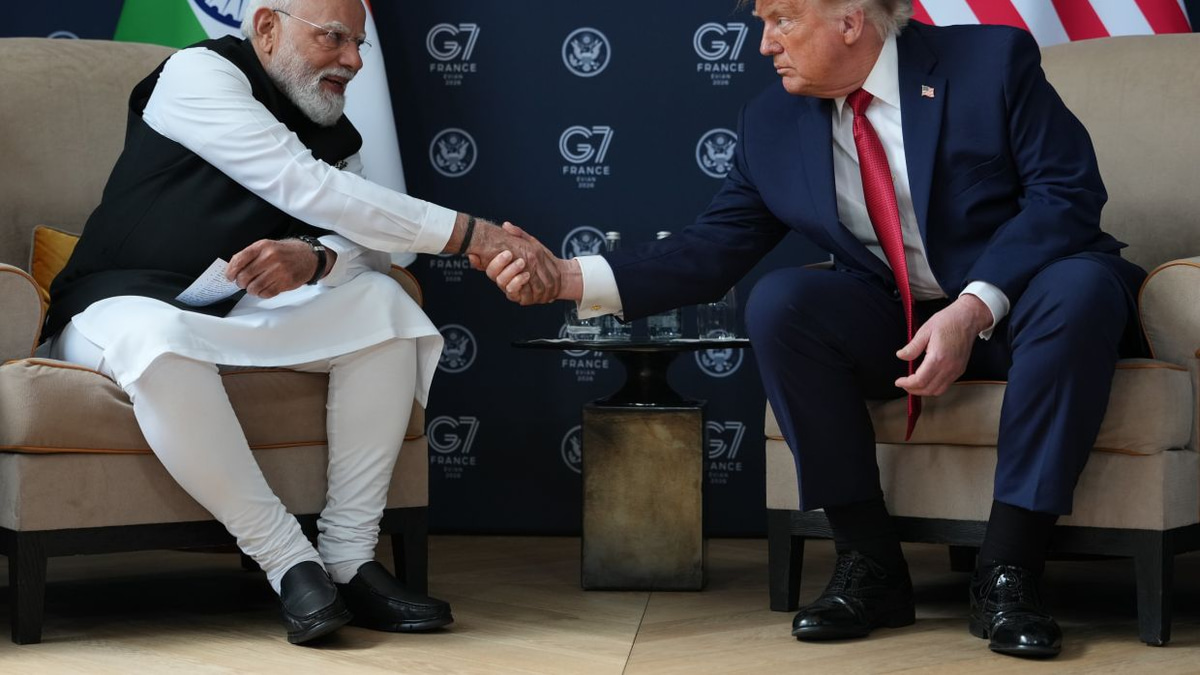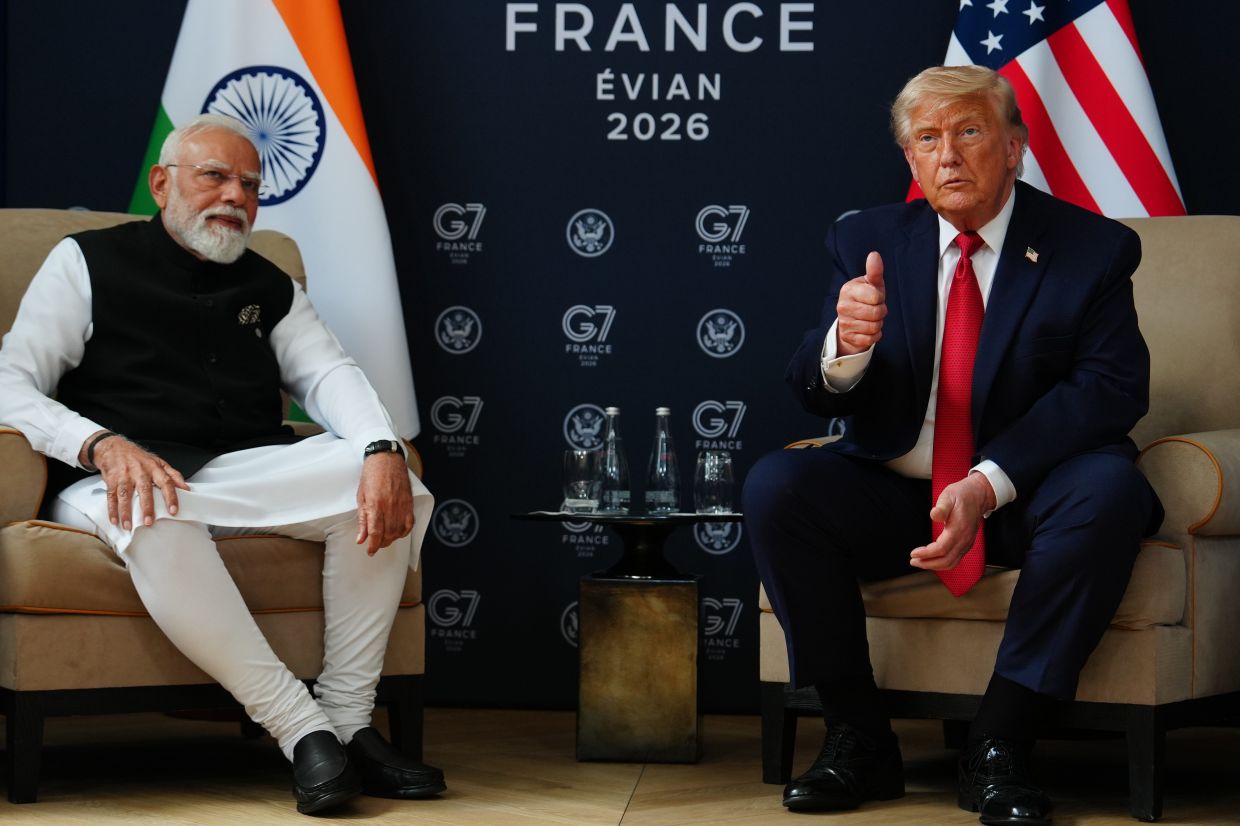
Prime Minister Narendra Modi has signalled that negotiations between India and the United States over a comprehensive trade agreement have reached an advanced stage, following face-to-face discussions with President Donald Trump at the G7 summit in Evian, France. The two leaders met on Wednesday in their first direct engagement since February 2025, when they last convened in Washington. In a statement released by India's foreign ministry, the talks were characterised as having achieved "significant progress" towards an interim Bilateral Trade Agreement, with both governments expressing satisfaction at the pace of negotiations and the substantive issues being resolved.
Trump's assessment of the negotiations was characteristically emphatic, telling reporters that the two nations were "very close" to finalising terms. The American president employed colourful language to describe Modi as both an exceptionally skilled negotiator and a physically striking figure, emphasising that beneath an outwardly pleasant demeanour lies a formidable tactician. This characterisation underscores the intensity and complexity of the discussions, which have spanned multiple rounds of formal negotiations over several months and touched on deeply contentious issues including market access, tariff structures, and sectoral protections.
The bilateral trade ambition between Washington and New Delhi is substantial in scope. Both governments have committed to a target of expanding two-way commerce to US$500 billion by 2030, nearly tripling current trade volumes. This goal reflects the strategic importance both capitals attach to deepening economic ties, particularly as geopolitical competition in the Indo-Pacific region intensifies. The trade agreement represents more than commercial arrangement; it signals alignment between two major democracies on economic architecture in a region increasingly shaped by competing visions of international commerce and investment.
The initial conceptual framework for the trade deal was established in February 2025, but momentum stalled after the US Supreme Court struck down Trump's sweeping tariff measures. The subsequent period witnessed complications that threatened to derail progress entirely. The Trump administration launched formal investigations into allegedly unfair trade practices by multiple countries, including India, and simultaneously imposed a blanket 10 percent tariff affecting numerous trading partners. These actions created additional barriers to reaching agreement, as Indian negotiators had to contend not only with the original negotiations but also with the threat of elevated tariffs that could impact Indian exporters across multiple sectors.
Despite these obstacles, Indian Commerce Minister Piyush Goyal indicated in early June that negotiators had resolved approximately 99 percent of the first phase of the trade agreement. This assessment suggests that outstanding disagreements concern relatively narrow technical issues rather than fundamental differences over the architecture of bilateral trade relations. The remaining one percent of negotiations likely involves contentious items such as agricultural tariffs, pharmaceutical patent protections, and digital trade rules—sectors where India and the United States have historically clashed.
The commitment from both governments to conclude negotiations represents a sharp departure from the protectionist trajectory that appeared inevitable during the period following the Supreme Court ruling. Modi ordered officials to accelerate work toward a "commercially meaningful agreement at the earliest", while the Indian statement indicated that policymakers on both sides recognised the mutual benefit of advancing the negotiations rather than prolonging disputes. To maintain momentum, Jamieson Greer, the US Trade Representative, will travel to India next week to oversee the next round of substantive discussions, signalling Washington's seriousness about closing the deal within an accelerated timeframe.
For Malaysian and Southeast Asian readers, the implications of a US-India trade agreement warrant close attention. The establishment of a major trade architecture between Washington and New Delhi signals the direction of economic governance in the region. An agreement that reflects American and Indian priorities may create new standards and expectations that smaller economies must navigate. Furthermore, the resolution of tariff disputes and market access issues between these two major economies could shift investment flows and supply chain configurations across Asia, potentially creating opportunities for Malaysian companies positioned in sectors that benefit from US-India trade expansion while creating challenges for firms dependent on legacy supply chain arrangements.
Beyond commerce, Modi raised humanitarian concerns stemming from the Middle East conflict during his discussions with Trump. The prime minister urged the American administration to implement safeguards protecting Indian seafarers as the United States implements an agreement aimed at ending the regional war. This appeal followed the deaths of three Indian sailors killed in a US military strike on a commercial vessel near Oman on June 10. The incident highlighted the vulnerability of Indian maritime workers to escalating tensions in critical shipping lanes.
Modi leveraged his meeting with Trump to emphasise that the Middle East crisis has inflicted disproportionate damage on developing economies. The closure of the Strait of Hormuz by Iran has constrained energy supplies, while disruptions to agricultural and fertiliser supply chains originating from the conflict have created ripple effects across global markets. India, as a major importer of crude oil and dependent on global food supply chains, has absorbed substantial economic costs from these disruptions. The prime minister warned that these supply chain disruptions will continue to burden the Global South for an extended period, even as diplomatic efforts progress toward resolving the underlying conflict.
The convergence of trade negotiations and geopolitical concerns in Modi's interactions with Trump reflects the interconnected nature of contemporary international relations. Bilateral economic agreements now occur within the broader context of regional stability, energy security, and humanitarian concerns. For India, advancing the trade arrangement with the United States while securing American commitment to protecting Indian citizens in contested regions represents a multidimensional diplomatic achievement. The pace and structure of the emerging trade architecture between these two nations will continue to shape economic and strategic orientations throughout Asia for years to come.