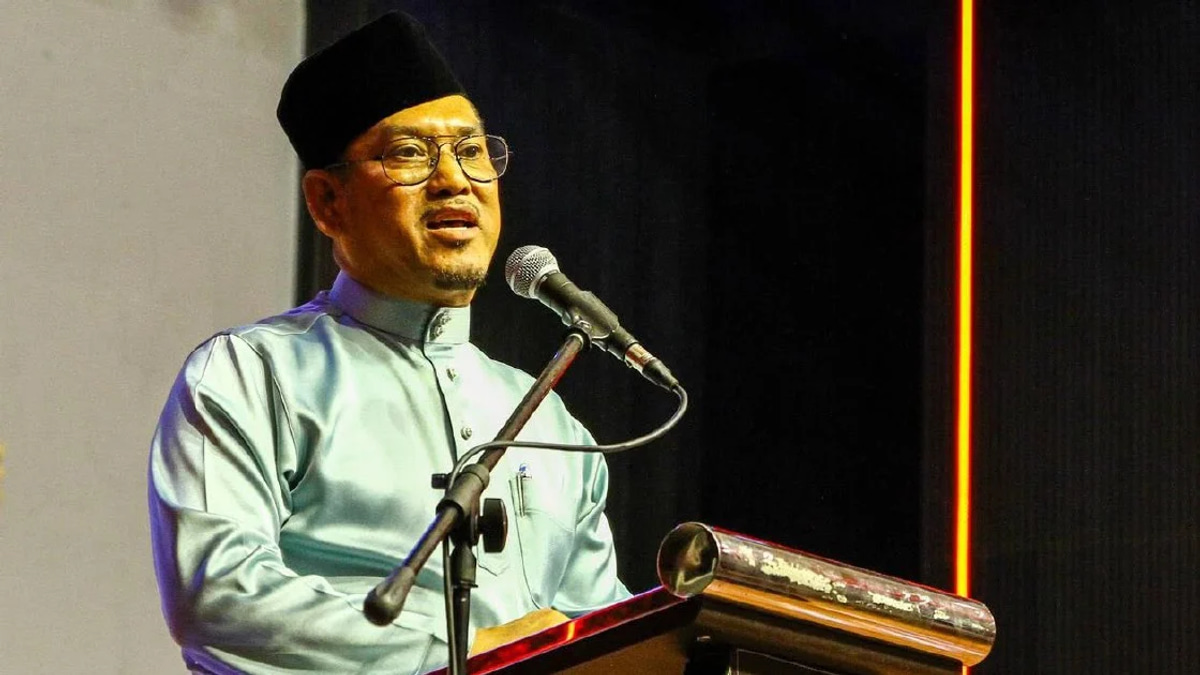
Melaka's approach to grassroots governance is undergoing a philosophical shift, with Chief Minister Datuk Seri Ab Rauf Yusoh signalling that measuring success through the sheer number of programmes implemented is a flawed metric. Instead, the state is pivoting towards a results-driven framework where tangible improvements in residents' lives form the true benchmark of achievement. This reorientation reflects a broader maturation in how Malaysian state governments are conceptualising their relationship with constituents, moving beyond vanity metrics towards accountability mechanisms that demand demonstrable outcomes.
The Wakil Rakyat Untuk Rakyat (WRUR) initiative, which has now expanded to 19 state constituencies across Melaka, has emerged as the vehicle for this methodological overhaul. Since its rollout, the programme has garnered 4,027 complaints from residents across participating areas, with authorities successfully resolving more than 2,633 of these grievances—representing a resolution rate exceeding 65 per cent. This figure carries significance not merely as a statistical achievement but as evidence that the state government's complaint-handling infrastructure possesses both the capacity and institutional will to translate citizen grievances into concrete action. The emphasis on resolution percentages rather than complaint volumes suggests a deliberate messaging strategy: the government is signalling that it welcomes scrutiny and treats each complaint as a legitimate demand for service delivery.
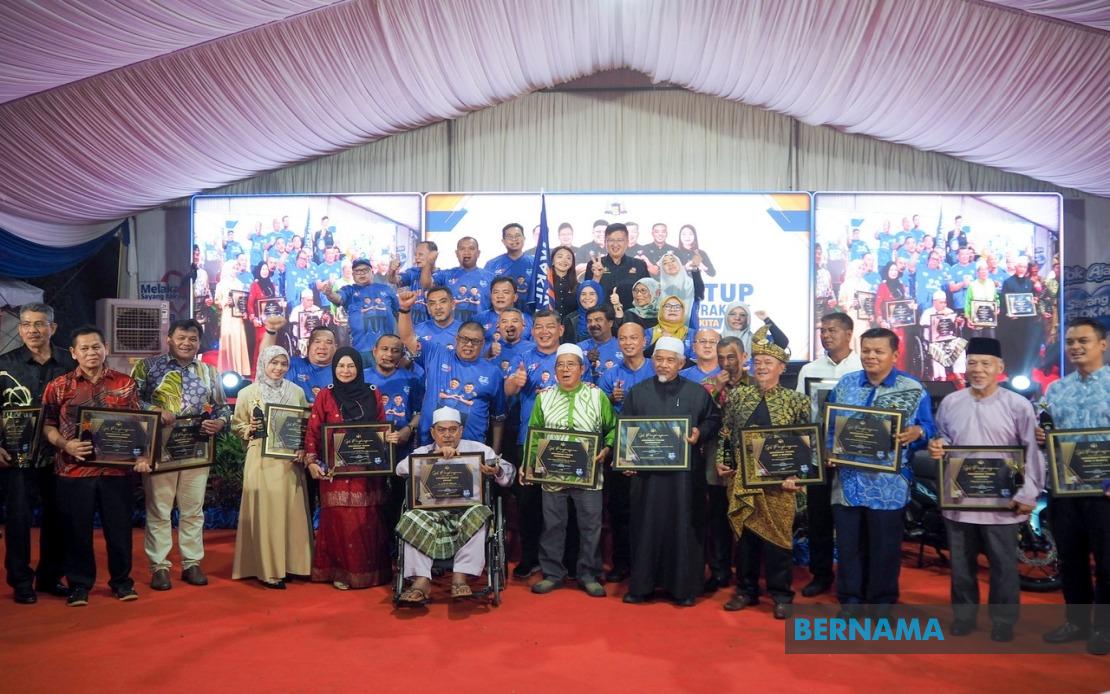
Ab Rauf's remarks came during the ceremonial closure of WRUR activities in Kota Melaka parliamentary constituency, the third parliamentary division to complete the four-week initiative following Alor Gajah and Hang Tuah Jaya. During this specific implementation window, the Kota Melaka rollout generated 470 complaints across its five constituent state constituencies. Of these, 31 were resolved before the programme's formal conclusion, with the remainder fed into ongoing processing pipelines ordered by priority level. Critically, Ab Rauf announced that the cessation of the formal WRUR programme does not signal an end to complaint resolution; rather, he has instructed all relevant agencies to maintain their commitment to addressing outstanding issues until residents perceive tangible improvements in their circumstances.
The WRUR framework itself represents a deliberate institutional design choice. Rather than creating new bureaucratic entities, the programme weaponises existing government machinery at the grassroots level, ensuring that every complaint—regardless of the complainant's political affiliation, ethnicity, or residential location—receives documentation and processing. This universalist approach carries symbolic weight in Malaysian politics, where questions of equitable service delivery have historically generated substantial community tension. By anchoring the programme's legitimacy to principles of non-discrimination and comprehensive coverage, Melaka's administration is attempting to redefine what responsible government looks like in the contemporary Malaysian context.
The Kota Melaka rollout itself encompassed a staggering operational footprint: across five state constituencies, more than 500 individual programmes were executed during the four-week period, collectively benefiting over 200,000 residents. This scale demonstrates the administrative machinery required to operationalise genuine grassroots engagement at the state level. The sheer volume of activities suggests that WRUR functions simultaneously as a grievance redressal mechanism and a service delivery acceleration platform, collapsing the distinction between hearing complaints and providing immediate relief. For Malaysian readers accustomed to government programmes often stalling at the announcement phase, the completion of 500+ activities within a month-long window signals either exceptional administrative capacity or, alternatively, the possibility that many activities are relatively modest in scope—a distinction worth monitoring in future iterations.
Parallel remarks from State Tourism, Heritage, Arts, and Culture Committee chairman Datuk Abdul Razak Abdul Rahman provided additional perspective on Melaka's development trajectory, specifically within the Telok Mas state constituency. Over a five-year period, authorities have channelled 328 local development projects totalling nearly RM68 million into Telok Mas and its 12 constituent areas. These projects span traditional infrastructure categories: road upgrades, river and drainage rehabilitation, sewerage system improvements, house repairs and construction, community hall renovations, and educational facility enhancements. The breadth of project categories suggests a comprehensive rather than siloed approach to local development, addressing the interconnected challenges that typically confound grassroots development efforts in Malaysian constituencies.
Beyond infrastructure, Telok Mas residents have accessed substantial welfare provisions during the same five-year window. Approximately 6,098 individuals benefited from food assistance, welfare disbursements, and health support packages aggregating over RM1.2 million in value. Additionally, 213 medical beds were distributed to residents identified as requiring such assistance, and 70 iterations of the Jualan Rahmah and Jualan Murah programmes—subsidised retail initiatives designed to ameliorate the cost-of-living pressures that have become defining features of the Malaysian household experience—were implemented since 2022. The Free Petrol Programme, a fuel subsidy initiative, extended assistance to approximately 15,000 residents, distributing RM177,000 in support. These programmes collectively represent a recognition that infrastructural development, while necessary, remains insufficient without complementary social safety net expansion.
The educational dimension of Telok Mas's development portfolio underscores ongoing state investment in human capital formation. A total of 1,694 secondary students preparing for their Sijil Pelajaran Malaysia (SPM) examinations received programme support, while 255 high-performing Form Five students and undergraduates at public institutions received educational incentives totalling RM244,200. This targeted approach to educational support—concentrating resources on examination preparation and merit-based tertiary progression—reflects an understanding that competitive academic outcomes serve as primary pathways for socioeconomic mobility within Malaysian society. Whether such support translates into measurable improvements in examination success rates and tertiary enrolment rates remains an important empirical question.
Melaka's tourism development agenda introduces another dimension to its state-level governance philosophy. Several new projects have secured approval to strengthen the local tourism sector, including a RM2.4 million allocation from the Ministry of Tourism, Arts and Culture designated for upgrading tourism facilities in Sungai Punggor and Alai, with completion targeted for 2027. Simultaneously, RM300,000 has been earmarked to transform Dataran Telok Mas into a one-stop centre integrating tourism information and local traditional product retail operations. These interventions reflect recognition that tourism development, properly executed, can generate employment, stimulate local entrepreneurship, and anchor cultural preservation efforts. The inclusion of the Bukit Larang geosite within Melaka Geopark's framework, with National Geopark recognition assessment scheduled for October, suggests that Melaka's tourism strategy extends beyond conventional heritage tourism towards geological and scientific tourism dimensions.
The WRUR programme's emphasis on impact measurement rather than activity counting carries implications that extend beyond Melaka itself. As Malaysian voters increasingly scrutinise government performance through lived experience rather than ceremonial metrics, state administrations face mounting pressure to demonstrate that their initiatives generate observable improvements in service quality, infrastructure condition, and household welfare. Melaka's reorientation towards results-driven governance evaluation potentially establishes a template that other states might observe and potentially emulate. Conversely, if WRUR activities prove superficial or if the promised continued attention to unresolved complaints dissipates following the programme's formal closure, the initiative may become emblematic of the gap between governance rhetoric and implementation reality that has long characterised Malaysian politics.
For residents in Kota Melaka and surrounding constituencies, the WRUR programme represents an institutional channel through which grievances can receive formal registration and ostensible administrative attention. Whether this translates into genuine problem resolution at scale remains to be demonstrated through longitudinal assessment of complaint processing outcomes and resident satisfaction surveys. The 65 per cent resolution rate provides an encouraging baseline, yet questions persist regarding the quality of resolutions, the timeframes required for processing, and the mechanisms available to residents whose complaints remain unresolved after extended periods. These operational details will ultimately determine whether WRUR establishes a new standard for responsive governance or represents merely another well-intentioned initiative that founders upon the gap between ambition and institutional capacity.