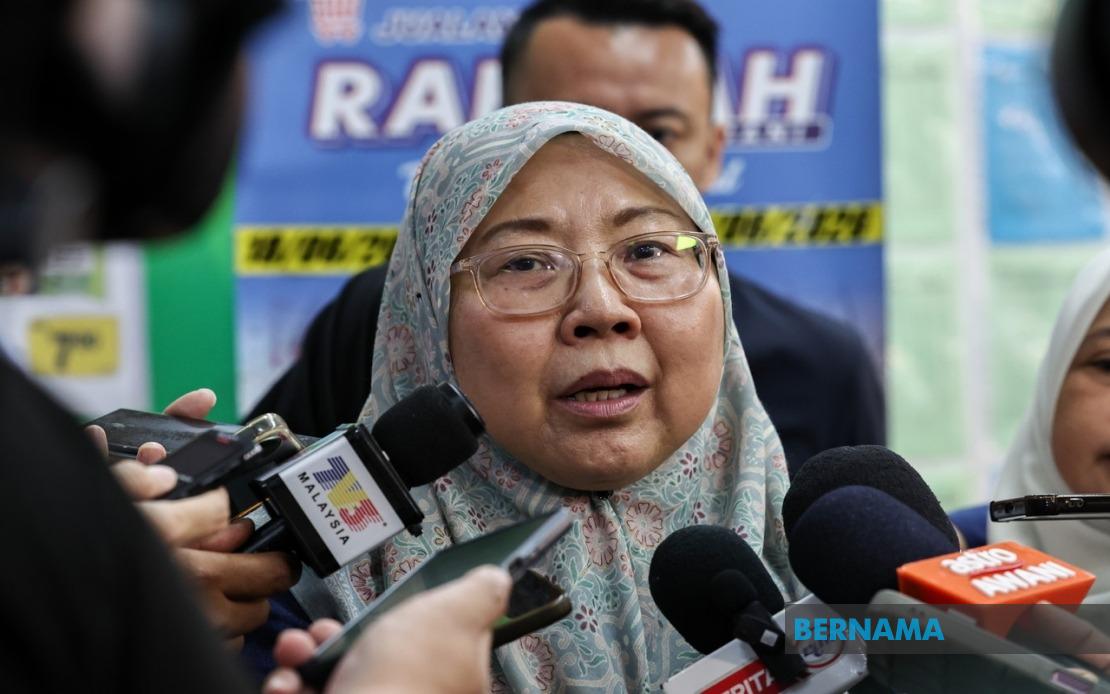
The Ministry of Domestic Trade and Cost of Living (KPDN) has moved to reassure consumers that supplies of basic necessities will remain plentiful throughout the Johor and Negeri Sembilan state elections, even as international shipping costs climb due to the escalating conflict in West Asia. Deputy Minister Datuk Dr Fuziah Salleh outlined the government's readiness to manage potential supply disruptions when demand typically surges from election officials and visiting citizens from other states.
International logistics expenses have become a persistent headwind for Malaysia's supply chains, particularly affecting the import-dependent food and cooking oil sectors. The KPDN has therefore implemented forward-planning mechanisms to shield domestic markets from external shocks. Rather than relying on traditional import schedules, the ministry has worked proactively with local manufacturers and distributors to stockpile reserves ahead of the election period, demonstrating how policy coordination can mitigate global price volatility at the household level.
A centrepiece of the ministry's preparation involves restructuring how subsidised cooking oil reaches consumers. The new direct distribution model bypasses wholesale intermediaries entirely, channelling product from repackers straight to retail points of sale. This streamlined pathway reduces handling costs and opportunities for black-market diversion, while accelerating product turnover. For Johor, the system currently supports a monthly allocation exceeding 3,000 metric tonnes, processed through 18 licensed repackers and delivered to 95 designated outlets nationwide, including major chains like Econsave.
Control mechanisms embedded within the supply chain address another persistent challenge: the leakage of subsidised goods to non-eligible buyers or traders seeking arbitrage profits. At checkout, staff verify customer identity through MyKad scans or mobile application authentication, restricting purchases to Malaysian citizens. Such gatekeeping, while administratively cumbersome, reflects broader concerns about subsidy sustainability as population pressures and fiscal constraints intensify across Southeast Asia.
On-site verification during an inspection at Econsave Taman Daya illustrated the practical application of these measures, with roughly 100 cartons of subsidised cooking oil available daily to absorb local purchasing patterns. This stable supply level suggests the KPDN's inventory planning has successfully anticipated demand fluctuations without excess stockpiling, which would tie up capital and risk spoilage. The visibility of adequate stock at major retail points offers tangible assurance to ordinary shoppers concerned about Election Day shortages.
The broader narrative of the KPDN's work emerges through the government's Rahmah MADANI Sales Programme (PJRM), a nationwide initiative to offer reduced-price essentials directly to low and middle-income households. Between January and mid-June 2026, the programme staged 13,692 events across Malaysia, drawing millions of shoppers and processing over a million transactions. Within Johor specifically, organisers conducted 920 sessions across all 56 state constituencies, attracting 2.3 million attendees and generating approximately 1.46 million purchases. These figures underscore the scale of government intervention in retail pricing and consumer assistance.
For Malaysian policymakers, the PJRM statistics represent a validation of the cost-of-living mitigation strategy pursued since 2023. By decoupling subsidy delivery from traditional grocery channels and instead creating temporary, geographically dispersed retail events, the government has expanded reach whilst reducing permanent subsidy bills. However, the sustainability of such programmes remains contested among economists, who warn that artificial price floors can distort market signals and discourage domestic production in competing sectors.
The timing of these assurances carries electoral weight, arriving just weeks before Johor's July 11 polling date. A smooth, well-stocked shopping experience during campaign weeks reinforces voter perceptions of government competence and care for household welfare—traditional political advantages. Conversely, any supply disruptions or long queues at subsidy points could damage incumbent credibility. The ministry's explicit commitment to avoiding shortages thus serves both logistical and electoral functions.
Regionally, Malaysia's experience managing supply chains amid West Asian volatility mirrors challenges facing other importing nations throughout Southeast Asia. Thailand, Indonesia, and the Philippines similarly depend on stable maritime routes and predictable shipping costs to maintain food security and subsidy affordability. Should Middle Eastern tensions escalate further or persist longer, transportation premiums could eventually force policymakers across the region to recalibrate subsidy programmes or shift sourcing strategies. Malaysia's proactive restocking approach offers one model, though its replicability depends on fiscal room and storage capacity that not all neighbours possess.
The introduction of direct repackager-to-retail pathways also reflects a broader digital and administrative modernisation of Malaysia's supply ecosystem. By eliminating wholesale middlemen and deploying identity verification technology, the KPDN narrows opportunities for corruption and unauthorised redistribution. Scalability of such systems to other subsidised goods—rice, sugar, flour—could eventually reshape how Malaysia delivers welfare assistance, shifting from blanket price controls toward targeted, trackable transfers. Such evolution would align domestic practice with international best practices increasingly adopted by middle-income nations managing fiscal pressures.
The July 7 early voting period and June 27 candidate nominations will test whether the KPDN's preparations withstand the administrative intensity of an election cycle. Supply chain managers must accommodate not just ordinary shoppers but also the additional staff, security personnel, and observers descending on Johor for polling operations. The ministry's confidence in maintaining over 3,000 tonnes of monthly cooking oil allocation suggests detailed coordination between federal trade authorities, state distributors, and retail partners. Execution over the coming weeks will reveal whether planning has genuinely insulated Johor consumers from global shocks or merely deferred inevitable price pressures until after voting concludes.