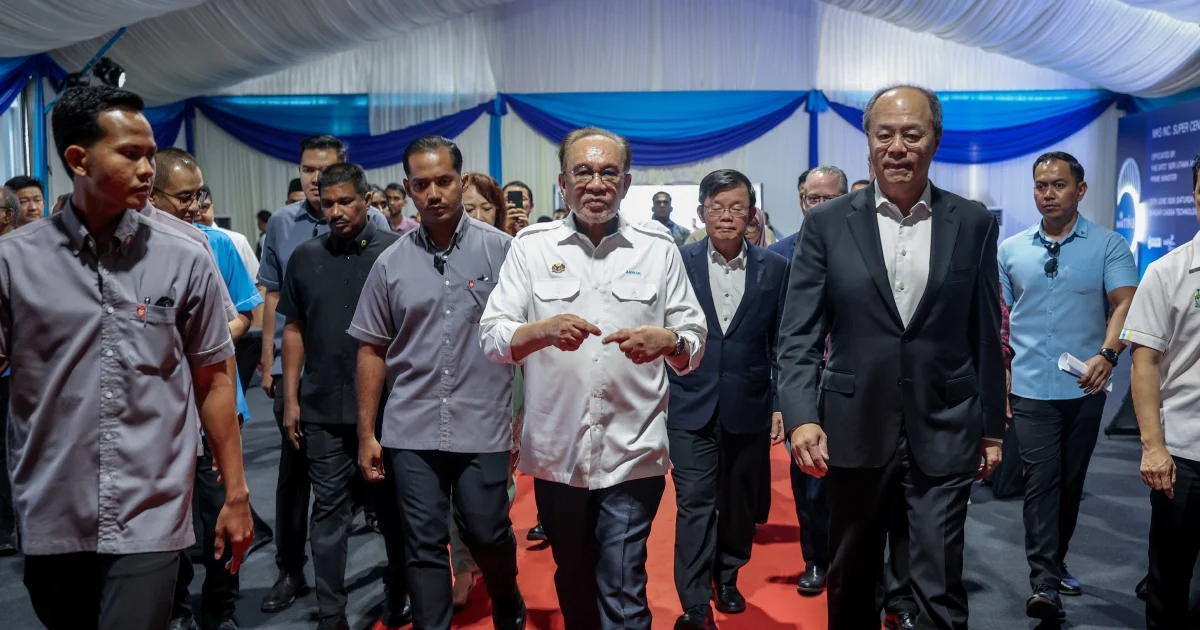
Prime Minister Datuk Seri Anwar Ibrahim has pointed to Malaysia's diplomatic strategy of engaging with all global powers while maintaining strict neutrality as a critical lever for attracting foreign investment and sustaining economic momentum. Speaking in Batu Kawan, Anwar underscored how the nation's refusal to tilt decisively towards any single superpower or geopolitical bloc creates a uniquely attractive investment environment that multinational corporations and institutional investors increasingly value in an uncertain global landscape.
The statement reflects a deliberate positioning by Malaysia at a time of sharp US-China competition and widening geopolitical fractures across the Indo-Pacific. Rather than forcing investors to choose between competing power blocs—a reality that has constrained business expansion in several other Southeast Asian economies—Malaysia's independent foreign policy signals political stability and an absence of ideological constraints on trade and capital flows. This flexibility has become a significant competitive advantage as global firms seek to diversify supply chains and de-risk operations away from singular dependencies.
Anwar's emphasis on neutrality also addresses a longstanding concern among foreign investors regarding predictability and access to stable markets. Nations perceived as non-aligned or uncommitted to rigid alliance systems often experience smoother negotiations with multinational enterprises, as companies can conduct business without navigating the diplomatic complications that arise when countries are locked into exclusive partnerships. Malaysia's historical role as a bridge-builder in regional diplomacy has reinforced this perception, making the country an attractive venue for regional headquarters, manufacturing hubs, and fintech operations serving both Western and Asian markets.
The economic benefits of this diplomatic posture have been substantial. Malaysia has successfully attracted major semiconductor manufacturers, advanced manufacturing facilities, and digital economy investments despite intense regional competition from Vietnam, Thailand, and Indonesia. The country's ability to maintain strong relationships with countries like the United States, China, Japan, and the European Union simultaneously—without appearing to compromise any relationship—has translated into trade agreements, investment commitments, and technology partnerships that might otherwise flow to rivals with clearer geopolitical alignments.
This approach also carries implications for Malaysia's role within ASEAN and the broader Southeast Asian economic landscape. As a founding member committed to non-interference and regional consensus-building, Malaysia has positioned itself as a trusted partner for initiatives like the RCEP, CPTPP engagement, and emerging frameworks for digital economy cooperation. Investors viewing Malaysia as a stable, neutral jurisdiction thus gain confidence in channeling investments through a nation unlikely to face sudden trade restrictions, sanctions, or policy reversals triggered by international rivalries.
However, maintaining genuine neutrality in an era of polarization requires sustained diplomatic skill and careful calibration. Anwar's insistence on this principle suggests the government recognizes that any perception of tilting towards one superpower would immediately undermine investor confidence and make Malaysia vulnerable to pressure from excluded powers. The strategy demands consistent messaging across multiple channels and demonstration of reciprocal engagement with all major trading partners and geopolitical actors.
For Malaysian policymakers, this neutrality doctrine also intersects with economic diversification efforts. By refusing to be locked into a single supplier ecosystem or market structure, Malaysia preserves optionality in pursuing industrial policies, technology partnerships, and trade arrangements that serve national development goals rather than external strategic interests. This flexibility has enabled Malaysia to negotiate favorable terms with investors in sectors ranging from green energy to artificial intelligence, areas where geopolitical tension could otherwise impose constraints.
The investment confidence Anwar references stems partly from Malaysia's successful track record in executing this balancing act over decades. Unlike some regional peers that have recently shifted alignment, Malaysia has maintained consistent diplomatic positioning while delivering on growth targets and infrastructure development. This history creates reassurance among investors that policy continuity and predictability will persist regardless of external pressures.
Yet challenges persist. Rising tensions in the South China Sea, competing claims over maritime resources, and accelerating technological decoupling between major powers may eventually force Malaysia into harder choices. The government's commitment to neutrality will be tested should regional disputes intensify or should powerful trading partners demand exclusive arrangements. Managing these pressures while retaining investor confidence will require sophisticated diplomacy and careful articulation of national interests.
The longer-term significance of Anwar's statement lies in its affirmation that neutrality and strategic autonomy remain viable—and valuable—foreign policy orientations in the 21st century. As globalization fragments and multipolar competition reshapes international relations, nations offering stable, inclusive frameworks for business and investment become increasingly precious. Malaysia's deliberate cultivation of this position suggests recognition that economic strength ultimately rests on the ability to attract capital and talent without surrendering independence to external powers.
For regional observers, Malaysia's strategy offers a template for how medium-sized powers can navigate great power competition without becoming vassal states or sacrificing economic opportunity. The model depends on maintaining credibility across multiple constituencies simultaneously—a task requiring consistency, transparency, and genuine commitment to rules-based regional order that benefits all parties.