Datuk Dr Zulkifli Hasan, the Minister in the Prime Minister's Department (Religious Affairs), has appealed to Malaysia's youth population to absorb the deeper meanings embedded within the Islamic concept of Hijrah, positioning the Prophet Muhammad's historic migration as a timeless template for initiating constructive change in their own lives and communities. Speaking from Putrajaya on June 16, Zulkifli emphasised that young Malaysians possess considerable untapped capacity to effect meaningful progress by reflecting upon and internalising the transformative principles underlying the Hijrah narrative, which traditionally marks the Prophet's journey from Makkah to Madinah in the Islamic calendar year 1 AH.
The minister's comments coincided with the nation's preparations for the Maal Hijrah 1448H/2026M celebration, a significant observance within the Islamic calendar that commemorates this pivotal moment in Islamic history. By invoking the concept of Hijrah specifically towards Malaysia's younger demographic, Zulkifli framed the celebration not merely as a historical remembrance but as a call to action, suggesting that the principles underlying the Prophet's migration—perseverance, faith-driven decision-making, and community building—remain profoundly relevant to contemporary challenges facing Malaysian society and the broader region.
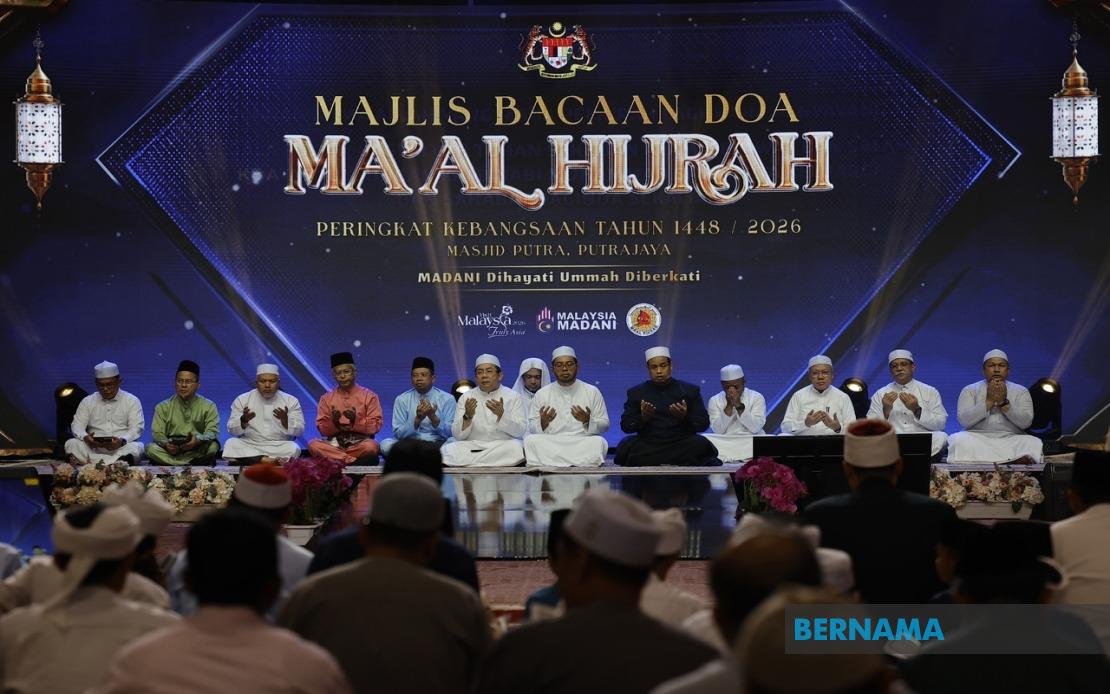
This year's national-level observance has adopted a deliberately modified structure intended to deepen spiritual reflection and practical application. Rather than following conventional ceremonial formats, organisers selected Putra Mosque as the symbolic and physical anchor point for the main programmes, deliberately recalling how the Prophet established the mosque as the foundational institution upon arriving in Madinah. Zulkifli articulated this choice explicitly, noting that the mosque represented the genesis of both civilisation and organised community development in the Islamic context. By commencing proceedings at this location, organisers aimed to reignite collective consciousness regarding the Prophet's struggles and achievements, channelling participants' attention toward the institutional and communal dimensions of Islamic practice.
The adjusted scale of this year's celebration reflects pragmatic considerations extending beyond purely religious dimensions. Organisers consciously structured the events as a modest undertaking, deliberately accounting for resource constraints and energy conservation imperatives arising from the ongoing global supply chain disruptions that have affected economies worldwide, including Malaysia. This measured approach demonstrates how religious observance can align with contemporary practical realities without diminishing spiritual significance—a particularly pertinent message for Southeast Asian nations navigating competing pressures between cultural preservation and sustainable resource management.
A pivotal component of the national celebration involves an intellectual and inspirational dimension through keynote lectures scheduled for June 18 at the JAKIM Auditorium. This segment is anticipated to attract approximately 1,000 participants and will feature prominent national and international personalities recognised as exemplars of Hijrah principles. These speakers are expected to share personal testimonies, analytical perspectives, and practical insights drawn from their experiences embodying and advancing the Hijrah spirit within contemporary contexts. Such programming transforms the observance from purely commemorative to actively pedagogical, offering audiences tangible examples of how historical spiritual concepts translate into modern individual and societal advancement.
The ceremonial centrepiece occurs on the actual date corresponding to 1 Muharam 1448H within the Islamic calendar, coinciding with June 17 at Putra Mosque beginning at 7 am. The highlight comprises the presentation of national and international Maal Hijrah Figure awards, recognising individuals whose lives and work exemplify the transformative principles embedded within Hijrah philosophy. The ceremony will be officiated by Sultan Nazrin Shah, the Sultan of Perak, conferring significant institutional legitimacy and emphasising the state's commitment to promoting Islamic spiritual values among its citizens.
For Malaysian readers and observers across Southeast Asia, Zulkifli's emphasis on Hijrah as a catalyst for youth engagement carries particular resonance. The region's nations contain substantial young populations navigating rapid technological, economic, and social transformations. By positioning Hijrah not as backward-looking nostalgia but as forward-propelling principle, the minister articulates an Islamic framework for progress that could potentially appeal to youth seeking value-based direction within secular-dominant societies. This framing may also contribute to broader interfaith dialogue, as the emphasis on institutional development and community-building aspects of Hijrah can resonate across religious boundaries.
The theological underpinning of Zulkifli's appeal rests on a specific interpretation of Hijrah's significance. Beyond its literal historical meaning—the Prophet's physical relocation—Hijrah encompasses metaphorical dimensions: the internal spiritual migration from darkness to enlightenment, from ignorance to knowledge, from personal disorder to purposeful living. By encouraging youth to internalise these deeper conceptual layers, Zulkifli implicitly argues that transformative change begins within individual consciousness before manifesting in collective action. This psychological and spiritual framework may offer Malaysian young people an alternative to purely materialistic or purely secular paradigms for understanding personal development and social contribution.
The strategic selection of Putra Mosque as the ceremonial centre also carries symbolic weight within Malaysia's contemporary political and religious landscape. Designed with architectural grandeur and situated in the administrative capital, Putra Mosque represents institutional Islam's integration within the Malaysian nation-state. Commencing national Hijrah celebrations there underscores the government's positioning of Islamic values as central to national identity and governance, a particularly salient message given ongoing debates within Malaysia regarding Islam's role in a multi-ethnic, multi-religious democracy.
From a regional perspective, Malaysia's prominent observance of Maal Hijrah and its explicit framing as a youth engagement opportunity reflects broader patterns across Southeast Asian Muslim-majority nations. Countries including Indonesia, Brunei, and portions of Thailand similarly emphasise Islamic commemorations as vehicles for social cohesion and value transmission. Yet Malaysia's specific approach—linking Hijrah to institutional development and community-building—positions it as offering a pragmatic Islamic framework potentially applicable to diverse development challenges facing the region, from governance capacity-building to youth unemployment to social fragmentation.
The minister's emphasis on energy conservation and modest celebration scale also carries implicit messaging about responsible governance and environmental stewardship. By consciously curtailing programme expenditure and scale, organisers communicate that religious observance and contemporary sustainability imperatives are compatible rather than contradictory. This approach may prove instructive for other Southeast Asian nations attempting to balance religious practice with development constraints and climate concerns.
As Malaysia's youth population contemplates the Hijrah narrative in 2026, they encounter a framework inviting them to examine their own lives through lens of purposeful migration—from current circumstances toward envisioned futures aligned with Islamic principles. Whether this appeal resonates broadly among Malaysia's diverse youth population, including those from minority religious backgrounds, remains an open question. Yet the minister's articulation represents a serious attempt to render ancient Islamic concepts contemporary and actionable, offering young Malaysians a spiritually-grounded methodology for navigating personal and collective challenges.