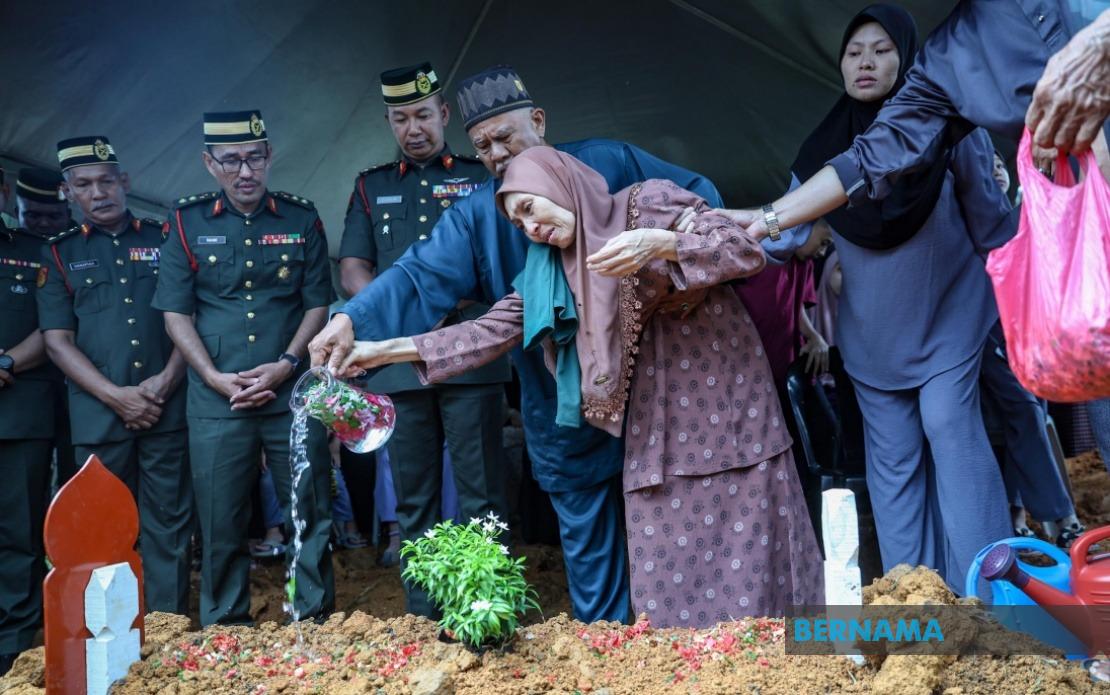
Private Siti Khadijah Sungip, 24, a member of the Royal Engineer Regiment's First Squadron, was laid to rest on June 17 at the Taman Sri Lambak Muslim Cemetery in Kluang following a fatal training accident at Hobart Camp in Gurun, Kedah. The funeral service, attended by military personnel, family members, and friends, marked the conclusion of a tragic incident that claimed the lives of two Malaysian Army soldiers during routine grenade throwing exercises.
The explosion occurred at 10.57 am on June 16 during training activities at the target range facility. Private Siti Khadijah and Corporal Norazmi Abu Bakar, serving with the Sixth Battalion of the Royal Malay Regiment, sustained critical injuries from the blast. Both personnel were immediately transported to Sultan Abdul Halim Hospital in Sungai Petani but succumbed to their injuries during transit, marking a devastating loss for the armed forces and their respective units.
The burial proceedings reflected the military's ceremonial traditions honouring fallen service personnel. At 1.15 pm, Private Siti Khadijah was interred following completion of post-mortem examination at Sultanah Bahiyah Hospital in Alor Setar, which had been conducted at approximately 2.30 am. The dignified ceremony underscored the solemn recognition accorded to military casualties within Malaysian society, where armed forces personnel hold significant respect and institutional standing.
Brigadier General Datuk Zulhelmy Masdar, Commander of the 7th Brigade headquartered at Mahkota Camp, presided over the symbolic presentation of the Jalur Gemilang to the deceased's father, Sungip Jais, 65. This gesture represented the nation's formal acknowledgment of sacrifice and service. The flag handover ceremony, a longstanding military tradition in Malaysia, serves to honour fallen soldiers while providing formal recognition to grieving families of their loved one's contribution to national security and defence.
Private Siti Khadijah's body had arrived at her family's residence in Taman Sri Lambak at 12.10 pm, accompanied by First Field Troop Leader Lieutenant Muhammad Lutfil Hadi Osman and four members of the First Squadron of the Royal Engineer Regiment from Sangro Camp in Taiping, Perak. The funeral prayer was conducted by Major Mohd Azlan Shah Abdul Razak from the TDM Field Engineering Institute, following Islamic customs and military protocol. The presence of military personnel throughout the burial process reflected institutional solidarity and recognition of her service.
This incident raises critical questions regarding safety protocols during hazardous military training exercises in Malaysia. Grenade throwing training forms an essential component of infantry and engineer regiment preparation, yet such activities inherently carry significant risk when conducted at operational scales. The simultaneous casualties suggest potentially systemic issues in safety management, training supervision, or equipment handling that warrant investigation. Military authorities must thoroughly examine the circumstances to prevent similar tragedies and ensure comprehensive review of training procedures across all units conducting explosive ordnance exercises.
The Royal Engineer Regiment, of which Private Siti Khadijah was a member, plays a vital role in Malaysia's defence infrastructure, undertaking construction, demolition, and combat engineering tasks that frequently expose personnel to dangerous conditions. Her participation in advanced grenade training indicated preparation for operational readiness, yet the fatal outcome demonstrates how even routine military instruction can result in catastrophic consequences. The incident underscores the inherent occupational hazards military personnel face and the need for continuous enhancement of safety measures protecting service members.
For the broader Malaysian military community, this tragedy represents a sobering reminder of the risks undertaken by armed forces personnel in their commitment to national defence. The simultaneous loss of two soldiers from different units highlights how training accidents can affect multiple battalions and regiments. Such incidents often prompt institutional reviews, policy adjustments, and renewed emphasis on adherence to safety procedures across all training facilities operated by the Malaysian Armed Forces.
Private Siti Khadijah's death also reflects the increasing presence of women in Malaysia's armed forces, a development that has expanded considerably over recent decades. Female military personnel now serve across various combat and support roles, contributing substantially to operational capacity and national security. However, this case emphasises that enhanced recruitment and integration of women into defence forces must be accompanied by equally rigorous commitment to occupational safety, regardless of gender, ensuring all personnel receive comprehensive protection during dangerous training activities.
The Malaysian Army has not yet released comprehensive details regarding the investigation into the Hobart Camp incident or any preliminary findings concerning causation. Such investigations typically examine multiple factors including equipment condition, training protocols, supervision levels, and individual adherence to safety procedures. The thoroughness and transparency of post-incident investigations significantly influence public confidence in military institutional accountability and institutional commitment to preventing recurrence of similar tragedies affecting service personnel and their families across the nation.


