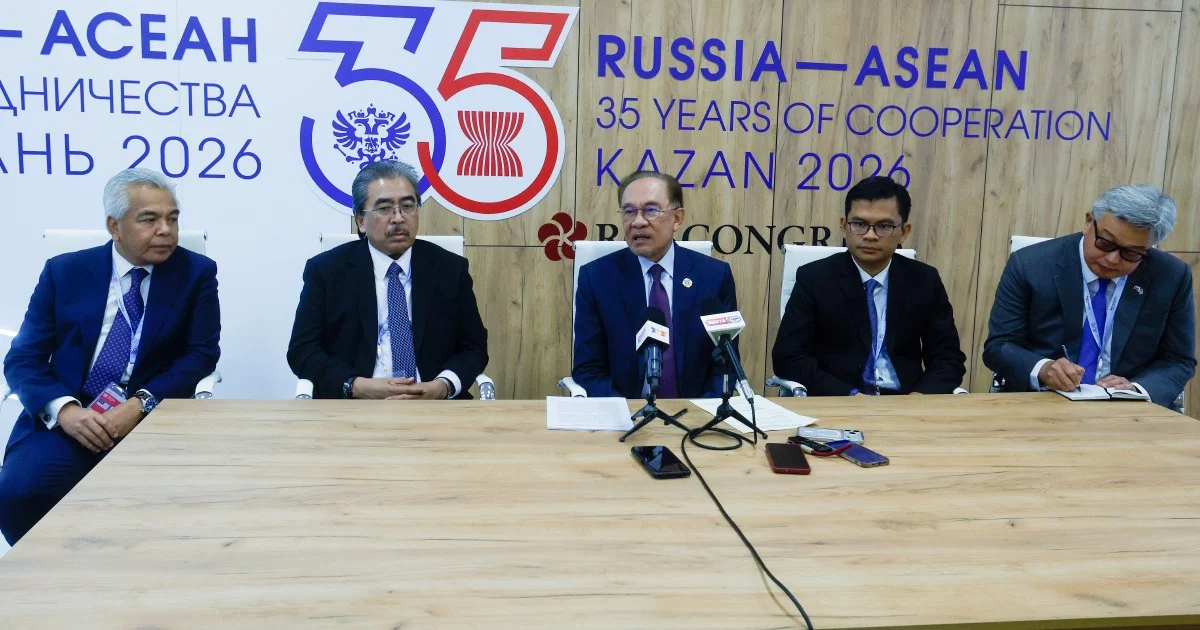
Prime Minister Datuk Seri Anwar Ibrahim has ordered government agencies to accelerate the rollout of visa-free travel privileges for Russian visitors to Malaysia, signalling a strategic shift in the country's approach to regional tourism recovery. Speaking in Kazan, Anwar underscored that removing travel barriers for Russian nationals represents a critical component of broader efforts to revitalise Malaysia's tourism sector, which has struggled to recover to pre-pandemic visitor volumes despite gradual improvements over the past two years.
The directive reflects Malaysia's recognition that visa facilitation remains one of the most effective tools for attracting high-value international visitors. Russian tourists have historically demonstrated strong spending patterns when travelling to Southeast Asia, and streamlining entry procedures could unlock substantial economic benefits for Malaysia's hospitality, retail, and service sectors. The timing of this announcement carries particular significance given the geopolitical realignment occurring across the region, with Malaysia seeking to diversify its tourism sources and strengthen bilateral relationships with non-Western markets.
The visa-free arrangement would place Russia alongside a growing list of nations enjoying reciprocal travel privileges with Malaysia. This development signals Anwar's administration's pragmatic approach to international relations and commercial engagement, prioritising economic partnerships while maintaining diplomatic flexibility. By expediting implementation, the government aims to capture market share in the competitive Southeast Asian tourism landscape, where countries like Thailand and Indonesia have aggressively marketed visa exemptions to expand visitor arrivals.
From an economic standpoint, the initiative carries substantial implications for Malaysia's post-pandemic recovery trajectory. Tourism contributed approximately 10.8 per cent to Malaysia's GDP before the pandemic, and the sector remains a crucial employer across multiple industries. Russian visitors represent a significant demographic within international tourism markets, particularly during winter months when tropical Malaysian destinations appeal strongly to those seeking warmth and alternative experiences. Removing visa requirements could result in increased bookings across hotels, restaurants, shopping malls, and cultural attractions, particularly in major tourist hubs like Kuala Lumpur, Penang, and Langkawi.
The acceleration of this policy also addresses practical concerns within Malaysia's tourism and hospitality industries, which have advocated strongly for more visitor-friendly policies. Hotel associations and travel operators have pointed out that visa requirements often deter spontaneous bookings and complicate group travel arrangements. By removing such obstacles, Malaysia positions itself as a more attractive destination compared to regional competitors that maintain stricter entry protocols, potentially shifting visitor preference patterns across Southeast Asia.
Government agencies tasked with implementing visa-free arrangements will need to coordinate closely on border management, immigration procedures, and security protocols. The expedited timeline suggests that relevant ministries—including the Ministry of Home Affairs, Immigration Department, and Ministry of Tourism, Arts and Culture—have been instructed to bypass standard bureaucratic timelines and prioritise this initiative. This institutional acceleration underscores the political commitment to achieving tangible results within a defined timeframe, likely before the 2024 tourism season reaches its peak.
The policy also carries diplomatic weight beyond pure economics. Malaysia has maintained balanced relationships with both Western and non-Western powers, and facilitating Russian visitor access demonstrates this equilibrium. The announcement in Kazan further reinforces Malaysia's willingness to engage constructively with Russia across multiple platforms, potentially opening avenues for deeper bilateral cooperation in sectors beyond tourism, including trade, education, and cultural exchange.
For Malaysian businesses in the tourism supply chain, this decision promises expanded opportunities. Travel agencies, tour operators, car rental companies, and food and beverage establishments stand to benefit from increased Russian visitor numbers. Cities and states will likely compete to attract tourists, spurring investments in tourism infrastructure, promotional campaigns, and hospitality training programmes. Rural tourism destinations may also gain exposure as Russian visitors explore beyond conventional tourist corridors.
The initiative also reflects broader trends in how Malaysia is repositioning itself within global tourism markets. Rather than relying primarily on traditional Western source markets, the government is actively cultivating relationships with emerging tourism powerhouses and alternative markets. This diversification strategy reduces vulnerability to fluctuations in specific regional economies and provides stability to the tourism sector through varied visitor base composition.
Implementation challenges will inevitably arise, including coordination between federal and state authorities, capacity planning at major airports, and management of potential security screening protocols. However, Anwar's explicit instruction to accelerate the process suggests that administrative obstacles are being treated as solvable rather than prohibitive. The government appears confident that streamlined procedures can be implemented without compromising border security or immigration integrity.
Looking forward, the success of this visa-free arrangement will be measured through visitor arrival statistics, spending patterns, and length-of-stay data comparing the pre- and post-implementation periods. Tourism authorities will likely monitor impacts on specific regions and sectors to identify opportunities for further market development. If Russian visitor numbers increase significantly, this model may be extended to other countries, creating a more inclusive and commercially competitive tourism policy framework.
The acceleration of visa-free travel for Russian tourists ultimately reflects Malaysia's pragmatic approach to economic development and international engagement. By removing administrative barriers that discourage visitation, the government addresses a long-standing complaint from the tourism industry while simultaneously strengthening bilateral ties with an important international partner. For Malaysia's tourism sector and broader economy, this decision represents a concrete policy intervention designed to generate measurable growth during a critical recovery period.