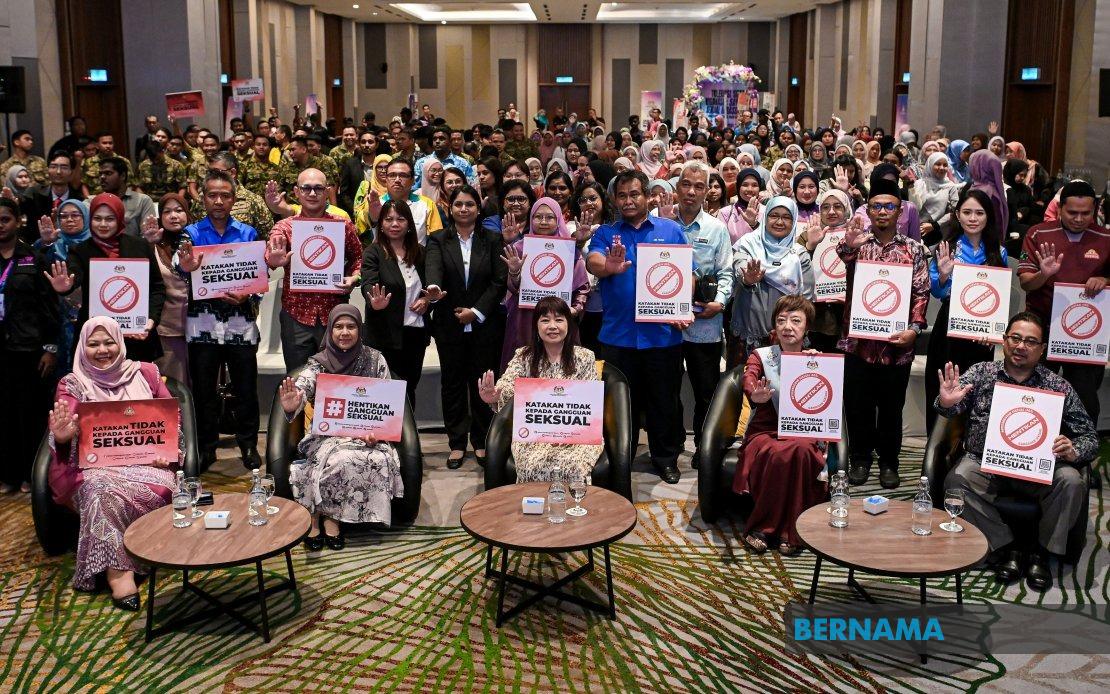
Malaysia has recorded 388 sexual harassment cases during the opening five months of 2024, signalling a persistent challenge that continues to demand nationwide attention and coordinated response. Deputy Minister of Women, Family and Community Development Lim Hui Ying disclosed the statistics in Port Dickson on June 18, underscoring the scale of workplace and domestic harassment affecting Malaysian society.
The trajectory of reported incidents presents a telling picture of social change. Police statistics reveal a substantial rise in complaints, climbing from 477 documented cases in 2022 to 1,038 in 2023. While the climbing numbers appear alarming, Lim offered crucial interpretive context: the growth reflects not solely an explosion in actual harassment incidents but rather a fundamental shift in community attitudes towards accountability. Victims and witnesses are increasingly willing to reject longstanding cultural silence and step forward with complaints, a development suggesting progress in combating normalised misconduct even as the absolute numbers remain troubling.
The pattern of harassment extends across multiple sectors and relationships. According to Lim's assessment, workplace environments constitute the primary setting for reported incidents, though many cases also involve perpetrators with existing family connections to victims. This distinction matters considerably for intervention strategies and support frameworks. Workplace harassment requires comprehensive corporate governance reforms, clear reporting protocols, and protective mechanisms ensuring career advancement remains uncompromised for complainants. Family-linked cases present distinct challenges, as victims often weigh shame, potential estrangement, and relationship preservation against their desire for justice.
Underlying psychological and social barriers continue to silence countless victims. Many individuals experiencing harassment struggle with overwhelming shame, fearing that reporting might irreparably damage professional trajectories or fracture family units. These anxieties reflect deeper societal assumptions about honour, reputation, and women's vulnerability. Lim's appeal to employers, colleagues, and family members to champion victim support directly addresses these structural silences. Her acknowledgement that harassment affects men alongside women, though in substantially lower numbers, reflects international evidence showing that male victims often experience amplified stigma and additional barriers to disclosure.
The Tribunal for Anti-Sexual Harassment (TAGS) has emerged as a critical institutional response to systemic barriers within traditional justice mechanisms. Since commencing operations through mid-June, the tribunal received 100 complaints, with 82 cases resolved within 60 days of initial hearing. This impressive resolution rate demonstrates the tribunal's effectiveness in expediting access to justice, a traditional weakness of Malaysian courts where harassment cases have historically languished through protracted procedures. The tribunal's accelerated timeline provides meaningful recourse for victims requiring swift remedies and psychological closure.
Beyond reactive complaint mechanisms, Malaysia's government has begun embedding sexual harassment prevention within broader national security frameworks. The Women, Peace and Security initiative, implemented through the Women's Development Department and aligned with the National Action Plan 2025–2030, reconceptualises harassment as fundamentally incompatible with national stability and women's meaningful participation in governance and development initiatives. This strategic framing elevates harassment prevention from isolated women's issue to core national concern, potentially unlocking higher-level political and budgetary commitment.
Building genuine cultural transformation requires sustained engagement across multiple societal levels. Parents bear responsibility for instilling respect and consent norms in children from early ages. Educational institutions must incorporate comprehensive dignity-based curricula rather than relying solely on regulations. Employers need transparent reporting mechanisms insulating complainants from retaliation risks. Colleagues must cultivate workplace cultures where bystander intervention becomes normalised rather than exceptional. This distributed responsibility framework acknowledges that legislative remedies alone prove insufficient without corresponding shifts in everyday behaviour and institutional practice.
Government support infrastructure has expanded to address victim needs comprehensively. The 24-hour Talian Kasih helpline (15999) provides counselling and psychosocial assistance without geographical constraints, recognising that many harassment victims remain geographically isolated or embedded within communities where anonymity remains essential. Integration with local social support centres creates layered networks ensuring that individuals can access appropriate intervention levels based on case severity and personal circumstances. These services function as critical bridges, particularly for victims unable or unwilling to immediately engage formal complaint mechanisms.
The intersection of workplace harassment and family-connected abuse demands particularly nuanced responses. Many Malaysian victims navigate dual pressures: professional anxieties about reporting abusive superiors or colleagues, combined with family concerns about bringing shame to household members when perpetrators are relatives. This compounded vulnerability requires support systems capable of addressing both employment-related and domestic dimensions simultaneously, with trained counsellors understanding how these spheres intersect within Malaysian cultural contexts.
Future progress hinges on sustaining the emerging willingness to report abuse while simultaneously reducing underlying harassment prevalence. The 2023 figure of 1,038 reported cases likely represents a fraction of actual incidents, suggesting that normalisation and silence remain widespread despite recent improvements. Expanding awareness campaigns, particularly reaching rural and underserved communities, remains essential. Workplace audits examining harassment prevalence and institutional vulnerabilities could complement complaint-focused approaches. Educational initiatives must reach young people before attitudes harden, positioning consent and dignity as foundational values rather than controversial impositions.
Lim's emphasis on collective responsibility ultimately frames sexual harassment as incompatible with Malaysian aspirations toward inclusive development and social stability. When harassment remains tacitly accepted or inadequately addressed, it corrodes institutional trust, stunts economic participation, and perpetuates cycles of trauma affecting families and communities. The government's multifaceted approach—combining legal remedies through TAGS, awareness initiatives through the Women, Peace and Security framework, and accessible support services through Talian Kasih—demonstrates recognition that addressing harassment requires simultaneous work at institutional, communal, and individual levels across Malaysian society.