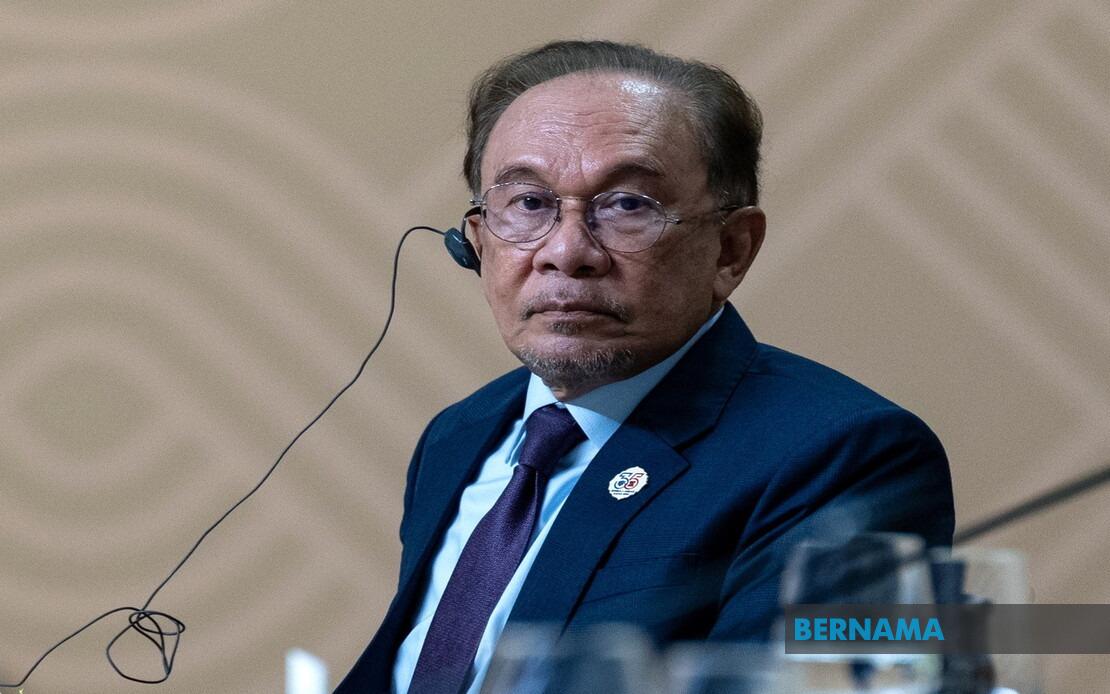
Malaysia's Prime Minister Datuk Seri Anwar Ibrahim has signalled strong confidence in the emerging prospects for a memorandum of understanding between the United States and Iran, positioning such an agreement as a critical pathway toward resolving the broader conflict and establishing durable peace across West Asia. Speaking at the 35th ASEAN-Russia Commemorative Summit in Kazan on Thursday, Anwar drew on recent high-level discussions to justify his measured optimism about the trajectory of these sensitive negotiations, even as both parties face a compressed timeframe for reaching a final accord.
The Prime Minister's remarks carry particular weight given Malaysia's regional standing and its historical engagement with Middle Eastern affairs. Anwar's confidence is not merely rhetorical posturing but appears grounded in direct intelligence gathered from his conversations with key regional stakeholders who have been instrumental in shepherding the dialogue process. This reflects Malaysia's positioning as a respected interlocutor in international diplomacy, capable of accessing candid assessments from major powers engaged in delicate negotiations.
A crucial foundation for Anwar's optimism stems from his discussions with Pakistan Prime Minister Shehbaz Sharif, who has assumed a substantial mediating role in coordinating the critical phases of US-Iran talks. According to Anwar, Sharif provided him with detailed first-hand accounts of negotiation progress, indicating that discussions have been conducted transparently and comprehensively. Sharif's reported involvement at every stage of the process lends credibility to assessments that substantive movement is occurring, rather than mere procedural advancement or diplomatic theatre.
The 60-day window established for finalising a formal agreement represents both an opportunity and a constraint. While this deadline creates urgency that could facilitate compromise, it also leaves limited room for the protracted back-and-forth negotiations that typically characterise high-stakes diplomatic settlements. Anwar acknowledged this temporal challenge directly, calling for collective goodwill and prayer to support successful conclusion within the prescribed period. His invocation of spiritual support underscores the complexity and gravity of bringing these two traditionally antagonistic parties toward a mutually acceptable framework.
Russian President Vladimir Putin's perspective, shared during Anwar's bilateral engagement at the Kazan summit, reinforced the Malaysian leader's assessment. Putin reportedly conveyed a similarly optimistic outlook regarding the negotiations' trajectory, suggesting that confidence in positive movement extends beyond Pakistan's mediation efforts to encompass broader international support structures. This convergence of assessment across different geopolitical actors implies that objective indicators of progress may indeed be accumulating, or at minimum, that key stakeholders perceive sufficient momentum to publicly endorse continued engagement.
For Malaysia and ASEAN more broadly, successful US-Iran rapprochement carries profound implications. West Asian instability generates ripple effects throughout the Indo-Pacific region, affecting maritime security, energy markets, investment flows, and the broader strategic balance. Malaysia, as a significant maritime trader and energy consumer with substantial interests in Gulf stability, stands to benefit substantially from deescalation and the restoration of international diplomatic norms in a region historically prone to volatility. An agreement would reduce the risk of military escalation that could disrupt critical sea lanes through which Malaysian commerce transits.
Anwar's cautious framing—describing his optimism as grounded in observable developments rather than guarantees—demonstrates diplomatic sophistication. He explicitly acknowledged that uncertainty persists, particularly given the involvement of the Donald Trump administration in the US negotiating position. Trump's previous withdrawal from the Iran nuclear agreement underscores the unpredictability that American domestic politics can introduce into international negotiations. By tempering expectations while still expressing measured confidence, Anwar balances Malaysia's interest in peace with realistic assessment of obstacles.
The broader context of the ASEAN-Russia Commemorative Summit provides additional significance to Anwar's remarks. The gathering itself reflects continuing diplomatic engagement between Southeast Asian nations and Moscow, despite broader geopolitical tensions. Malaysia's participation and its willingness to discuss Middle Eastern peace prospects at this venue underscore ASEAN's commitment to transcending regional boundaries in pursuit of global stability. This positions the association as a constructive force in international conflict resolution, capable of engaging with major powers on issues extending well beyond Southeast Asia's immediate periphery.
The timing of these diplomatic signals also merits consideration. As US-Iran tensions have periodically flared into military confrontations over recent years—including the 2020 assassination of General Qassim Soleimani and subsequent Iranian missile strikes—any indication of sustained diplomatic engagement represents progress. The establishment of a structured timeline, even one as compressed as 60 days, suggests that both parties have moved beyond rhetorical posturing toward concrete negotiation frameworks with defined endpoints.
For Malaysia domestically, Anwar's diplomatic activism on the international stage reflects his government's broader foreign policy orientation toward constructive engagement and problem-solving diplomacy. This approach contrasts with more confrontational stances and positions Malaysia as a stabilising voice in an increasingly multipolar international system. The Prime Minister's ability to access direct communication channels with leaders in Washington, Tehran (through intermediaries), Moscow, and Islamabad demonstrates Malaysia's continuing relevance in global diplomatic networks despite its status as a middle power.
The success or failure of the US-Iran negotiations over the coming weeks will serve as a significant test case for multilateral diplomacy in addressing entrenched conflicts. Malaysia's explicit backing for these efforts, communicated at the highest levels through Anwar's statements, contributes modestly but meaningfully to the international pressure for compromise. In an era when diplomatic solutions to major conflicts have become increasingly elusive, any voice advocating for negotiated settlement carries value, particularly when emanating from a respected regional power with demonstrated impartiality.
Ultimately, Anwar's optimism must be understood as conditional and contextualised. He has not predicted inevitable success, nor has he dismissed the considerable challenges that any final agreement must overcome. Rather, he has signalled that based on current observable indicators and direct consultation with key mediators, the trajectory appears sufficiently positive to warrant continued international support and engagement. For Malaysia and its regional partners, such developments offer hope that West Asian stability—and by extension, broader regional security and prosperity—remains achievable through sustained diplomatic commitment and multilateral coordination.


