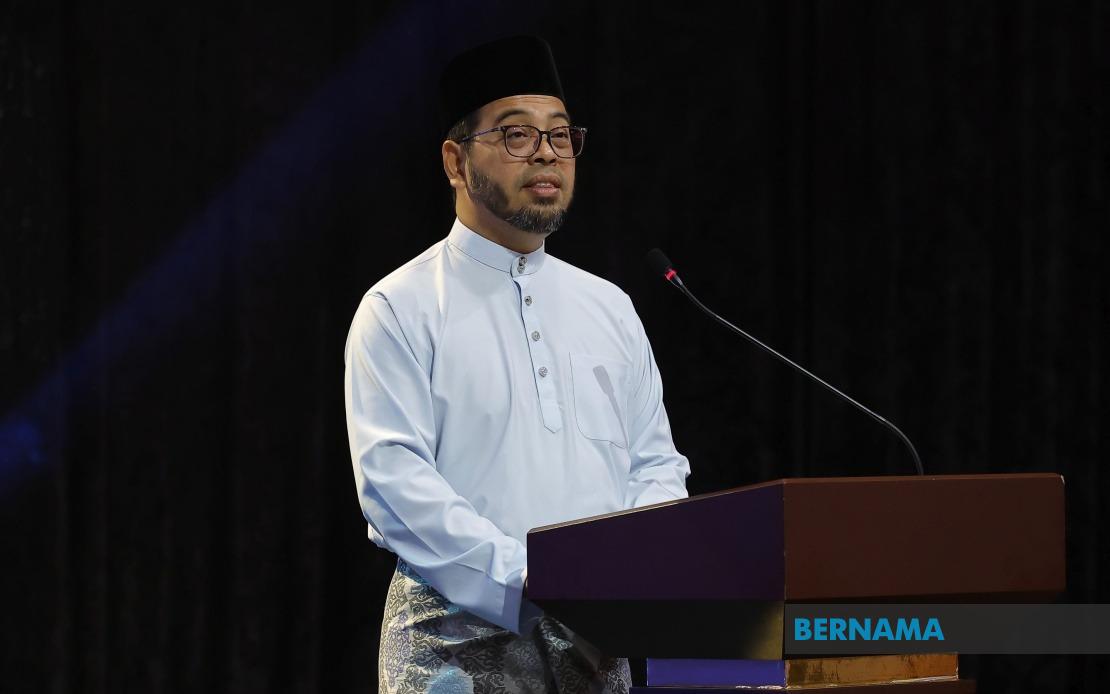
The imperative for Malaysian Muslims to transcend factional divides and cultivate a more cohesive spiritual community has become increasingly urgent, according to Religious Affairs Minister Dr Zulkifli Hasan, who delivered this message during the national Maal Hijrah 1448H/2026M celebration at Putra Mosque in Putrajaya. The occasion, graced by Sultan of Perak Sultan Nazrin Shah and attended by Deputy Prime Minister Datuk Seri Fadillah Yusof, underscored the growing recognition among senior government figures that internal harmony represents a foundational requirement for national resilience in an era marked by unprecedented external pressures.
Dr Zulkifli framed the challenge not merely as a religious obligation but as a pragmatic necessity for national stability. The minister argued that meaningful societal transformation cannot materialise without corresponding personal development within individuals—a multidimensional process encompassing intellectual advancement, spiritual enrichment, and moral refinement. This framing reflects a broader understanding within Malaysia's religious establishment that community cohesion depends fundamentally on the ethical foundation of individual citizens, a perspective that shifts focus from institutional arrangements to inner character development.
The consequences of persistent communal fragmentation, according to the minister, extend far beyond spiritual considerations. Division within the Muslim community weakens the nation's collective capacity to respond effectively to mounting external threats, he cautioned, while unified communities generate positive momentum that benefits all members through shared resources and collective strength. This formulation suggests that the religious leadership views sectarian and ideological disputes among Muslims not simply as theological matters but as strategic vulnerabilities that compromise Malaysia's standing amid heightened global competition and uncertainty.
The timing of these remarks reflects substantive economic concerns confronting the government. Dr Zulkifli explicitly referenced supply chain disruptions and widespread economic uncertainty affecting countries throughout the global system, phenomena that have destabilised established patterns of trade and investment flows across Southeast Asia. Malaysia, despite its relative economic diversification and geographic advantages, remains embedded within vulnerable international networks that expose domestic prosperity to distant shocks and disruptions beyond national control. In this context, the minister's emphasis on unity functions as an implicit acknowledgment that conventional policy instruments may prove insufficient without complementary social cohesion.
The concept of hijrah itself underwent reinterpretation within the minister's framework, moving beyond its historical association with physical migration to encompass a more expansive understanding of spiritual and moral transformation. In contemporary context, hijrah becomes a continuous personal and collective journey involving deliberate rejection of destructive behaviours and conscious cultivation of virtues that strengthen social bonds among Muslims. This reconceptualisation attempts to make classical Islamic terminology directly relevant to modern Malaysian challenges, bridging traditional religious knowledge with contemporary governance concerns and creating linguistic common ground between religious and secular audiences.
Dr Zulkifli's emphasis on communal strength as a prerequisite for advancing Islamic values throughout Malaysian society reveals an interesting inversion of conventional priorities. Rather than privileging religious advancement as the primary objective, with social unity as an instrumental consequence, the minister positioned unified community as foundational, arguing that only robust collective cohesion enables effective implementation of broader Islamic value propagation. This suggests a sophisticated understanding of social dynamics in pluralistic contexts, acknowledging that contested religious initiatives require substantial social capital and consensus to achieve meaningful traction.
The celebration itself, organised under the theme "MADANI Dihayati, Ummah Diberkati"—which translates to emphasising lived experience of the MADANI framework coupled with divine blessings for the community—signals government intent to link religious observance directly with the broader MADANI agenda. This integration attempts to position religious activities and Islamic values as integral to, rather than separate from, the government's development philosophy and policy priorities. The MADANI framework, Malaysia's overarching governance approach, thereby acquires explicit religious grounding and legitimacy through ceremonial association with Islamic occasions and leadership endorsements.
The presentation of prestigious awards during the ceremony reinforced this positioning. The National Tokoh Maal Hijrah award to IIUM Rector Prof Emeritus Datuk Dr Osman Bakar, a prominent Islamic intellectual with significant regional influence, and the International Tokoh Maal Hijrah award to Moroccan scholar Dr Ahmad Al-Raysuni recognised individuals whose contributions to Islamic knowledge and religious discourse extend influence across Muslim-majority regions. These selections implicitly acknowledged that Malaysia's religious standing and influence increasingly depends on producing and nurturing intellectual figures capable of shaping Islamic discourse beyond purely national boundaries.
Dr Zulkifli's invocation of transcommunal responsibility, emphasising that citizens across all belief backgrounds share obligations regarding national peace, stability, and prosperity, represents an attempt to universalise the specific Islamic unity agenda. This framing permits the government to advance initiatives strengthening Muslim cohesion while maintaining formal commitment to Malaysian pluralism and multi-religious citizenship. The rhetorical move transforms specifically Islamic concerns into ostensibly universal national imperatives, widening the potential constituency supporting these initiatives beyond the Muslim population.
The minister's call for continued public support for government initiatives aimed at elevating Muslim dignity and ensuring Islamic values flourish domestically reflects broader government positioning. This formulation frames opposition to specific religious policies or programmes not merely as disagreement with particular measures but potentially as hindrance to collective Muslim advancement and national prosperity. The rhetorical strategy leverages communal solidarity and shared religious identity to generate compliance with government religious agenda, transforming policy questions into identity affirmations.
Contextualising these remarks within Malaysia's contemporary political landscape reveals their particular salience. The country continues navigating complex religious dynamics involving competing interpretations of Islamic teaching, tensions between federal and state religious authorities, and periodic disputes regarding the boundaries between Islamic and civil law. Dr Zulkifli's emphasis on unity and internal transformation appears partly responsive to these persistent tensions, offering an inclusive framework that acknowledges differences while emphasising overarching solidarity. This approach attempts to transcend specific doctrinal disputes through appeal to higher communal interests and shared responsibility.
For Southeast Asian observers, these developments carry broader implications regarding Malaysia's trajectory and regional religious influence. As the government deepens integration of Islamic values and communal cohesion messaging into its governance framework and development philosophy, Malaysia simultaneously positions itself as a Muslim-majority nation capable of balancing religious engagement with pluralistic administration. The model emerging—emphasising internal Muslim unity, intellectual leadership, and religious values integration within secular governance structures—offers a template potentially influencing religious policy discussions across the region, particularly in other Muslim-majority societies grappling with comparable tensions between religious identity and contemporary governance challenges.


