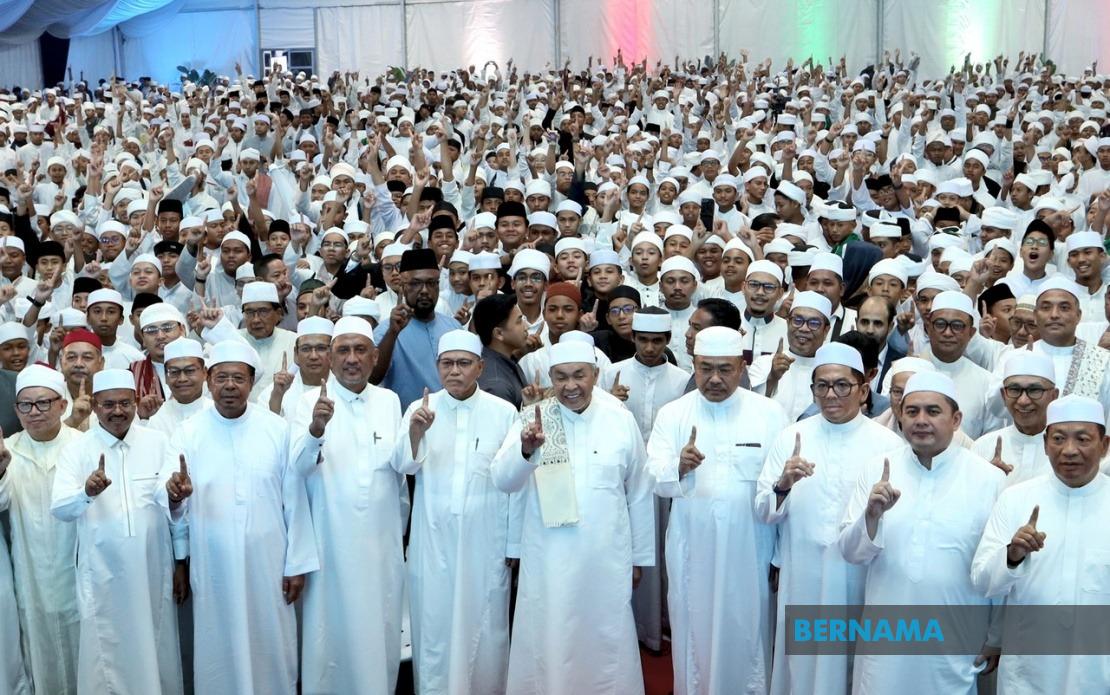
Malaysia has taken a significant institutional step to professionalise Quranic education through Cabinet approval of the National Tahfiz Council, according to Deputy Prime Minister Datuk Seri Dr Ahmad Zahid Hamidi. Announcing the decision at the Pahang State Huffaz Gathering 2026 in Kuantan on June 18, Dr Ahmad Zahid outlined how the new council would establish unified standards for direction, curriculum design, recognition benchmarks and educational progression for tahfiz students across the country. The move represents a fundamental shift in how Malaysia treats memorisation-based Islamic education, elevating it from a predominantly informal or community-based pursuit to a formally recognised educational stream within the national framework.
Dr Ahmad Zahid, who has been appointed chairman of the council by Prime Minister Datuk Seri Anwar Ibrahim, framed the initiative as essential infrastructure for students pursuing Quranic studies. The deputy premier expressed a compelling vision during his address to more than 5,000 huffaz gathered at the event: transforming tahfiz education into a complete developmental pathway that enables students to transition seamlessly from memorisation programmes into formal schooling, then onward to university qualifications and ultimately into professional careers. This articulation suggests the government recognises a historical gap between tahfiz training and mainstream economic participation, with many traditionally educated huffaz lacking formal credentials that employers and tertiary institutions recognise.
Pahang's position as a pilot jurisdiction highlights regional variations in tahfiz education implementation across Malaysia. The state has reportedly developed a comprehensive learning progression beginning in early childhood through dedicated kindergarten programmes, continuing through structured schooling phases, and extending to international-level achievement. This cascading model, inspired by initiatives championed by the Sultan of Pahang, Al-Sultan Abdullah Ri'ayatuddin Al-Mustafa Billah Shah, demonstrates how progressive governance structures can integrate religious education with contemporary educational standards. The Tadika Tahfiz Negeri Pahang programme exemplifies how states can embed Quranic learning from foundational years, potentially creating stronger cohorts of motivated students who possess both traditional knowledge and mainstream qualifications.
The National Tahfiz Policy 2.0 framework underpins the council's operational strategy, with several concrete mechanisms already in development. A TVET tahfiz programme introduces vocational and technical training elements into Quranic education, recognising that not all huffaz will pursue academic pathways and that skills-based alternatives create viable career options. The Malaysian Tahfiz Certificate 2.0 provides standardised credentialing that educational institutions and employers can uniformly recognise, addressing a persistent weakness in tahfiz education where achievements previously lacked formal documentation beyond community acknowledgement. Complementing these measures, the Graded Hafazan Certification establishes transparent proficiency benchmarks, while the Huffaz Financing Scheme removes financial barriers that have traditionally limited participation to more affluent families.
Collaborative structures emerging from the council's framework suggest a deliberate integration strategy across Malaysia's education ecosystem. Partnerships between tahfiz institutions, higher learning establishments and skills training providers create permeable boundaries between educational sectors. The memorandum of understanding signed during the Pahang gathering between Yayasan Pahang, the Community Development Department and Majlis Amanah Rakyat illustrates how government bodies and foundations can coordinate resource deployment. By involving MARA—historically focused on Bumiputera economic participation—the framework positions tahfiz graduates as candidates for skills development initiatives, signalling intent to transform religious education into an economic empowerment tool rather than viewing it as separate from national development priorities.
For Southeast Asian context, Malaysia's institutionalisation of tahfiz education reflects broader regional trends in formalising Islamic knowledge systems. Countries including Indonesia, Brunei and Thailand have grappled with similar questions about integrating traditional Islamic education into national frameworks while maintaining pedagogical integrity and cultural authenticity. Malaysia's approach through standardised certificates and professional pathways may offer a replicable model for neighbours seeking to professionalise their own tahfiz sectors. The Malaysian Tahfiz Recognition Standard specifically represents an attempt at creating benchmarks that balance religious authenticity with contemporary educational expectations, a tension all Muslim-majority nations navigate.
The economic implications merit examination. By creating structured career pathways for huffaz, Malaysia potentially develops a skilled workforce versed in religious knowledge who simultaneously possess marketable qualifications. This could prove valuable in Islamic finance, halal certification, religious education delivery and community development sectors where such expertise commands premium compensation. The Huffaz Financing Scheme recognition suggests government awareness that tahfiz students have historically faced financial vulnerability, potentially representing disadvantaged socioeconomic cohorts. Removing cost barriers expands participation beyond traditional supporters of Islamic education to include lower-income families, democratising access to a pathway previously concentrated among more privileged communities.
The strategic naming of Ahmad Zahid as council chairman carries political significance beyond administrative designation. As Rural and Regional Development Minister, his dual portfolio suggests the government views tahfiz education development as integral to broader rural advancement strategies. Many tahfiz institutions operate in smaller towns and villages rather than urban centres, meaning their educational integration may directly support rural economic diversification and human capital development. This positioning indicates tahfiz education is no longer perceived as marginal religious instruction but rather as potentially central infrastructure for regional development objectives.
Implementation challenges will inevitably emerge as the council operationalises these frameworks. Ensuring uniform standards across diverse tahfiz institutions with varying resource levels, governance structures and pedagogical approaches will require substantial coordination. Rural institutions may struggle to meet new requirements without targeted financial support or capacity-building assistance. Additionally, integrating tahfiz education into mainstream recognition systems requires buy-in from universities and employers who must accept tahfiz credentials as equivalent to conventional qualifications. Cultural resistance from some traditionally-oriented tahfiz operators who view formalisation as diluting religious authenticity may create friction during implementation phases.
Looking forward, the council's success will depend on institutional sustainability and consistent resource allocation across multiple government agencies. The involvement of MARA, KEMAS and higher learning institutions indicates multi-agency commitment, but sustained coordination requires stable funding mechanisms and aligned incentive structures. Malaysia's approach provides a sophisticated institutional framework for tahfiz education, potentially transforming how students combine religious learning with economic viability—a challenge all Southeast Asian Muslim-majority societies continue addressing.