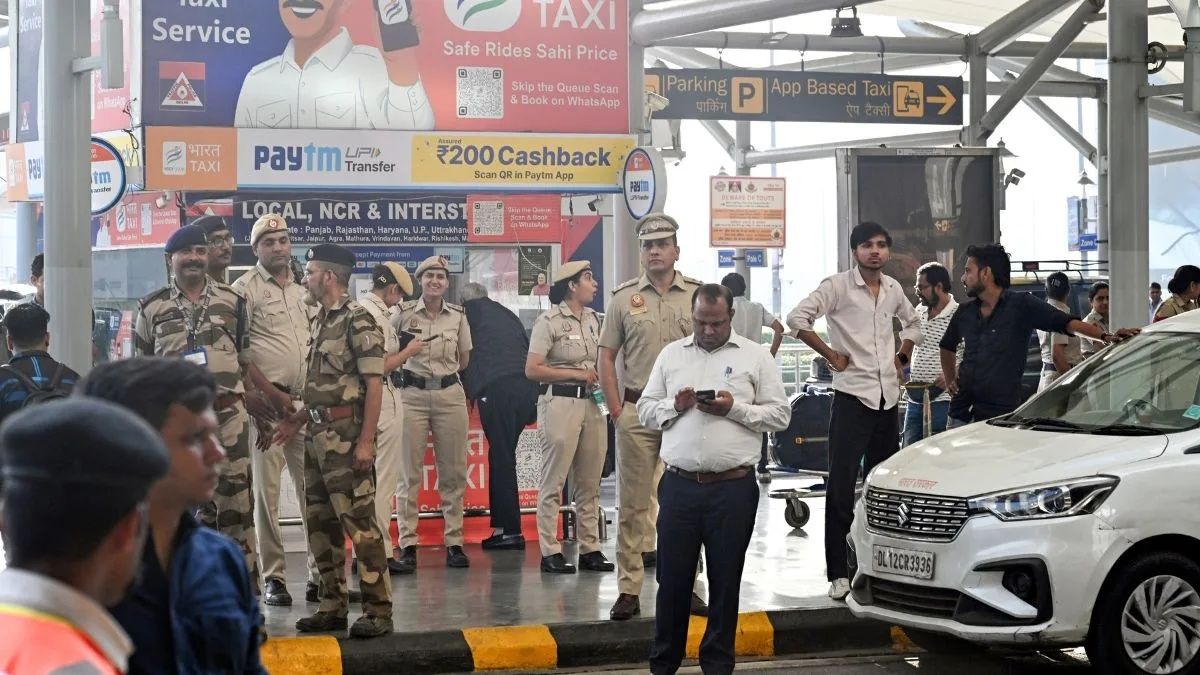
In a significant cross-border security operation, Malaysia's Royal Police have handed over two individuals with suspected ties to the banned Khalistan Zindabad Force to Indian authorities, who arrested them immediately upon arrival at Delhi's Indira Gandhi International Airport. The deportation represents a growing cooperation between Malaysian and Indian security agencies in tackling transnational terror networks, a development with implications for regional security coordination across Southeast Asia. Punjab Police Director General Gaurav Yadav confirmed that the operation was conducted as part of a broader intelligence-driven initiative to dismantle overseas support structures fuelling militant activities within Punjab state.
The two deportees have been identified as Gurvinder Singh from Ambala and Manjit Singh from Patiala, both residents of Punjab. Intelligence assessments suggest that during their time in Malaysia, the pair functioned as key coordinators in channelling financial resources and logistical support to the banned organisation's cadres operating within India. The significance of their alleged roles extends beyond simple operational involvement; investigators believe they formed part of a crucial node in an international network designed to sustain terror-linked activities in Punjab, demonstrating how terrorist organisations increasingly rely on diaspora networks and overseas bases to maintain operational capacity.
The investigation into these individuals emerged from earlier probes into multiple incidents targeting critical civilian and transportation infrastructure in Punjab. Security forces uncovered a terror module connected to an improvised explosive device detonation near Sirhind in Fatehgarh Sahib district on January 23 and a subsequent failed explosion attempt close to Shambhu in Patiala district on April 27. These incidents revealed a coordinated conspiracy aimed at disrupting Punjab's essential infrastructure, with particular focus on sabotaging sections of the Dedicated Freight Corridor—a strategically important transportation artery linking India's industrial heartland.
Searches and subsequent interrogations following these attacks yielded substantial seizures of weaponry and explosives that underscored the sophistication of the terror module. Security personnel recovered an RPG launcher, improvised explosive devices, military-grade RDX, hand grenades, advanced pistol variants, and considerable ammunition reserves. The quality and quantity of seized materiel indicated that the conspirators possessed access to well-developed supply chains and possessed operational capability beyond typical protest movements. Such findings prompted investigators to trace the financial origins of these acquisitions, leading them to examine cross-border money flows and the international dimensions of the conspiracy.
Detailed financial analysis proved instrumental in uncovering the international dimension of the network. Forensic examination of transaction records revealed that operational funds being utilised by the terror module were being routed through foreign channels rather than originating domestically. This discovery redirected investigative focus outward, eventually leading security agencies to Malaysia as a jurisdiction of interest. The tracing of financial flows exposed how terrorist organisations exploit the legitimate banking and remittance systems to disguise the true origins and purposes of large fund transfers, a challenge that authorities across South and Southeast Asia continue to grapple with.
Once investigators established Malaysia as a source of financial support, they identified the two accused as principal coordinators managing the flow of resources to Punjab-based operatives. Gurvinder Singh and Manjit Singh allegedly utilised overseas bank accounts and international financial channels to provide material support to KZF-affiliated elements. This mode of operation—leveraging the complexity of modern financial systems and the mobility afforded by international travel—reflects how contemporary terror networks operate differently from earlier militant movements, which relied more heavily on local recruitment and indigenous funding sources.
DGP Yadav's assessment indicates that the investigation has revealed the existence of a sophisticated international support architecture encompassing handlers, financiers, and facilitators distributed across multiple countries. The network functioned with clear division of labour: overseas-based operatives concentrated on resource mobilisation and strategic coordination, while ground-level cadres in Punjab focused on operational execution. This hierarchical structure provided the movement with resilience, as disruption at any single level did not immediately compromise the entire network. The identification of Malaysia as a critical node in this architecture highlights how Southeast Asian countries have become staging grounds for transnational terror financing, a reality that regional governments are increasingly confronting.
Following their arrival in India, the two accused were presented before a court in Patiala district, which ordered their remand to police custody pending further interrogation. The custodial phase represents a critical juncture in the investigation, as authorities seek to extract detailed information regarding the broader network structure, specific individuals involved in financing, operational planning meetings, and communication protocols utilised to maintain secure contact with Punjab-based associates. Investigators are particularly interested in identifying additional network members who may still be operating from Malaysia or other countries.
Security officials have indicated that the investigation remains ongoing, with particular emphasis on mapping the entire operational chain from financiers through intermediaries to ground-level operatives. Punjab Police continue efforts to identify and apprehend additional individuals implicated in the conspiracy. The cross-border nature of this investigation underscores how tackling terrorism increasingly requires coordination between multiple national governments and intelligence agencies, particularly given terror groups' capacity to establish support networks spanning continents.
The successful deportation from Malaysia reflects a broader shift in how regional security challenges are being managed. Malaysia's cooperation with Indian authorities demonstrates a willingness among Southeast Asian countries to address transnational terror financing, even when the terror groups operate primarily in South Asia. For Malaysian policymakers and citizens, the involvement of individuals allegedly operating from Malaysian territory in support of militant activities in India raises uncomfortable questions about regulatory oversight of financial systems and the vetting of long-term residents engaging in suspicious international transactions. The case also highlights the dual challenge facing security agencies: disrupting immediate plots while simultaneously dismantling the international infrastructure that enables terrorist organisations to sustain operations over extended periods.