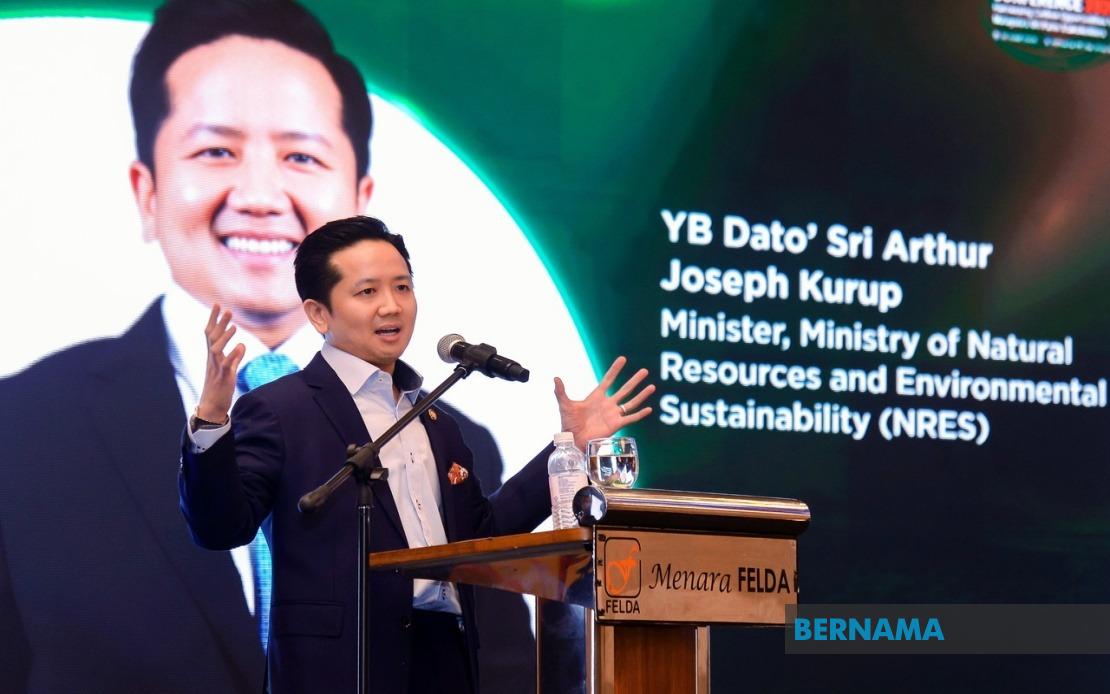
The Malaysian government is continuing to refine its approach to implementing a carbon tax, with plans to move forward once key considerations around timing and sector readiness have been addressed, according to Natural Resources and Environmental Sustainability Minister Datuk Seri Arthur Joseph Kurup. Speaking at the Malaysia Palm Carbon Conference (MPC) 2026 in Kuala Lumpur on June 16, the minister stressed that the government remains committed to rolling out the mechanism, though the exact timing will depend on ongoing policy development and consultations with affected industries.
Arthur's remarks signal a measured pace in introducing what is expected to become a significant tool in Malaysia's climate action arsenal. The government's deliberate approach reflects awareness that such fiscal measures require careful calibration to avoid unintended economic consequences. The minister indicated that rather than rushing implementation, authorities are taking time to align the carbon tax with Malaysia's broader sustainability strategy while ensuring the business community is adequately prepared for the transition.
Crucially, the government has made clear that the carbon tax is intended as a motivational mechanism rather than a punitive one. The framing as an incentive structure is significant because it indicates policymakers view the tax as a tool to encourage industry innovation and investment in green technologies rather than simply penalising high-emitting sectors. This distinction matters for business confidence and suggests the government aims to make the mechanism palatable to industrial stakeholders who might otherwise view it as an additional regulatory burden.
The proposed carbon tax was originally targeted at select industries including steel, cement and construction, sectors that are major contributors to Malaysia's industrial emissions. However, in April, the minister indicated that the government would reconsider the implementation timeline given the current global energy supply challenges and geopolitical tensions. These complications underscore how climate policy does not exist in isolation but must navigate broader economic pressures and external shocks that can affect business viability and consumer purchasing power.
Government planners are currently examining how revenues generated from the carbon tax would be deployed, with several promising options under consideration. Proposed uses include financing climate adaptation projects that help Malaysia prepare for intensifying weather impacts, supporting forest conservation initiatives that protect the country's critical natural carbon sinks, and funding sustainable land management programmes that promote environmentally responsible agriculture and development. This revenue allocation approach aims to ensure that funds collected through the tax directly support Malaysia's climate resilience and environmental protection goals.
The strategic deployment of carbon tax revenue matters significantly for public acceptance of the policy. By channeling funds back into climate and environmental initiatives rather than general government coffers, authorities can demonstrate that the measure serves climate objectives rather than serving as a simple revenue grab. For Malaysian businesses and consumers, such transparency about resource allocation can build confidence that the economic costs imposed through the tax are generating tangible environmental and resilience benefits.
The carbon tax initiative sits within a broader legislative framework the government is constructing to strengthen Malaysia's climate governance. The National Climate Change Bill, which the minister said is expected to be tabled in parliament this year, represents complementary policy architecture designed to create a comprehensive legal and institutional framework for addressing climate change. Together, these measures signal a government commitment to moving beyond voluntary pledges and towards binding mechanisms that enforce climate commitments.
For Malaysia's business community and economy more broadly, the carbon tax represents both a compliance challenge and an opportunity. Companies in targeted sectors will need to factor the tax into operational costs and investment decisions, potentially redirecting capital towards cleaner technologies and processes. Yet for forward-thinking enterprises, the carbon tax can also serve as a signal of market direction, with early movers in decarbonisation gaining competitive advantage as the policy eventually takes effect.
Regionally, Malaysia's approach to carbon taxation carries significance beyond its borders. As a middle-income country with substantial industrial and agricultural sectors, how Malaysia manages the implementation of such climate policies may offer lessons for other Southeast Asian economies grappling with similar balancing acts between climate action and economic development. The government's focus on industry readiness and gradual implementation reflects broader challenges facing developing economies in managing the transition to low-carbon growth.
The delay in implementation also reflects Malaysia's particular economic context. As a significant crude palm oil producer, Malaysia's agricultural sector carries outsized importance in national accounts and employment. Any carbon tax mechanism must account for these realities, which likely explains why the government is consulting widely and moving deliberately. The presence of Federal Land Development Authority chairman Datuk Seri Ahmad Shabery Cheek at the Palm Carbon Conference underscores the government's attention to sectoral concerns about policy design.
Looking ahead, the success of Malaysia's carbon tax will depend not only on technical design but on how effectively government communicates its purpose and manages implementation transitions. Clear messaging about the incentive structure, transparent use of revenues, and adequate support for businesses undergoing transition investments will all be essential for gaining stakeholder buy-in. The government's current refinement phase appears to be an effort to build that foundation before full rollout.


