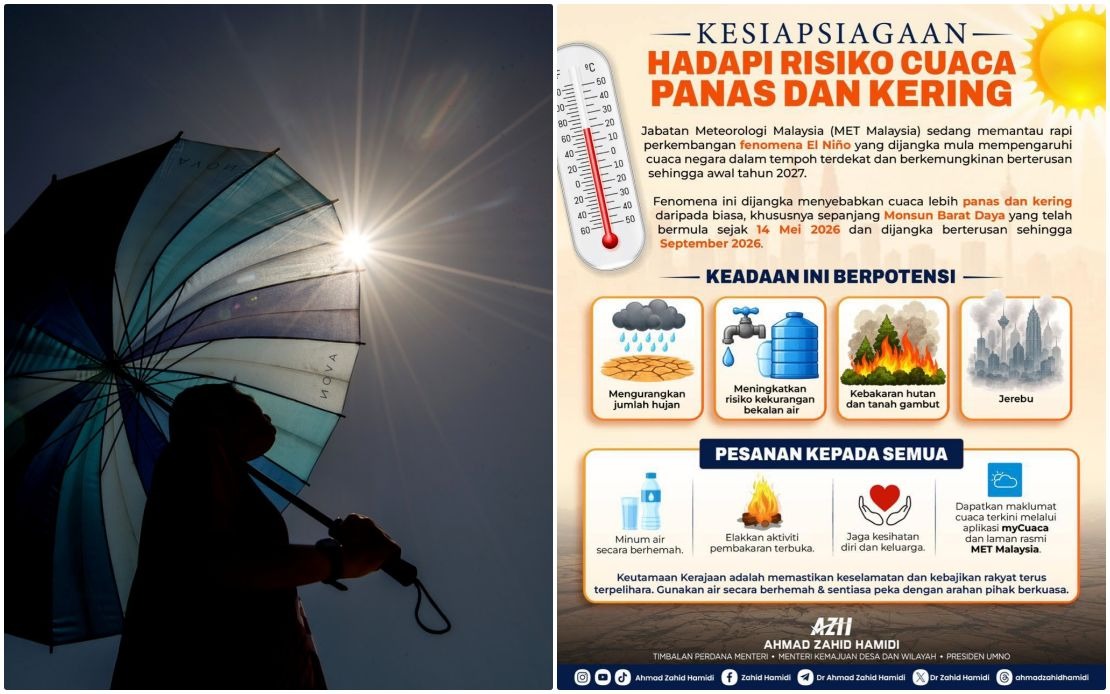
Malaysia faces an extended period of hotter and drier weather conditions ahead, with Deputy Prime Minister Datuk Seri Dr Ahmad Zahid Hamidi warning citizens to take precautions as the El Niño phenomenon is anticipated to influence the country's climate until early 2027. In his capacity as chairman of the Central Disaster Management Committee, Ahmad Zahid issued the alert to ensure public awareness of the climatic shift expected to intensify during the Southwest Monsoon season, which commenced in May and will continue through September.
The El Niño effect is projected to deviate significantly from normal rainfall patterns across several Malaysian regions, potentially creating acute water availability challenges for both urban and rural populations. The phenomenon's characteristic dry conditions pose particular risks during the monsoon period, when precipitation would ordinarily be more abundant. This compression of rainfall amounts during months typically associated with moisture could strain water supplies in the coming months, necessitating a shift in consumption patterns and emergency preparedness across households and industries alike.
Beyond water scarcity, Ahmad Zahid highlighted the elevated hazard of wildfires, particularly in forest and peatland areas where desiccated vegetation becomes highly flammable. These ecosystems are particularly vulnerable when atmospheric moisture levels drop and fuel moisture content decreases, creating conditions where even minor ignition sources can trigger large-scale conflagrations. The risk extends beyond environmental degradation; large-scale fires directly threaten air quality across the region and pose respiratory health hazards for millions of people across Malaysia and neighbouring territories through transboundary haze.
In his public advisory disseminated via social media, the Deputy Prime Minister urged Malaysians to exercise vigilant monitoring of weather patterns and to adopt water conservation practices in their daily routines. The guidance specifically discouraged open burning activities, which could inadvertently trigger or exacerbate fire incidents during this climatically sensitive period. He also emphasised the importance of prioritising health and welfare, particularly for vulnerable populations including children, the elderly, and those with pre-existing respiratory or cardiovascular conditions who face elevated health risks during periods of extreme heat and poor air quality.
The Malaysian Meteorological Department (MetMalaysia) has been designated as the authoritative source for real-time climate information, with Ahmad Zahid directing the public to utilise the myCuaca mobile application for up-to-date weather alerts and forecasts. This digital platform enables citizens to receive location-specific weather intelligence and early warning notifications, facilitating proactive decision-making at the household and community levels. Accessibility to timely meteorological data is essential for sectors ranging from agriculture and water resource management to public health planning and disaster mitigation.
MetMalaysia's director-general Dr Mohd Hisham Mohd Anip corroborated the Deputy Prime Minister's assessment in an official statement, confirming that El Niño conditions are anticipated to deliver above-normal temperatures and below-normal precipitation, particularly throughout the Southwest Monsoon phase. The monsoon period, which began on May 14 and extends until September, constitutes a critical window during which the phenomenon's effects will be most pronounced. This timing is significant because it coincides with the agricultural off-season in many regions and the peak demand period for water resources across both domestic and commercial sectors.
The coordinated messaging from both political leadership and the meteorological authority underscores the seriousness with which the government is treating this climatic event. Early preparation and public engagement represent strategic approaches to minimising potential disasters and protecting national welfare. By raising awareness well in advance, authorities aim to enable citizens and businesses to implement mitigation strategies, stockpile resources, and adjust operational practices before conditions become critical.
The extended duration of the forecast—stretching into early 2027—represents an unusually prolonged disruption to normal climatic patterns, distinguishing this El Niño episode from shorter-term weather variations. Such extended anomalies demand institutional responses spanning multiple government agencies, from water resource authorities managing reservoir levels to fire management agencies pre-positioning firefighting assets. Agricultural stakeholders will also need to adjust planting schedules and crop selection to align with anticipated moisture availability.
For regional context, El Niño episodes have historically triggered cascading effects across Southeast Asia, affecting monsoon patterns, agricultural productivity, and transboundary air quality. Malaysia's position within this regional system means that climate conditions experienced elsewhere in Southeast Asia may presage or complement domestic weather patterns. Coordination with neighbouring countries on fire prevention and haze mitigation will likely become increasingly important as drought conditions potentially affect broader terrestrial systems across the region.
The government's emphasis on responsible action by all stakeholders reflects recognition that climate resilience depends not solely on institutional responses but on collective behavioural adjustments. Water conservation, fire prevention, and health precautions require participation from households, businesses, and community organisations. By framing this challenge as a shared responsibility, authorities are cultivating a culture of climate-conscious living that may yield benefits extending beyond this particular El Niño episode.


