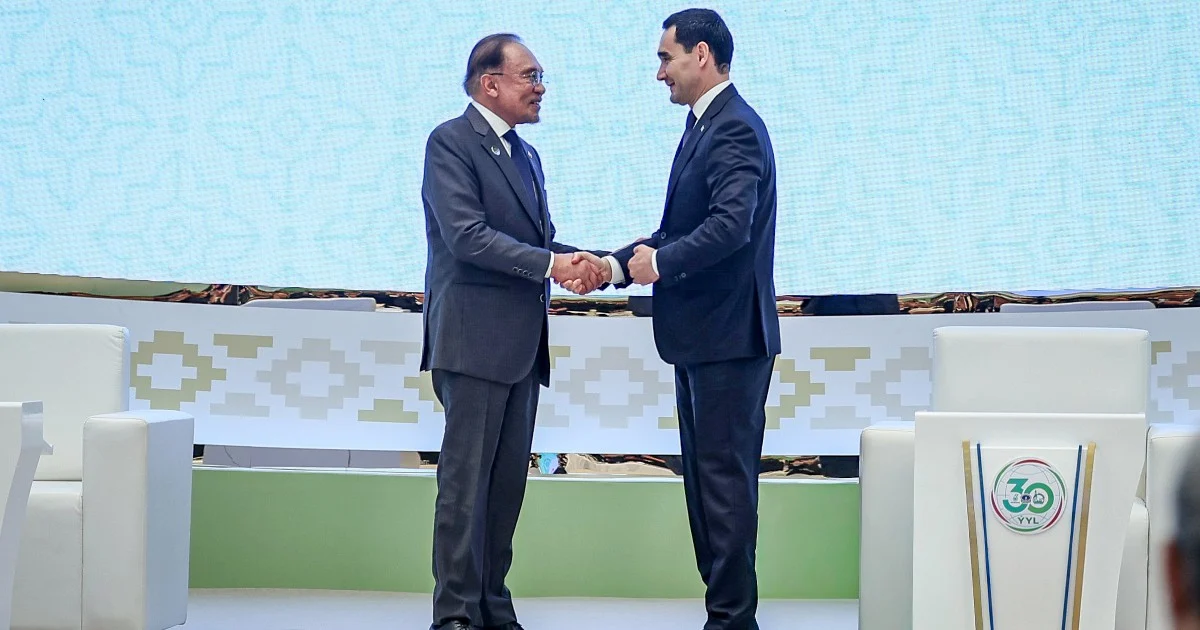
Prime Minister Datuk Seri Anwar Ibrahim's recent visit to Turkmenistan has yielded significant agreements for expanding bilateral relations between Malaysia and the energy-rich Central Asian nation. The two countries have pledged to deepen collaboration across multiple sectors, with energy cooperation taking centre stage as the primary focus for the partnership moving forward.
Turkmenistan's substantial natural gas reserves and strategic location along major energy corridors linking Asia and Europe make it an increasingly important partner for Malaysia's evolving energy strategy. As Malaysia seeks to diversify its energy portfolio and secure reliable supply chains amid global market uncertainties, the agreement signals Kuala Lumpur's intent to explore new avenues for hydrocarbon procurement and energy security cooperation. This development reflects broader regional trends wherein Southeast Asian nations are actively engaging Central Asian partners to reduce energy dependency and build resilient supply networks.
Beyond the energy sector, the two nations have committed to expanding their economic footprint through enhanced trade and investment mechanisms. Malaysian businesses now have clearer pathways to enter the Turkmenistan market, while Turkmen enterprises can similarly access opportunities within Southeast Asia's largest economy by purchasing power. This bilateral trade expansion is particularly significant given Malaysia's position as a major manufacturing and financial hub in the region, offering Turkmenistan pathways to regional supply chains and distribution networks.
The transportation sector emerged as another critical area for collaboration. Strengthening logistics and connectivity between Malaysia and Turkmenistan could facilitate smoother movement of goods and services, reducing transit times and costs for bilateral commerce. Improved transportation links also position Malaysia as a strategic gateway for Turkmenistan's goods destined for Southeast Asian markets, while creating commercial opportunities for Malaysian logistics and shipping companies operating across the broader Asian landscape.
Educational exchanges form a complementary pillar of this renewed partnership. By facilitating student mobility and academic cooperation, both nations invest in building long-term people-to-people connections and fostering mutual understanding. Malaysian universities can benefit from collaborations with Turkmen institutions, while Turkmen students gaining education in Malaysia return home as informed advocates for bilateral engagement. Such educational frameworks historically prove instrumental in sustaining diplomatic relationships across generations.
Technology cooperation represents a forward-looking dimension of the agreement, positioning both countries to leverage digital innovation and technical expertise. Malaysia's strengths in fintech, telecommunications, and digital transformation can complement Turkmenistan's emerging innovation sectors. Conversely, technical knowledge from Turkmenistan's energy and resource management sectors could prove valuable for Malaysian companies operating in similar domains globally.
The timing of this partnership expansion carries particular significance within the broader context of Malaysia's foreign policy orientation. As Kuala Lumpur balances relationships among major powers and seeks strategic diversification, cultivating partnerships with Central Asian nations provides additional leverage and reduces over-reliance on any single economic bloc. Turkmenistan, similarly navigating complex regional geopolitics, benefits from deepening ties with stable Southeast Asian partners.
For Malaysian investors and businesses, the opening represents opportunities to participate in Turkmenistan's ongoing economic development projects and infrastructure initiatives. The country has been pursuing modernisation efforts across various sectors, creating potential partnership opportunities for Malaysian companies with relevant expertise and capital. Energy companies, in particular, may find attractive prospects in upstream and downstream operations, liquefied natural gas technology, and renewable energy integration.
The practical implementation of these agreements will depend on establishing institutional frameworks, bilateral commissions, and sectoral working groups to translate political commitments into tangible outcomes. Historical experience suggests that sustained engagement at multiple governmental levels, coupled with private-sector involvement, yields the most substantial results. Malaysia's track record in managing complex bilateral relationships across diverse regions positions it well to ensure effective execution of these agreements.
Regional implications extend beyond bilateral dynamics. Strengthened Malaysia-Turkmenistan relations could catalyse broader engagement between Southeast Asia and Central Asia, two regions with historically limited connectivity. Enhanced economic ties may inspire similar partnerships among other ASEAN members and Central Asian neighbours, gradually building regional architecture that benefits multiple actors. This gradual integration of distant regions through strategic partnerships represents a pragmatic approach to expanding economic opportunities without creating destabilising power vacuums.
Looking forward, the success of this partnership hinges on consistent follow-through from both governments and active participation from private-sector stakeholders. The energy dimension, while prominent, should not overshadow opportunities across other sectors where mutual benefits may prove equally substantial. By approaching this partnership with clear timelines, measurable objectives, and regular progress reviews, Malaysia and Turkmenistan can transform political declarations into sustained economic cooperation that benefits both nations and contributes to broader regional stability and prosperity.