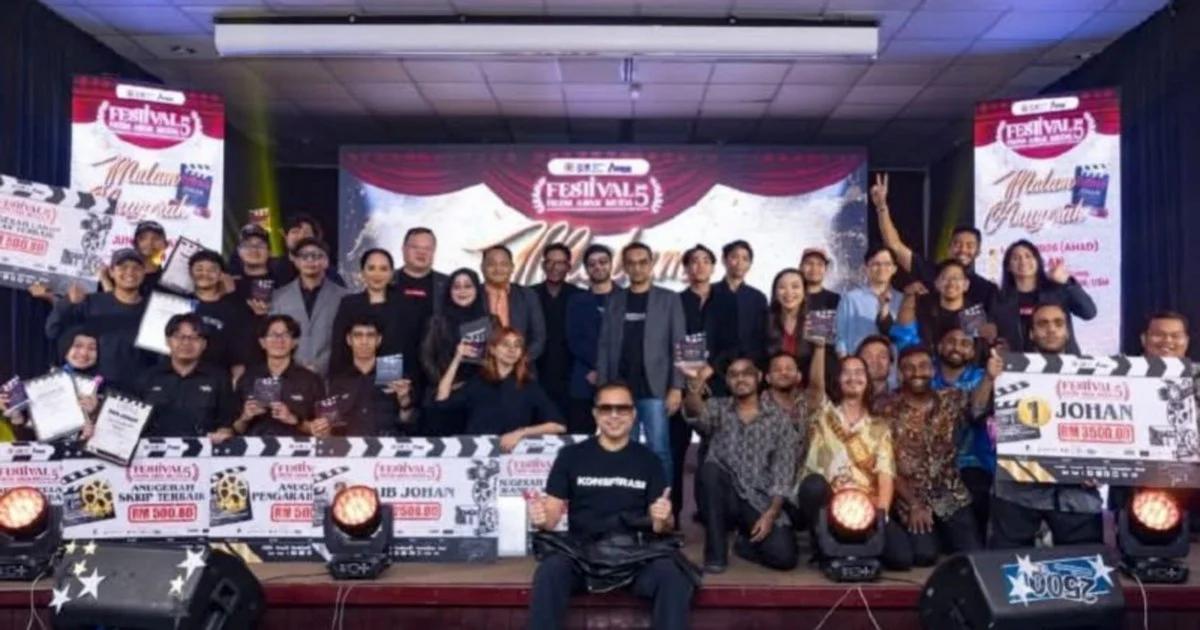
The Malaysian Anti-Corruption Commission (MACC) is deepening its push to instil integrity and strengthen anti-corruption awareness among Malaysia's youth by partnering with Universiti Sains Malaysia (USM) to support the 5th Youth Film Festival (FFAM) in Penang. This collaboration marks a strategic shift in how the country's graft-fighting body engages with younger generations, recognising that traditional enforcement approaches need complementary educational and cultural initiatives to create lasting behavioural change.
The festival represents a deliberate effort by MACC to harness the communicative power of cinema, a medium that resonates deeply with students and young professionals who increasingly consume complex social messages through visual storytelling. By embedding anti-corruption themes within a youth-focused film festival rather than relying solely on regulatory warnings or institutional messaging, MACC is acknowledging that creative expression often penetrates mindsets more effectively than conventional awareness campaigns. The choice of USM as the venue and partner institution also signals recognition of the role universities must play in cultivating ethical leadership among Malaysia's future decision-makers and professionals.
This initiative arrives at a critical juncture for Malaysia's anti-corruption agenda. While the country has made measurable progress in institutional reforms over recent years, sustaining momentum requires generational buy-in. Young people who internalise anti-corruption values early are more likely to embed integrity into their professional cultures once they enter the workforce across government, business, academia, and civil society. By positioning MACC not as a punitive authority but as a champion of merit and fairness, the commission hopes to reframe integrity as an aspirational value rather than a compliance burden imposed from above.
The festival model itself offers distinct advantages over traditional outreach. Participants in film competitions are incentivised to produce creative content that explores governance, public accountability, and ethical dilemmas in ways that capture authentic youth perspectives. Rather than digesting top-down messaging, young filmmakers become messengers themselves, translating anti-corruption principles into narratives that speak to their peers. This peer-to-peer communication dynamic can be significantly more persuasive than institutional didacticism, especially among audiences often sceptical of authority or prone to disengagement from official campaigns.
For Penang, hosting the festival carries regional implications. The northern state has positioned itself in recent years as a technology and innovation hub, keen to attract knowledge-based industries and international investment. Demonstrating a strong institutional commitment to transparency and good governance—symbolised by high-profile anti-corruption initiatives—reinforces Penang's appeal to multinational corporations and skilled talent that prioritise operating in ethically sound environments. MACC's participation elevates the festival's credibility and sends a signal to businesses and investors that the state's leadership takes graft prevention seriously.
The broader Southeast Asian context matters too. Corruption remains a persistent challenge across the region, with varying degrees of institutional capacity to combat it. Malaysia's approach—combining enforcement with cultural and educational interventions—offers a model that other nations might study or adapt. Should MACC's film festival initiative prove effective in shifting youth attitudes toward integrity, it could become a template for anti-corruption agencies elsewhere in the Association of Southeast Asian Nations (ASEAN) seeking to strengthen long-term cultural change rather than relying exclusively on criminal prosecutions.
USM's role as partner underscores the importance of academic institutions in this ecosystem. Universities are not merely venues for the festival; they are environments where young people develop critical thinking skills and form peer networks that will shape professional culture. By collaborating with MACC, USM implicitly commits to embedding anti-corruption literacy into broader campus discourse and student development programmes. This institutional backing lends weight to MACC's message and demonstrates that integrity is not simply a legal or bureaucratic concern but a foundational principle of academic and intellectual life.
The festival also reflects pragmatic recognition that technological change and social media have altered how young Malaysians access and process information. Traditional posters, pamphlets, and lectures often fail to penetrate attention-saturated digital environments. Film, especially short-form and compelling cinema, travels across social platforms, generating organic engagement and discussion. If selected festival entries are strategically shared online following the event, MACC can multiply the reach and shelf-life of its messaging well beyond the physical campus venue.
However, success will hinge on execution. For the initiative to meaningfully shift attitudes, MACC must ensure that selected films are genuinely compelling and avoid the pitfall of heavy-handed moralising that alienates rather than persuades younger audiences. The commission must also demonstrate that hosting and endorsing such creative content leads to tangible institutional follow-through—perhaps through hiring practices, workplace cultures, or enforcement decisions that visibly reflect the values promoted in the films. Young people are adept at detecting hypocrisy; if MACC partners with a festival celebrating integrity while appearing to tolerate malfeasance elsewhere, credibility will suffer.
The 5th Youth Film Festival collaboration thus represents more than a single event. It signals that Malaysia's anti-corruption establishment recognises the limitations of enforcement-only strategies and is investing in the long-term cultural foundation necessary to embed integrity as a defining feature of Malaysian public life. Whether this approach succeeds in durably shifting youth attitudes will take years to assess, but the strategic thinking behind it reflects a maturing understanding of how institutional change ultimately depends on generational values.


