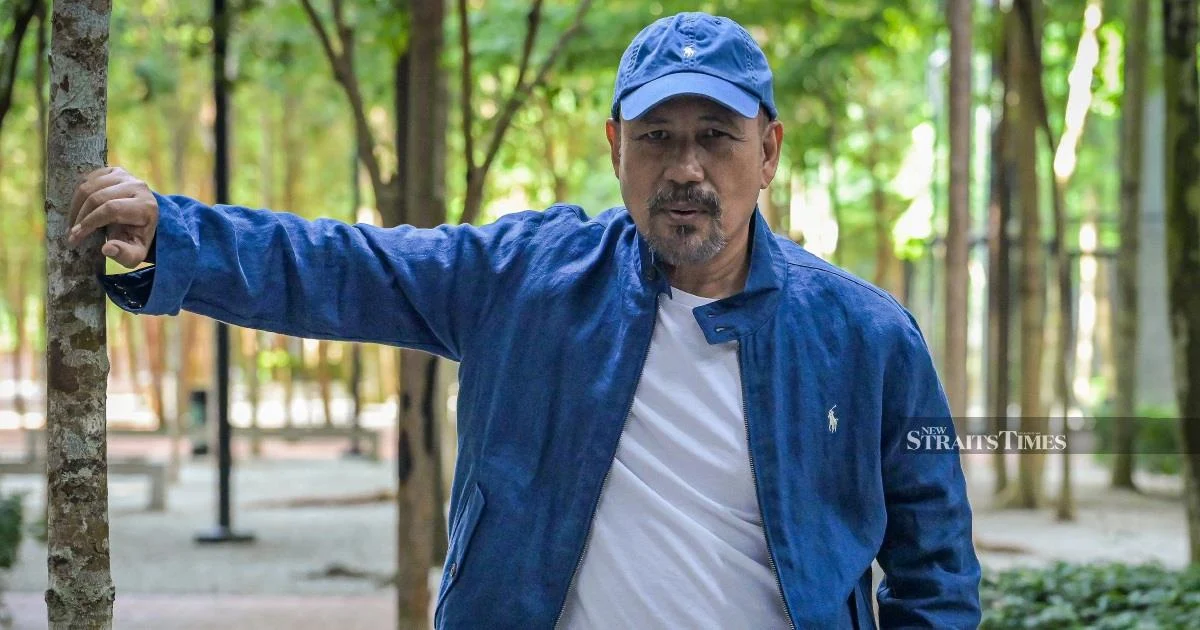
Legendary Malaysian music maestro Datuk M. Nasir is pursuing a RM5 million legal action against MyTeksi Sdn Bhd, the operating entity behind Grab Malaysia, alleging that the company exploited his name and reputation to promote a beverage without his consent or knowledge. The dispute centres on the unauthorised commercial use of the artist's identity, a matter that touches on fundamental issues of intellectual property rights and personal brand protection in Malaysia's rapidly expanding digital economy.
M. Nasir, who has maintained a measured public stance on the controversy, emphasised that his decision to initiate legal proceedings stems from what he views as a clear violation of his moral and legal entitlements. The veteran performer, whose influence spans decades in Malaysia's music industry, framed the lawsuit not merely as a commercial dispute but as a matter of principle regarding an individual's inherent right to govern how their name and likeness are deployed for commercial purposes. This characterisation underscores a broader tension between corporate entities and public figures regarding the boundaries of consent in marketing activities.
The beverage marketing campaign in question apparently involved leveraging M. Nasir's established brand recognition without seeking prior approval or establishing any formal partnership arrangement. Such situations have become increasingly common as companies seek to capitalise on the cultural capital of prominent personalities to enhance product visibility and consumer appeal. The incident highlights potential gaps in corporate governance practices, particularly among large technology platforms that operate across multiple service verticals and may not always maintain rigorous compliance protocols when venturing into unfamiliar commercial territories.
MyTeksi's expansion into the beverage sector represents a diversification strategy typical of Southeast Asian technology conglomerates that have sought to broaden their revenue streams beyond their core ride-hailing operations. However, this expansion appears to have proceeded without the necessary due diligence regarding intellectual property clearances and personality rights, creating exposure to legal liability. The company's approach raises questions about internal approval mechanisms and whether adequate legal review processes existed before launching marketing materials that prominently featured a recognisable Malaysian public figure.
The RM5 million claim reflects the significant monetary value attributed to M. Nasir's name recognition and the substantial damages that unauthorised commercial appropriation can inflict on a celebrity's ability to monetise their own reputation. This valuation methodology is consistent with international precedents where courts recognise that celebrities derive considerable income from licensing their names, images, and endorsements to carefully selected brands. The amount serves as an indicator of how Malaysian courts might assess damages in cases involving personality rights violations.
From a legal perspective, the case engages with Malaysia's existing framework governing intellectual property and personality rights, though the precise mechanisms for protecting names and reputations in commercial contexts have evolved unevenly across different jurisdictions. Malaysian law recognises both contractual rights and tort-based protections against unauthorised commercial appropriation, though enforcement mechanisms and damage calculations remain areas where precedent continues to develop. M. Nasir's decision to pursue litigation signals confidence in the legal system's capacity to provide meaningful remedies.
The dispute also reflects deeper questions about how digital-era companies should interact with established cultural figures and their intellectual property. Grab Malaysia, as a major regional technology platform with substantial market influence, would reasonably be expected to maintain stringent protocols for any marketing initiative bearing a public figure's name. That such protocols apparently failed to prevent this incident suggests either organisational breakdowns or insufficiently cautious risk management practices within the beverage division.
For other Malaysian celebrities and public figures, the case carries significant implications regarding enforcement of their personality rights. Should M. Nasir succeed in his claim, the outcome would establish important precedent regarding the remedies available to personalities whose names are appropriated without authorisation. Conversely, an unfavourable judgment might embolden corporations to adopt more cavalier approaches to obtaining clearances, potentially weakening protections that Malaysian personalities have traditionally relied upon.
The lawsuit arrives during a period of growing awareness across Southeast Asia regarding intellectual property rights and the commercial value of personal brands. Malaysian entertainment industry figures have become increasingly vigilant about protecting their names and images from unauthorised commercial exploitation, reflecting both increased sophistication about brand management and heightened understanding of financial losses stemming from unauthorised use. M. Nasir's action contributes to this evolving conversation about respecting boundaries between commercial entities and the individuals whose reputations they seek to leverage.
While M. Nasir has chosen to address the matter primarily through legal channels rather than public commentary, his restraint does not diminish the significance of his assertion that controlling one's name and image in commercial contexts represents a fundamental right. This position aligns with international norms regarding personality rights, where consent-based systems are widely recognised as essential for protecting both celebrities and the broader principle that individuals should govern the commercial exploitation of their own identities. The case will likely attract attention from other Malaysian personalities navigating similar issues with corporate entities operating in their country.