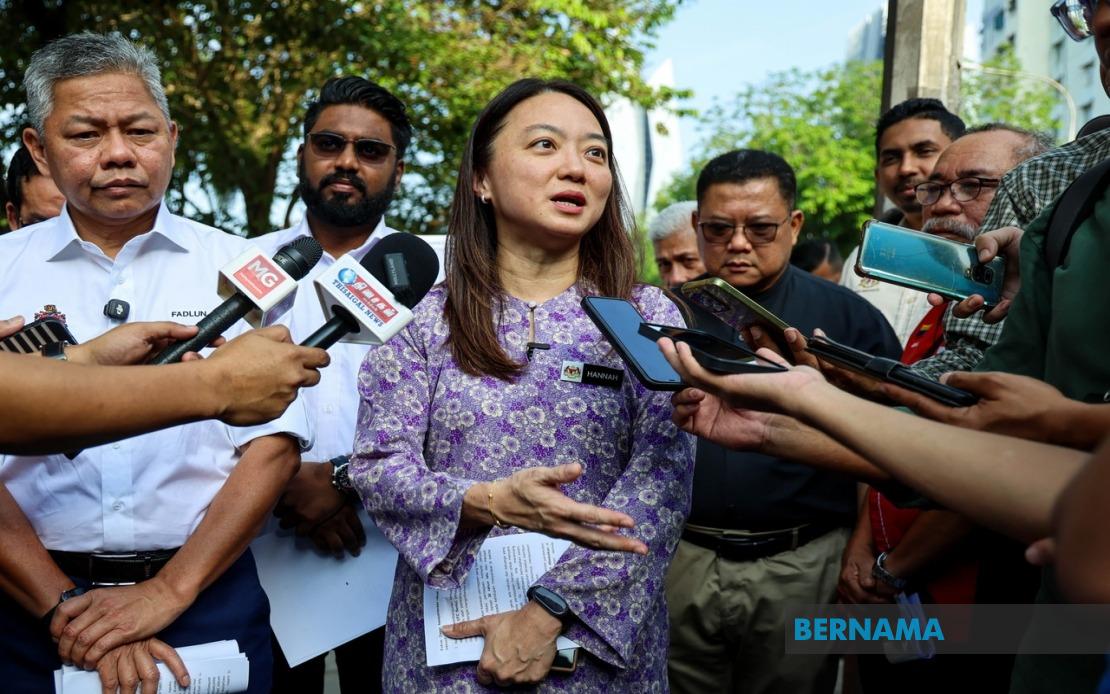
Federal Territories Minister Hannah Yeoh has issued a direct call to action for all Malaysian local authorities, particularly those overseeing high-profile destinations like Putrajaya, to move beyond reactive maintenance practices and establish consistent, forward-looking approaches to keeping public facilities clean and safe. Speaking after inspecting a hawker facilities project near the Urban Transformation Centre in Sentul, Yeoh stressed that there should be no acceptable excuse for authorities to allow basic upkeep to deteriorate to the point where infrastructure failures become viral social media moments.
The remarks come in response to recent complaints circulating online regarding damaged equipment in Putrajaya, including non-functional lifts and escalators that drew public attention through video posts on various social platforms. Rather than viewing these incidents in isolation, Yeoh positioned them as symptomatic of a broader institutional challenge facing Malaysia's local government system—the tendency to address infrastructure issues only after they have already captured public attention and triggered criticism. This reactive cycle, she suggested, undermines both the competence of municipal authorities and public confidence in their operational standards.
Yeoh made a critical distinction between two categories of maintenance work. Large-scale upgrading projects, she acknowledged, often require substantial budgetary allocations and may justify extended timelines for completion. However, fundamental cleanliness and safety measures should never face resource constraints as an excuse for neglect. This differentiation is significant because it establishes a clear performance baseline for local authorities—certain standards must be met regardless of financial circumstances, and only the timing of ambitious improvements should vary with available funding. The message implicitly challenges PBTs to prioritise operational excellence within their existing means before requesting additional resources.
Putrajaya holds particular significance in this discussion given its status as Malaysia's administrative capital and a major tourist destination. The city attracts both domestic and international visitors who form immediate impressions based on the condition of public infrastructure. When visitors encounter broken escalators or out-of-service lifts, the broader narrative about Malaysian urban management and governance standards can be negatively affected. Yeoh noted that Putrajaya Corporation's leadership has already mobilised repair efforts, but her comments suggest this responsiveness should have been pre-emptive rather than reactive to social media pressure.
A cornerstone of Yeoh's directive involves intensifying ground-level monitoring through frequent site visits by management personnel. This approach targets a structural weakness in many local authorities—the gap between policy frameworks and actual field conditions. When decision-makers remain distanced from operational realities, problems can fester unnoticed until they become embarrassingly visible. Regular inspections by leadership serve multiple functions: they create accountability pressure, enable early problem detection, demonstrate organisational commitment to standards, and generate data that can inform resource allocation decisions. The emphasis on frequency rather than sporadic checks indicates that Yeoh views this as an ongoing cultural shift rather than a one-time administrative directive.
Yeoh also addressed the behaviour of social media users themselves, encouraging greater discernment before content goes viral. Her observation that video posts often represent only a fragment of a complete situation reflects legitimate concerns about digital information environments. A single recorded incident might not capture context about whether repairs are already underway, or whether the problem represents a new development or a chronic issue. However, her suggestion that the public should be more cautious about amplifying complaints creates a somewhat delicate balance—authorities need accountability mechanisms, yet premature viral amplification can distort public understanding. The implicit tension here is whether discernment primarily serves good governance or primarily protects institutional reputations from legitimate scrutiny.
From a governance perspective, Yeoh's remarks highlight the evolving relationship between digital accountability and traditional institutional responsibilities. Social media has fundamentally altered the dynamics of local government oversight by enabling citizens to document and publicise failures in real time, circumventing traditional media gatekeeping. While this creates pressure on authorities, it also raises questions about whether social media-driven agendas properly reflect genuine public priorities. The minister's position suggests authorities should not view viral incidents as aberrations but rather as symptoms of underlying maintenance failures that should never have occurred.
The broader implications for Malaysian local government are substantial. This directive essentially establishes that PBTs across the country should benchmark themselves against a standard of continuous, preventive maintenance rather than event-driven responses. For Kuala Lumpur, Petaling Jaya, Shah Alam, and other major local authorities managing complex urban infrastructure, the message is clear: maintenance culture must shift from corrective to preventive modes. This requires different staffing models, budget allocation approaches, and accountability structures than those currently in place in many municipalities.
Yeoh's intervention also reflects growing recognition among Malaysia's political leadership that infrastructure quality directly impacts both economic competitiveness and citizen satisfaction. As the country pursues higher-income status and competes for international talent and investment, the condition of public facilities serves as a tangible indicator of governmental effectiveness. Broken escalators in Putrajaya send a message about systemic dysfunction that extends far beyond the specific equipment failure. Conversely, consistently well-maintained public spaces communicate confidence and order, qualities that drive tourism, investment, and resident morale.
For local authorities seeking to implement these expectations, the path forward involves building institutional capacity around preventive maintenance protocols. This might include establishing computerised asset management systems that track maintenance schedules, implementing management accountability metrics tied to facility condition standards, and allocating sufficient operational budgets to address small issues before they become critical failures. Many PBTs currently lack these systematic approaches, operating instead on ad-hoc repair models triggered by complaints or visible deterioration.
The minister's follow-up actions also matter. She indicated that her ministry has already engaged with Putrajaya Corporation management and repair work has commenced, demonstrating that the call for proactivity includes ministerial oversight and support. This suggests a comprehensive approach rather than simply delegating responsibility downward to local authorities without providing guidance or resources. Other ministries overseeing different local government agencies may now face implicit expectations to adopt similar engagement approaches.
Ultimately, Yeoh's intervention addresses a persistent challenge in Malaysian municipal governance—the gap between aspirations and execution. Public facilities maintenance is neither technically complex nor particularly expensive when handled preventively. The barriers are primarily institutional and cultural: establishing consistent protocols, maintaining staff discipline, allocating budgets appropriately, and creating accountability mechanisms that reward proactivity rather than penalising only reactive failures. Whether this call translates into sustained institutional change across Malaysian local authorities remains to be seen, but the directness of the message and ministerial backing provide at least a clear directive.