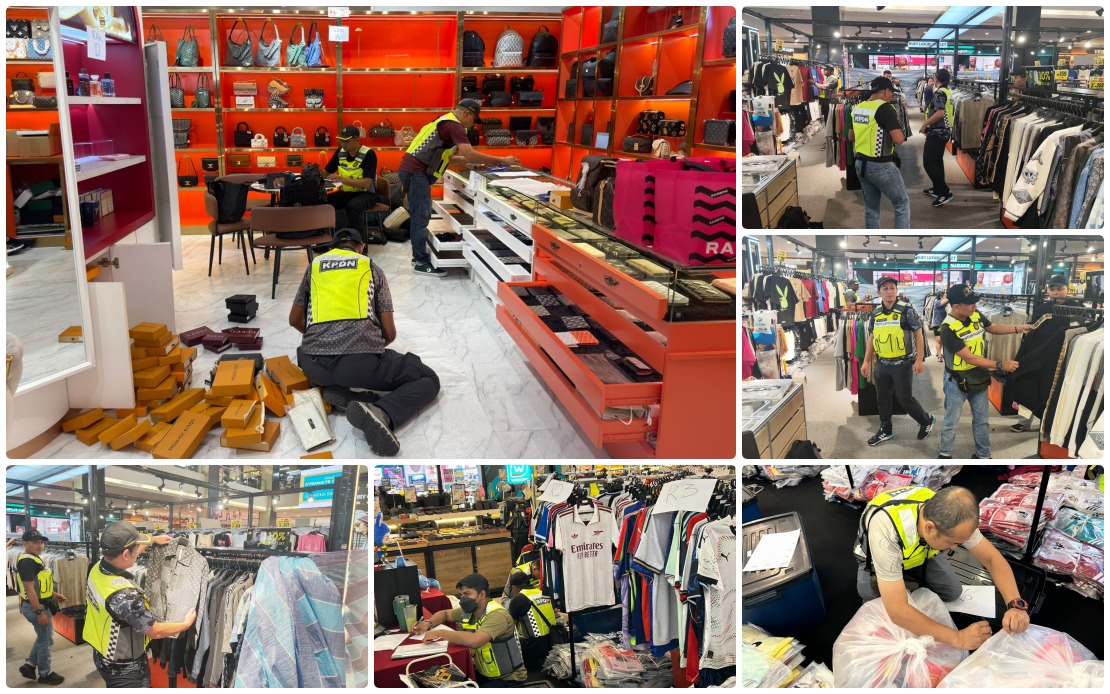
The Ministry of Domestic Trade and Cost of Living (KPDN) has completed a significant enforcement operation targeting the distribution of counterfeit branded merchandise in Johor Bahru. On June 15, enforcement teams descended upon three commercial premises and removed approximately RM600,000 worth of suspected fake goods bearing unauthorised trademark applications. The operation represents an intensified effort to combat intellectual property violations in Malaysia's southern business hub, where porous retail networks have historically enabled the circulation of counterfeit items to unsuspecting consumers.
According to Datuk Azman Adam, the enforcement director-general of KPDN, the raids were conducted by the Putrajaya Enforcement Division following extensive intelligence gathering spanning more than a month. The investigation identified traders operating through major supermarket chains while simultaneously functioning as wholesale distributors to other retailers, suggesting a more coordinated supply network than typical street-level counterfeit sales. This multi-tiered distribution model indicates how sophisticated counterfeiting operations have become in Malaysia, extending beyond casual peddlers to organised commercial entities embedded within legitimate retail infrastructure.
The confiscated merchandise encompassed diverse product categories frequently targeted by counterfeiters, including branded clothing, handbags, wallets, belts, and perfumes. Alongside the physical goods, enforcement teams seized business documentation believed to be associated with the illegal trading operations. The breadth of product types suggests the operation supplied multiple market segments, potentially serving both wholesale buyers and retail consumers through various channels. This diversity of goods also indicates the operators maintained sufficient capital and logistical capacity to manage a significant inventory, pointing to a reasonably established criminal enterprise rather than opportunistic sales.
Investigators determined there was sufficient evidence that the individuals involved had contravened Section 102(1)(c) of the Trademark Act 2019, which specifically criminalises the possession, custody, or control of goods bearing wrongly applied trademarks with intent to trade them. Four individuals were detained for further questioning, including the premises owners and caretakers whose cooperation is essential for unravelling the supply chain and identifying upstream sources of the counterfeit merchandise. The detention of multiple suspects suggests investigators believe the operation involved coordinated involvement rather than a single culpable party, potentially implicating importers and logistics coordinators in addition to retail operators.
The legal framework governing trademark infringement in Malaysia carries substantial penalties designed to deter both individual traders and corporate entities from engaging in counterfeiting. Individual offenders convicted under the Trademark Act 2019 face maximum fines of RM10,000 per counterfeit item or imprisonment up to three years for first offences, with penalties escalating dramatically for repeat violations to RM20,000 per item or five-year imprisonment. For corporate entities and business structures, the financial exposure intensifies further, with first-offence fines reaching RM15,000 per item and repeat offences attracting penalties of RM30,000 per item, creating substantial financial disincentives for companies considering counterfeiting operations.
The severity of these penalties reflects Malaysia's commitment to protecting intellectual property rights and maintaining market integrity. However, enforcement effectiveness depends upon consistent application and swift prosecution through the courts. The high per-item penalties are theoretically substantial, yet given that large operations may involve hundreds or thousands of items, the cumulative liability for corporate defendants can become astronomical, potentially exceeding the commercial viability of entire enterprises. This mathematical reality suggests that prosecution authorities employ penalty calculations strategically to achieve maximum deterrent effect against organised counterfeiting networks.
Counterfeiting operations inflict measurable economic damage throughout Malaysia's retail ecosystem and beyond. Consumers purchasing counterfeit goods receive inferior products while believing they have acquired authentic branded items, eroding trust in both the retailers offering these products and the brands themselves. Legitimate businesses operating in fashion, accessories, and cosmetics sectors lose revenue to competitors offering fake alternatives at substantially lower prices, distorting market competition and disadvantaging law-abiding traders. International brands suffer reputational damage when counterfeit versions of their products fail to meet quality standards, generating customer complaints that undermine brand equity accumulated over decades.
The geopolitical dimensions of counterfeiting extend beyond individual consumer harm. Malaysia's position as a regional trade hub creates particular vulnerability, as counterfeit goods sourced from countries with lax enforcement can transit through Malaysian ports and distribution networks to reach consumers across Southeast Asia. Johor Bahru's proximity to Singapore and its role as a commercial gateway make it especially attractive to counterfeiters seeking access to multiple markets. The KPDN operation therefore represents not only a domestic consumer protection measure but also a contribution to regional intellectual property enforcement, signalling to international brand owners and trading partners that Malaysia actively polices trademark violations.
KPDN's enforcement director-general emphasised that the ministry intends to escalate enforcement activities and maintain an uncompromising stance against any parties engaged in counterfeiting or intellectual property infringement. This commitment reflects broader government policy recognising intellectual property protection as essential to Malaysia's economic development objectives. As the country seeks to transition toward higher-value manufacturing and innovation-driven industries, protecting intellectual property becomes increasingly important for attracting foreign investment and supporting domestic innovation. Companies considering establishing research and development facilities in Malaysia require confidence that their innovations will be legally protected against unauthorised copying.
The investigation's month-long preliminary phase demonstrates that successful enforcement requires sustained intelligence collection and analysis rather than reactive responses to complaints. KPDN's intelligence-driven approach allowed enforcement teams to identify not just individual retailers but entire distribution networks, maximising impact through coordinated raids rather than piecemeal enforcement. This methodology likely involved cooperation with supermarket operators, consumer complaints, and market surveillance activities. The intensity of investigation required to build cases against organised counterfeiting networks suggests that KPDN's enforcement capabilities have evolved beyond basic compliance checking to encompass sophisticated intelligence analysis capabilities.
Moving forward, the detention and interrogation of the four individuals arrested will be critical for understanding the supply chain's upstream connections. Investigators will attempt to determine where the counterfeit goods originated, which is particularly important given that major counterfeiting operations typically source products from manufacturers outside Malaysia. Understanding whether merchandise came from Thailand, China, or other regional sources will inform bilateral cooperation efforts and potentially trigger investigations extending beyond Malaysian jurisdiction. The business documents seized may contain financial records, supplier contacts, and customer lists that illuminate the broader ecosystem supporting counterfeiting activities in Malaysia.
The RM600,000 seizure value represents substantial confiscated merchandise, yet enforcement specialists recognise that even successful operations capture only a fraction of circulating counterfeits. Many retail and online channels continue operating beyond KPDN's visibility, particularly through digital marketplaces where enforcement becomes technically challenging and jurisdictionally complex. Sustained reduction in counterfeiting will require not only field enforcement but also consumer education initiatives teaching shoppers to identify authentic branded goods and understand the risks of purchasing suspiciously discounted merchandise. E-commerce platforms also bear responsibility for implementing verification systems preventing counterfeit sellers from operating on their networks.
This operation underscores Malaysia's determination to enforce intellectual property rights rigorously and protect consumers from fraudulent merchandise. The scale of the seizure and the multiple locations targeted demonstrate KPDN's capacity to conduct complex enforcement investigations. However, the persistence of organised counterfeiting operations despite regulatory frameworks and enforcement activities indicates that market demand for cheap counterfeit goods continues driving supply. Addressing counterfeiting effectively requires sustained commitment combining enhanced enforcement, consumer awareness, supply-chain cooperation, and international collaboration to disrupt the sources feeding counterfeit merchandise into Malaysian and Southeast Asian markets.


