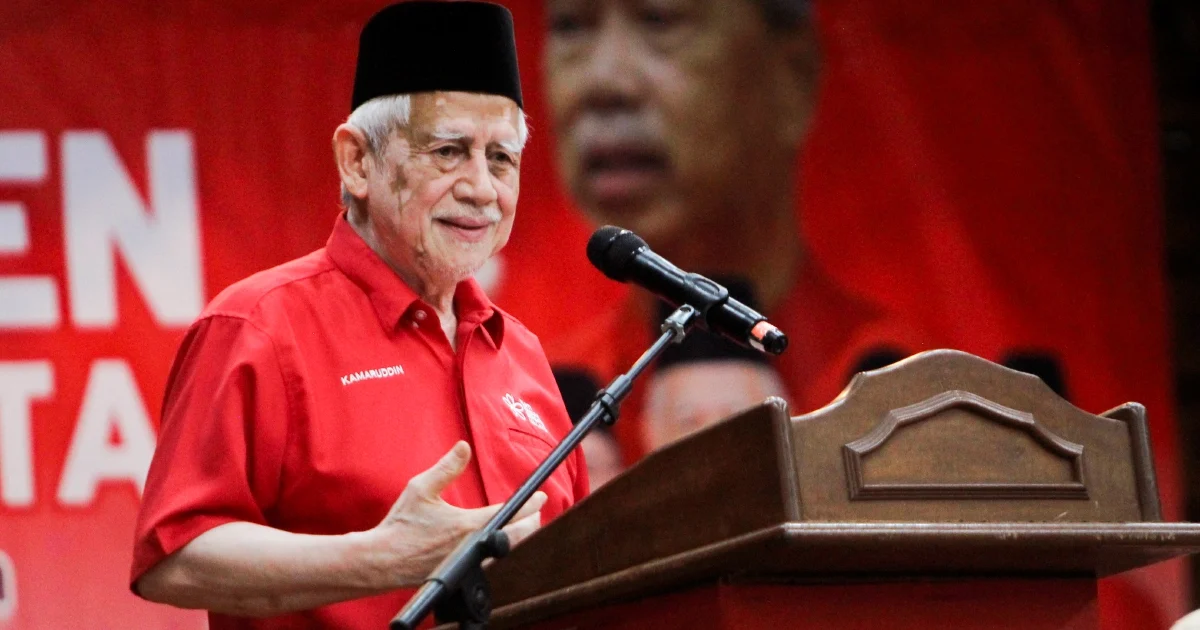
Perikatan Nasional's decision to expunge Datuk Seri Mohamed Azmin Ali and Datuk Dr Mohd Radzi Md Jidin from its leadership hierarchy triggered little concern within the Kelantan chapter, reflecting a broader consolidation of power within the coalition's senior ranks. The move, announced overnight, marked a significant recalibration of PN's organisational structure at a moment when the coalition continues to navigate complex state and federal political dynamics.
Kelantan Bersatu's measured response underscores the coalition's internal discipline and its focus on maintaining electoral momentum in a state where PN has held considerable influence. The removal of both figures, who held positions in the coalition's official hierarchy, appeared to be part of a wider strategic repositioning rather than a crisis-driven purge. For Kelantan specifically, where Bersatu holds substantial sway over state politics, the reshuffle carried minimal operational consequence, suggesting the party leadership had been apprised of the structural changes beforehand or viewed them as routine administrative adjustments.
The timing of this leadership shuffle deserves scrutiny within Malaysia's broader political context. PN has faced mounting pressure to demonstrate cohesion and decisiveness as it positions itself for upcoming electoral contests and seeks to strengthen its governance credentials. By streamlining its leadership apparatus and removing figures who may have represented factional interests or competing priorities, the coalition aims to project unity and clear strategic direction to both internal stakeholders and the electorate.
Mohamed Azmin Ali, a prominent politician with extensive experience spanning multiple portfolios and coalition memberships, had occupied a significant position within PN's structure. His removal signals a potential shift in the coalition's internal power dynamics and may reflect broader disagreements over strategy, policy direction, or resource allocation. Similarly, Mohd Radzi Md Jidin's departure from the leadership line-up suggests that PN is consolidating decision-making authority among a smaller, ostensibly more unified core group.
For Kelantan specifically, which has served as a crucial electoral and organisational stronghold for PN, the stability of state-level politics appears unaffected. This resilience likely stems from the deep institutional roots that Bersatu has established in the state over successive electoral cycles. The party's organisational infrastructure, accumulated electoral advantages, and established networks within state governance structures provide sufficient insulation from leadership changes at the national level. Kelantan voters and political observers are likely to perceive these developments as routine adjustments rather than existential threats to coalitional stability.
The larger implications of this reshuffle extend beyond Kelantan to reshape how PN governs and operates across different jurisdictions. A leaner, more tightly controlled leadership structure could enhance decision-making speed and reduce internal friction, but it simultaneously risks alienating regional power brokers who expected greater voice in coalition affairs. The coalition must carefully balance consolidating central authority with maintaining the regional autonomy that makes Kelantan's support valuable and durable.
Bersatu's unflustered posture also reflects the party's confidence in its electoral base and administrative capabilities within Kelantan. Having secured state control and maintained legislative majorities through successive electoral contests, the party demonstrates institutional confidence that transcends leadership fluctuations at the coalition level. This stability contrasts sharply with other PN components or rival coalitions that have experienced greater turbulence in recent years, positioning Bersatu as a reliable anchor for the broader alliance.
The broader coalition dynamics warrant attention as well. PN comprises multiple parties with distinct territorial bases, historical backgrounds, and strategic interests. When national leadership undergoes adjustment, component parties must evaluate whether such changes strengthen or weaken the overall alliance. Kelantan Bersatu's calm acceptance suggests confidence that the reshuffle either addresses internal problems without fundamentally altering the coalition's character or serves party interests by eliminating competing power centres that may have previously constrained its influence.
Looking forward, these leadership changes may reverberate through upcoming elections at both state and federal levels. Voters across Malaysia will be watching whether PN's reorganised leadership demonstrates improved governance, clearer policy articulation, and greater internal harmony, or whether it simply represents superficial restructuring. In Kelantan, where PN maintains considerable political capital, the real test will be whether this streamlined leadership translates into tangible policy achievements and responsive governance that reinforces existing voter loyalty.
The incident ultimately illustrates how Malaysian coalition politics operate at multiple levels simultaneously. What appears as a straightforward leadership reshuffle at the national level carries distinct meanings and implications for state-level parties depending on their institutional strength, electoral security, and historical relationships within the broader alliance. Kelantan Bersatu's equanimity in this instance reflects both confidence in its own position and understanding that coalition management requires accepting such adjustments as routine aspects of political life.