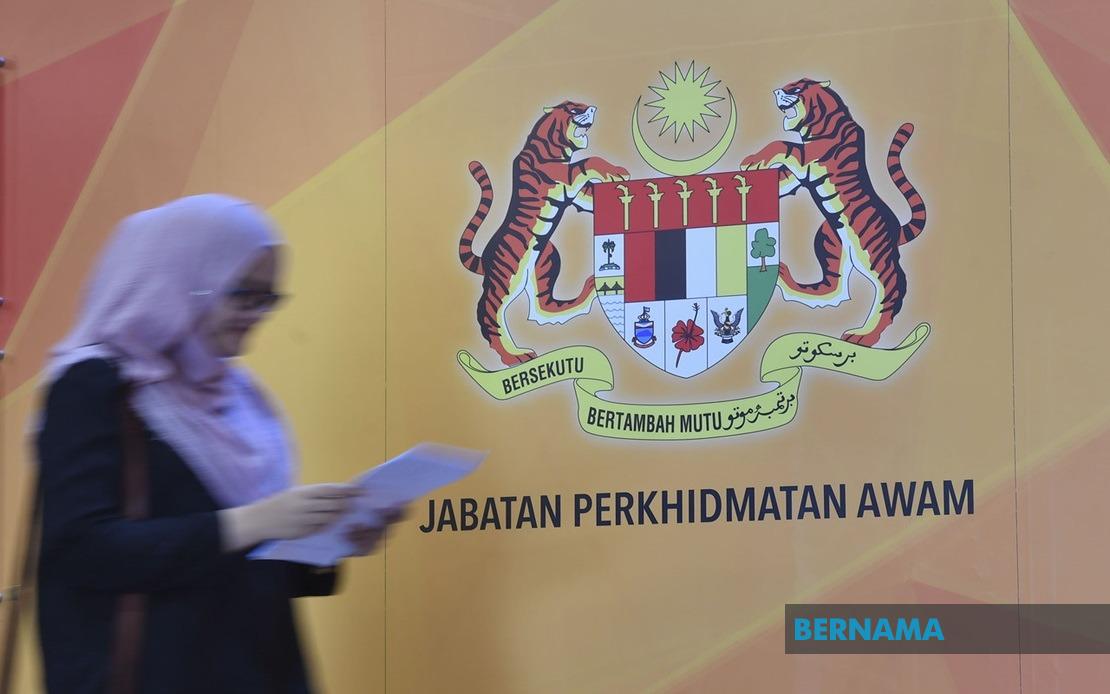
Malaysia's Public Service Department (JPA) has unveiled a comprehensive sponsorship initiative offering 640 places for students graduating from the Sijil Pelajaran Malaysia (SPM) examination in 2026, reinforcing the government's commitment to nurturing skilled professionals who will strengthen the nation's competitiveness on the global stage. The announcement, made on 19 June, positions these sponsorships as a cornerstone of the MADANI Government's human capital development strategy, designed to equip talented young Malaysians with world-class education that will ultimately accelerate economic growth and innovation across key sectors.
The sponsorship portfolio encompasses four distinct pathways, each targeting different educational goals and international markets. The National Sponsorship Programme provides 30 placements, while the Special Programme targeting Japan, Korea, France and Germany delivers 140 slots. The Special Programme for Domestic SPM Graduates offers 200 opportunities for students pursuing tertiary studies within Malaysia, and the JPA-MARA Special Programme (PKJM) rounds out the initiative with 270 additional places. This multi-tiered approach allows JPA to address both domestic capacity and regional strategic partnerships, recognising the importance of both local institutional strength and international exposure for developing comprehensive professional capability.
The educational domains covered by these sponsorships reflect Malaysia's strategic priorities in the knowledge economy. Engineering, science and technology dominate the offerings, acknowledging their critical role in driving industrial advancement and innovation. However, JPA has ensured that social sciences remain part of the portfolio, recognising that sustainable development requires expertise across governance, economics, and policy sectors. This balanced approach indicates a sophisticated understanding that Malaysia's future competitiveness depends not merely on technical prowess but on well-rounded professionals capable of addressing complex societal challenges alongside technological transformation.
The geographical reach of sponsored placements demonstrates JPA's international positioning strategy. Students successful in their applications gain access to leading universities in the United States, Australia, Japan, South Korea, France, Germany, the United Kingdom and New Zealand, alongside premier institutions within Malaysia itself. This network of partner institutions across multiple continents provides sponsored students with exposure to diverse educational philosophies, research methodologies, and professional networks. For Malaysian employers and policymakers, this geographical distribution ensures that sponsored graduates return equipped with global best practices and international perspectives essential for operating in an increasingly interconnected world economy.
The application review process reflects modern administrative efficiency. Candidates who submitted applications during the earlier window can now access their sponsorship results through JPA's online system, with the results window running from 10 am on the announcement date through 5 pm on 22 June. This transparent, time-bound digital approach reduces uncertainty for applicants and their families, allowing them to plan their academic trajectories with clarity. The extended review window accommodates the volume of applications processed while maintaining accessibility for those checking results across different schedules and locations throughout Malaysia and abroad.
A significant innovation in JPA's sponsorship framework emerged in June 2025 with the introduction of the Academic Merit-Based Convertible Loan (PBUA), under which all 2026 SPM graduate recipients will receive their funding. This financing mechanism represents an evolution from traditional scholarship models, introducing a performance-linked dimension that incentivises sustained academic excellence throughout the sponsored student's university career. By structuring support as a convertible loan with academic conditions, JPA signals that sponsorship carries mutual obligations—the department invests substantially in selected students, who in turn commit to maintaining rigorous academic standards. This approach cultivates accountability and motivation beyond the initial selection process, potentially enhancing completion rates and academic outcomes among sponsored cohorts.
The PBUA framework specifically recognises and rewards academic merit, aligning JPA's investment strategy with demonstrated intellectual capability and potential. Sponsored students understand that their funding stability depends partly on their ongoing performance, creating incentives for consistent engagement with their studies. This contrasts with unconditional scholarships and reflects a maturing approach to public investment in higher education, where governments increasingly expect accountability and measurable outcomes. For Malaysian graduate employers, this system theoretically ensures that JPA-sponsored graduates represent not merely admitted talent but individuals who have maintained competitive academic standing throughout their tertiary education.
The sponsorship initiative carries particular significance for Malaysia's regional and global standing. In an era of intense international competition for talent, countries worldwide invest heavily in developing human capital capable of driving technological innovation and economic advancement. JPA's commitment to supporting 640 additional students annually represents a strategic gambit that Malaysia's competitive advantage depends upon ensuring that its most capable students gain access to world-class education, regardless of family financial circumstances. This democratisation of access to premium institutions helps prevent brain drain and ensures that talent development remains connected to national capability-building rather than becoming concentrated among affluent families with independent means.
The regional dimension of JPA's sponsorship strategy also reflects Southeast Asia's evolving educational landscape. By maintaining dedicated programmes targeting Japan, Korea, France and Germany, alongside domestic options and broader opportunities in Anglophone nations, JPA acknowledges that Malaysia's strategic interests extend beyond traditional Western educational partners. These partnerships facilitate knowledge transfer in advanced manufacturing, technology and innovation sectors where competition with regional neighbours remains intense. Students returning from these programmes bring not merely qualifications but established networks and familiarity with partner countries' approaches to industrial development and technological advancement.
For current SPM candidates and their families, this announcement opens tangible pathways toward quality tertiary education that might otherwise remain financially prohibitive. The 640 available slots, while selective, represent meaningful opportunities for high-achieving students from diverse socioeconomic backgrounds. The variety of programmes ensures that students with different educational aspirations and career objectives can find suitable sponsorship options, whether pursuing international exposure or specialised domestic programmes. For Malaysia's educational ecosystem more broadly, JPA's continued investment signals government confidence in human capital development as fundamental to national progress.
The timing of this announcement reflects JPA's ongoing commitment to planning continuity, with the 2026 cohort sponsorship rollout demonstrating that the department operates with multi-year strategic horizons. This forward-looking approach provides schools and guidance counsellors with adequate notice to support potentially eligible students in preparing competitive applications. For institutional partners both domestically and internationally, JPA's predictable, annual sponsorship intake enables better planning of programme capacity, international student recruitment, and resource allocation. The department's consistency in maintaining and expanding sponsorship pathways underscores recognition that investing in talent development yields returns spanning decades, as sponsored graduates establish professional careers and contribute to Malaysia's knowledge economy and social development for years following their graduation.