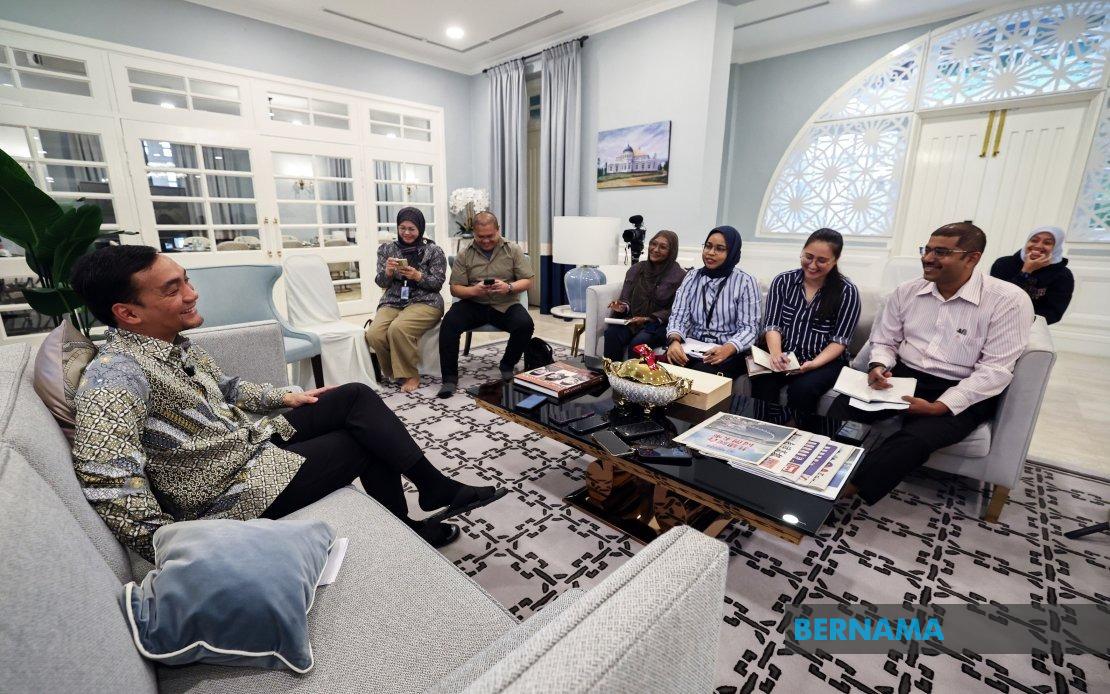
With the Johor state election barely three weeks away, Johor Barisan Nasional chairman Datuk Onn Hafiz Ghazi has directed a message to party loyalists who missed out on candidate selection: their exclusion from the ballot does not diminish their importance to the coalition's broader mission. Speaking from his official residence in Saujana, the Johor Menteri Besar sought to manage expectations among disappointed party members while reinforcing unity as the campaign enters its decisive phase ahead of the July 11 polling day.
Onn Hafiz's remarks underscore a persistent challenge within Malaysian political parties as candidate selection processes conclude—managing the disappointment of those passed over while maintaining party cohesion. In competitive multiparty democracies, not every aspiring politician can secure a seat, yet their continued engagement often proves crucial to electoral success. The Menteri Besar framed rejection not as permanent exclusion but as redirection toward alternative roles within the party structure and government machinery. He acknowledged that Members of Parliament positions and party administrative functions offer continuing pathways for those unable to contest state seats this cycle, effectively broadening the definition of political contribution beyond legislative candidacy.
The candidate selection process, Onn Hafiz disclosed, had reached approximately 80 per cent completion at the time of his remarks. This transparency offered a sliver of hope to hopefuls still awaiting final confirmation, as he emphasized that nothing becomes irreversible until candidates formally receive their watikah, or official letters of appointment. He cited precedents where previously issued appointment letters were subsequently withdrawn, highlighting the fluid nature of candidate selection even at advanced stages. This institutional flexibility, while providing last-minute opportunities for some, also sustained uncertainty for many party members during an already tense period.
The selection criteria established by Johor BN reflect a deliberate broadening of the candidate pool. Onn Hafiz stressed that chosen candidates emanate from diverse professional backgrounds without age restrictions, responding to earlier speculation about generational preferences within the party hierarchy. The overarching principle, he explained, centers on identifying aspirants with genuine roots in their constituencies—individuals recognized and accepted by local communities. This emphasis on local embeddedness challenges a narrative sometimes promoted by critics that Malaysian political parties prioritize external parachuting of candidates over homegrown leadership development.
Onn Hafiz invoked the concept of WALI candidates—an acronym standing for winnable, acceptable, and likeable—previously articulated by the BN president. This framework acknowledges that electoral success requires more than factional loyalty or administrative capability; successful candidates must resonate with voters across multiple dimensions. Notably, the Menteri Besar explicitly deprioritized age as a selection criterion, arguing that youthfulness without competence serves neither party nor electorate. This stance directly confronts internal party dynamics in Malaysia where senior figures sometimes face pressure to mentor younger protégés, potentially compromising merit-based selection in favor of succession planning.
The formal governance structure underpinning candidate selection reveals a layered approval hierarchy. Onn Hafiz clarified that individual selections require endorsement from both the BN chairman and UMNO president Datuk Seri Dr Ahmad Zahid Hamidi, alongside consultations with senior party leadership. This multi-level authorization process, while ensuring broad party consensus, also diffuses accountability and can generate perceptions of centralized control or factional influence. The involvement of multiple decision-makers theoretically guards against arbitrary choices yet simultaneously complicates transparency and public understanding of selection rationales.
Demographic shifts in Johor's electorate informed Onn Hafiz's strategic messaging. Voters under 40 years old comprise between 20 and 40 per cent of the state's population—a significant bloc that can determine electoral outcomes yet frequently demonstrates lower turnout rates than older cohorts. The Menteri Besar acknowledged that BN's elected representatives have actively engaged this demographic, suggesting systematic outreach efforts to secure support among younger voters. This recognition reflects broader Malaysian political awareness that younger generations, increasingly skeptical of traditional party structures and more attuned to governance performance metrics, require deliberate cultivation.
The Menteri Besar extended his voting appeal beyond Johor's borders, specifically addressing Johoreans employed in Singapore. This outreach acknowledges the significant cross-border workforce commuting daily between the two jurisdictions, many of whom maintain voting rights in their home state. Encouraging their participation underscores BN's recognition that even residents temporarily absent still constitute the political community. Higher voter turnout, Onn Hafiz argued, strengthens democratic legitimacy and ensures elected governments command broader mandates.
Onn Hafiz's framing of the upcoming election positioned the incumbent BN government as a tested administrator seeking continued opportunity to serve. He asserted that his administration has exerted maximum effort delivering developmental outcomes for Johor's population and expressed readiness to sustain this trajectory with renewed electoral endorsement. This performance-based appeal contrasts with appeals grounded primarily in party ideology or organizational longevity, suggesting a shift toward evaluating parties through governance effectiveness lenses—a development reflecting Malaysian voters' increasing pragmatism regarding electoral choices.
The campaign calendar remains compressed, with nomination day scheduled for June 27 and early voting on July 7, followed by general polling on July 11. This abbreviated timeline intensifies pressure on all parties to execute campaign strategies effectively while managing internal challenges such as candidate morale among the unselected. Onn Hafiz's proactive messaging to disappointed party members represents an attempt to minimize potential defection or reduced effort by those overlooked, recognizing that elections are ultimately won through grassroots mobilization involving party members at all hierarchical levels. In this context, maintaining party unity transcends symbolic importance and becomes practically necessary for competitive electoral performance.
The Johor election carries significance extending beyond state-level governance, serving as an important electoral indicator for federal-level party positioning ahead of potential national elections. Johor's status as a PAS-historically competitive state and economically significant jurisdiction amplifies its importance within Malaysia's broader political landscape. BN's performance here will likely influence intra-coalition dynamics and provide crucial data regarding voter sentiment toward federal-level leadership, particularly regarding UMNO's position within the broader political ecosystem. Therefore, Onn Hafiz's emphasis on unity and continued commitment from all party members, regardless of candidacy status, reflects appreciation for these wider ramifications beyond immediate state-level considerations.